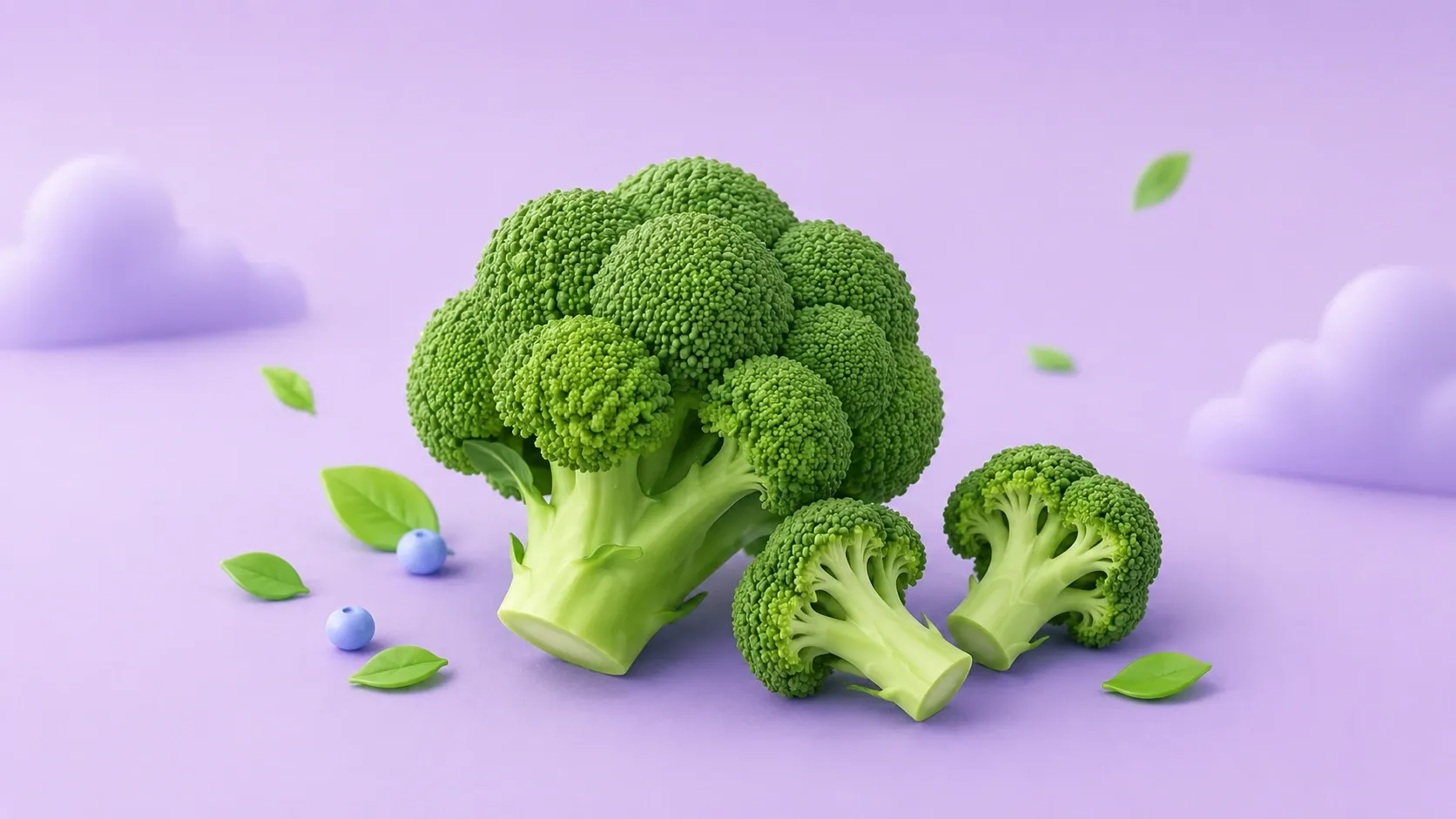
Raw broccoli has about 34 calories per 100 grams, along with roughly 6.6 grams of carbohydrate, 2.8 grams of protein, 2.6 grams of fiber, and almost no fat, according to USDA FoodData Central. A cup of chopped raw broccoli lands at just about 31 calories. Broccoli is one of those rare foods where you can pile your plate high and barely make a dent in your day, because the number comes down to one thing more than any other: how much it weighs, and broccoli is mostly water and fiber.
The quick answer: calories in broccoli
Raw broccoli is about 34 calories per 100 grams, and cooked, drained broccoli is almost identical at about 35 calories per 100 grams. Because broccoli is mostly water and fiber with very little fat, the calories stay low no matter how you serve it, so a big portion is still a small number.
Here is how the macros break down for 100 grams of raw broccoli:
- Calories: about 34 kcal
- Carbohydrate: about 6.6 g
- Protein: about 2.8 g
- Fiber: about 2.6 g
- Fat: about 0.4 g
With almost no fat, a useful dose of fiber, and a surprising amount of protein for a vegetable, broccoli is essentially a low-calorie, high-volume food. That makes it one of the easiest ways to fill a plate without inflating your total, which is why it shows up so often in our Food and Calorie Guides hub.
Calories by serving size
“A serving of broccoli” is not a fixed amount, so the calories shift a little depending on how much you scoop and whether it is raw or cooked. The table below applies the USDA per-100-gram values to common serving sizes for raw broccoli (34 calories, 6.6 g carbohydrate, 2.8 g protein, 2.6 g fiber).
| Serving | Calories | Carbohydrate | Protein | Fiber |
|---|---|---|---|---|
| 1 spear, about 5 inches (31 g) | about 11 | 2 g | 0.9 g | 0.8 g |
| 1 cup chopped, raw (91 g) | about 31 | 6 g | 2.6 g | 2.4 g |
| 100 g raw | about 34 | 6.6 g | 2.8 g | 2.6 g |
| 1 cup chopped, cooked (156 g) | about 55 | 11 g | 3.7 g | 5.2 g |
The takeaway: even a full cup of cooked broccoli is only about 55 calories, and a raw cup is closer to 31. That is roughly the calorie cost of a few almonds for an entire cup of vegetable. If you are tracking carefully, the bigger variable is not the broccoli but anything you cook it in, since “a cup of broccoli” is almost always under 60 calories on its own.
Raw versus cooked broccoli
The calorie difference between raw and cooked broccoli is tiny. Raw broccoli is about 34 calories per 100 grams and cooked, drained broccoli is about 35, so the per-gram energy is essentially the same. Cooking does not add or remove a meaningful number of calories on its own; it mainly softens the florets.
Where the two differ is the weight of a portion. Cooked broccoli wilts and packs down, so a cup of cooked broccoli (about 156 g) weighs more than a cup of raw (about 91 g) and therefore carries more calories per cup, even though each gram is identical. Per 100 grams cooked, here is the rough comparison:
| Type | Calories | Carbohydrate | Fiber | Protein |
|---|---|---|---|---|
| Broccoli, raw | about 34 | about 6.6 g | 2.6 g | 2.8 g |
| Broccoli, cooked | about 35 | about 7.2 g | 3.3 g | 2.4 g |
So you are not choosing raw or cooked to save calories; the two are interchangeable on that front. Boiling can leach a little vitamin C into the water, while steaming and roasting retain more, but for calorie tracking the practical rule is simple: log either at roughly the same per-gram value and just match your portion to whether it is raw or cooked.
Why broccoli is so low in calories
Broccoli packs so few calories into a large volume because it is roughly 90 percent water, with most of the rest being fiber. Water has no calories, and fiber is a carbohydrate your body cannot fully absorb for energy, so a big, bulky serving still adds up to very little. That is what makes a whole cup of cooked broccoli land near 55 calories, a fraction of the same weight of almost any starch or protein.
Low energy density is broccoli’s superpower for appetite control. A few practical points:
- Use it to add volume, not calories. Bulking up a meal with broccoli makes the plate look and feel bigger while barely touching your total, which helps with fullness.
- Pair it with a protein and a starch. Broccoli works as the high-volume side that lets you keep portions of denser foods in check, much like the approach in our low-calorie filling foods guide.
- Mind what goes on top. A tablespoon of oil for roasting adds roughly 120 calories, and a cheese sauce can add several hundred. Often it is the topping, not the broccoli, that drives the number.
What broccoli gives you nutritionally
Beyond being low in calories, broccoli earns its reputation as a nutrient-dense vegetable. A one-cup cooked serving delivers:
- Fiber: about 5 grams in a cooked cup, which slows digestion, supports gut health, and adds to fullness.
- Vitamin C: broccoli is unusually rich in it, with a single cooked cup covering a large share of a day’s needs, supporting immune function and skin.
- Vitamin K and folate: broccoli is a strong source of both, which matter for bone health, blood, and cell function.
- Plant compounds: broccoli and other cruciferous vegetables contain sulforaphane and related compounds that researchers continue to study for their potential health benefits.
That combination of fiber, water, and micronutrients for almost no calories is why health authorities consistently encourage filling more of your plate with vegetables like broccoli. The Harvard Nutrition Source notes that a diet rich in vegetables and fruits is linked to lower blood pressure, better digestion, and a reduced risk of several chronic diseases (Harvard, The Nutrition Source). If you want a surprising amount of protein from a vegetable too, broccoli even earns a mention among our high-protein foods.
How broccoli fits a calorie budget
Broccoli is about as forgiving as food gets for anyone watching calories, because the portion almost never works against you. Two things make it valuable and one is worth a quick note.
It adds bulk for almost nothing. A cup of cooked broccoli at about 55 calories fills space on the plate and in your stomach, leaving room for protein and a measured starch like a baked potato. If you are figuring out your own intake, you can run the numbers with our calorie calculator or read our guide on how many calories you should eat to lose weight.
It is genuinely filling. The fiber and water make broccoli more satisfying than its calorie count suggests, so it helps curb the urge to overeat denser foods. Building meals around high-volume vegetables is one of the most reliable ways to stay in a deficit without feeling deprived.
The toppings are the real budget item. Because the broccoli itself is so light, the calories almost always come from how it is prepared. Logging the oil, butter, and cheese separately in a tracking app like CalcEat keeps the math honest, so a 55-calorie cup of broccoli does not quietly become a 300-calorie side.
The bottom line
Raw broccoli is about 34 calories per 100 grams and roughly 31 per cup chopped, and cooked, drained broccoli is almost identical at about 35 calories per 100 grams, or about 55 per packed cup. A single spear is only about 11 calories. For practical purposes, broccoli is one of the lowest-calorie, highest-volume foods you can eat, and the per-gram value barely changes whether it is raw or cooked.
Keep it simple: pile it on, match your measurement to raw or cooked, and account for whatever oil, butter, or sauce you add. Track the broccoli and its toppings separately, and you will find it is one of the easiest foods to fit into any calorie budget.
This article is general information, not medical or dietary advice for your specific situation.