Some foods fill you up for barely any calories, and others vanish in two bites and leave you hungry an hour later. That difference is not random, and it is one of the most useful things you can learn for losing weight without feeling deprived. This guide walks through what actually makes food filling, then gives you a verified list of low-calorie, high-satiety foods you can build real meals around.
What actually makes a food filling
Hunger is not just about how much you eat; it is about what you eat. In a now-classic study, researchers fed people equal-calorie portions of 38 different foods and measured how full each one kept them. The results varied enormously: boiled potatoes were the most filling food tested, several times more satisfying than a croissant of the same calories. Foods higher in protein, fiber, and water tended to satisfy more, while foods higher in fat satisfied less (Holt et al., 1995).
Four properties do most of the heavy lifting.
Protein
Protein is the most satiating of the three macronutrients. It blunts appetite, helps you feel full sooner, and tends to keep hunger away longer than the same calories of carbs or fat. Reviews of controlled feeding studies consistently find that higher-protein meals increase fullness and often lead people to eat less at the next meal (Paddon-Jones et al., 2008). Protein is also more “expensive” for your body to digest, so a slightly larger share of its calories is burned off in the process. If you want to go deeper here, our guide to high-protein foods is a good next stop.
Fiber
Fiber adds bulk without adding many digestible calories. It slows down how fast your stomach empties, smooths out your blood sugar response, and physically takes up space. A systematic review of fiber and appetite found that many fiber-rich foods, especially viscous, gel-forming fibers like those in oats and legumes, can increase fullness and help reduce how much you eat (Clark and Slavin, 2013). The effect depends on the type and amount of fiber, but more whole, fiber-rich plants is a reliable rule. If you are not sure what “enough” fiber looks like, our guide to how much fiber you need a day gives the targets and a food table.
Water and volume
Your stomach has stretch receptors that help tell your brain you have eaten enough, and they respond to the volume of food, not just its calories. Foods with a lot of built-in water, like vegetables, fruit, and broth-based soups, let you eat a large, satisfying amount for very little energy.
Low energy density
Energy density ties the first three together. It is simply the number of calories in a given weight of food (calories per gram). Foods full of water and fiber are low in energy density: you get a big plate for few calories. People tend to eat a fairly consistent weight of food day to day, so when that food is less calorie-dense, total intake drops without extra hunger. The Mayo Clinic describes this as the practical key to feeling full on fewer calories (Mayo Clinic). It is also the engine behind eating less overall, which is exactly how a calorie deficit gets easier to sustain.
The most filling low-calorie foods
Below are foods that score well on one or more of those four properties. All calorie figures are rounded values from USDA FoodData Central; exact numbers vary by variety, ripeness, and how a food is prepared, so treat them as close estimates rather than precise truths.
| Food | Typical serving | Approx. calories | Why it fills you up |
|---|---|---|---|
| Cucumber (with peel) | 1 cup sliced (about 105 g) | About 16 | Roughly 95% water and very low energy density |
| Air-popped popcorn | 3 cups (about 24 g) | About 95 | High volume and whole-grain fiber for very few calories |
| Watermelon | 1 cup diced (about 152 g) | About 46 | Mostly water, so a big juicy portion costs little |
| Strawberries | 1 cup sliced (about 166 g) | About 53 | Water plus about 3 g fiber per cup |
| Broccoli (cooked) | 1 cup (about 156 g) | About 55 | Fiber and water; lots of chewing for the calories |
| Apple (with skin) | 1 medium (about 182 g) | About 95 | Around 4 g fiber and high water content |
| Plain nonfat Greek yogurt | 3/4 cup (about 170 g) | About 100 | High protein (about 17 g) for strong, lasting fullness |
| Hard-boiled egg | 1 large | About 78 | About 6 g of highly satiating protein |
| Oats (cooked) | 1/2 cup dry, cooked | About 150 | Viscous fiber that slows digestion and steadies hunger |
| Lentils (cooked) | 1/2 cup (about 99 g) | About 115 | Protein and fiber together, roughly 9 g each in this serving |
| Chicken breast (skinless, cooked) | 3 oz (about 85 g) | About 140 | Lean protein, about 26 g, with almost no fat |
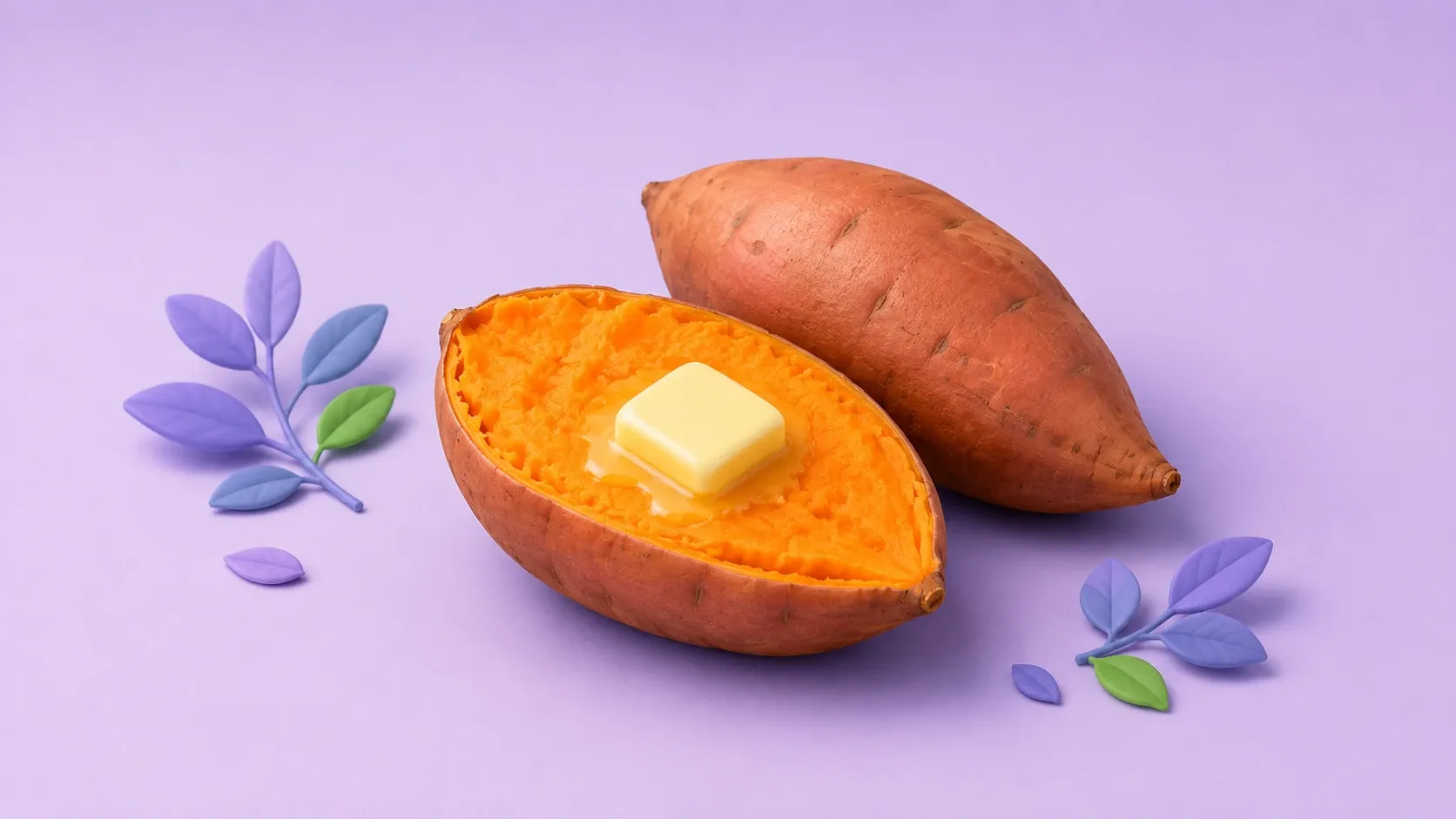
| Boiled potato (with skin) | 1 medium (about 136 g) | About 120 | Topped the satiety index; filling and naturally fat-free |
A few categories are worth calling out, because they are where most of the easy wins live.
High-volume vegetables
Non-starchy vegetables are the closest thing to a free food you will find. Leafy greens, cucumber, celery, zucchini, tomatoes, peppers, cauliflower, and broccoli are mostly water and fiber, so you can pile your plate high for a tiny calorie cost. Cooked broccoli runs about 35 calories per 100 grams, and raw cucumber with the peel is around 15 calories per 100 grams. These are the foods to make the base of a meal.
Lean proteins
Lean protein is your anchor for staying full between meals. Skinless chicken breast delivers about 31 grams of protein per 100 grams cooked for roughly 165 calories, plain nonfat Greek yogurt has about 10 grams of protein per 100 grams at only 61 calories, and a large egg packs around 6 grams of protein for about 78 calories. White fish, shrimp, low-fat cottage cheese, and tofu belong in this group too.
Broth-based soups
A bowl of brothy, vegetable-packed soup is a classic appetite tamer. The combination of warm liquid, volume, and fiber fills your stomach for very few calories, which is why a light soup before a meal often leads people to eat less overall. Skip the cream-based versions, which carry far more calories for the same bowl.
Whole fruit
Whole fruit gives you sweetness, water, and fiber together. Berries and watermelon are especially low in calories for their size: a cup of sliced strawberries is about 53 calories, and a cup of diced watermelon is roughly 46. Apples, oranges, and pears travel well and bring real fiber. Eat fruit whole rather than juiced, since juicing strips the fiber and concentrates the sugars.
Legumes
Beans, lentils, chickpeas, and edamame are a satiety power couple, high in both protein and fiber. Cooked lentils provide about 18 grams of protein and 16 grams of fiber per cup for roughly 230 calories, which is excellent staying power. They are denser than vegetables, so portion them like a protein rather than piling them on, but a half-cup added to a salad or soup makes it far more filling.
Easy swaps and meal ideas
You do not need a new diet to use any of this. The trick is to lean on the foods above to make your meals bigger and more filling without adding many calories.
Simple swaps that cut calories without cutting satisfaction:
- Replace half the rice or pasta on your plate with extra vegetables or salad. Same-size plate, far fewer calories.
- Swap a creamy soup or dressing for a broth-based soup or a vinaigrette used lightly.
- Trade chips for air-popped popcorn or cut vegetables with hummus.
- Choose whole fruit over fruit juice, and water or unsweetened drinks over sugary ones.
- Build snacks around protein: plain Greek yogurt instead of a granola bar, a hard-boiled egg instead of crackers.
A few meal ideas that put it together:
- Breakfast: oats cooked with water or milk, topped with berries and a spoon of Greek yogurt for extra protein.
- Lunch: a big salad of leafy greens, cucumber, and tomato, with grilled chicken or chickpeas and a light vinaigrette.
- Dinner: a palm-sized portion of fish or chicken, half a plate of roasted broccoli and peppers, and a small boiled potato.
- Snacks: an apple, a bowl of air-popped popcorn, cottage cheese with cucumber, or a handful of edamame.
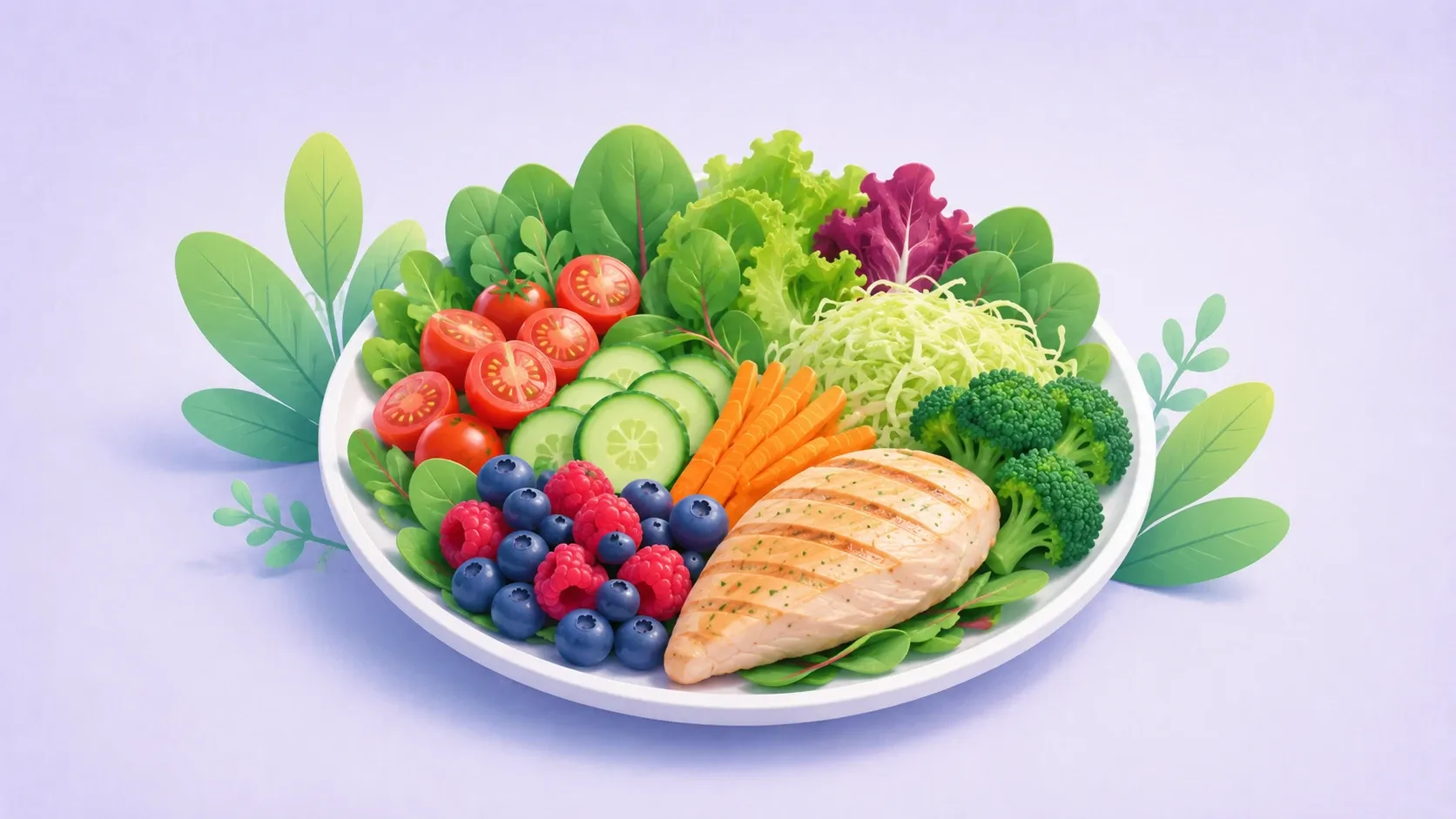
The pattern is always the same: protein to anchor it, vegetables for volume, and whole fruit or whole grains for fiber.
”Low-calorie” does not mean “unlimited”
Here is the honest caveat. Filling, low-calorie foods make a deficit easier, but they do not suspend the math. A handful of non-starchy vegetables is so low in calories it barely registers, but most foods on this list still count. Three apples, a large bowl of oats, or a generous scoop of lentils add up to a real number of calories, and anything you add on top, oil, butter, cheese, dressing, or sauce, adds up faster.
It also matters that “low-calorie” and “healthy” are not the same thing. A diet soda is low in calories but does little to nourish or fill you. The goal is not to chase the lowest possible number; it is to choose foods that are both light in calories and genuinely satisfying, so you can eat enough to feel good while staying in a gentle deficit.
This is where a little awareness goes a long way. You do not need to weigh every gram, but knowing the rough calorie cost of your meals keeps the easy wins from quietly turning into overeating. An app like CalcEat lets you snap a photo of your plate for a fast estimate, scan a barcode, or log by hand, so you can see whether your filling, low-calorie choices are actually adding up the way you think.
The bottom line
Filling foods are not a trick or a gimmick. They are foods rich in protein, fiber, and water, which satisfy your hunger for fewer calories because of how your body registers fullness. Build your plate around high-volume vegetables and lean protein, lean on whole fruit, legumes, and brothy soups, and use whole grains like oats over refined ones, and you can eat satisfying, generous meals while still trimming calories.
Start with one or two swaps this week rather than overhauling everything at once. Small, repeatable changes are what stick, and they add up to real results over time. For more food-by-food breakdowns and practical tips, explore our Food & Calorie Guides hub. You have got this.