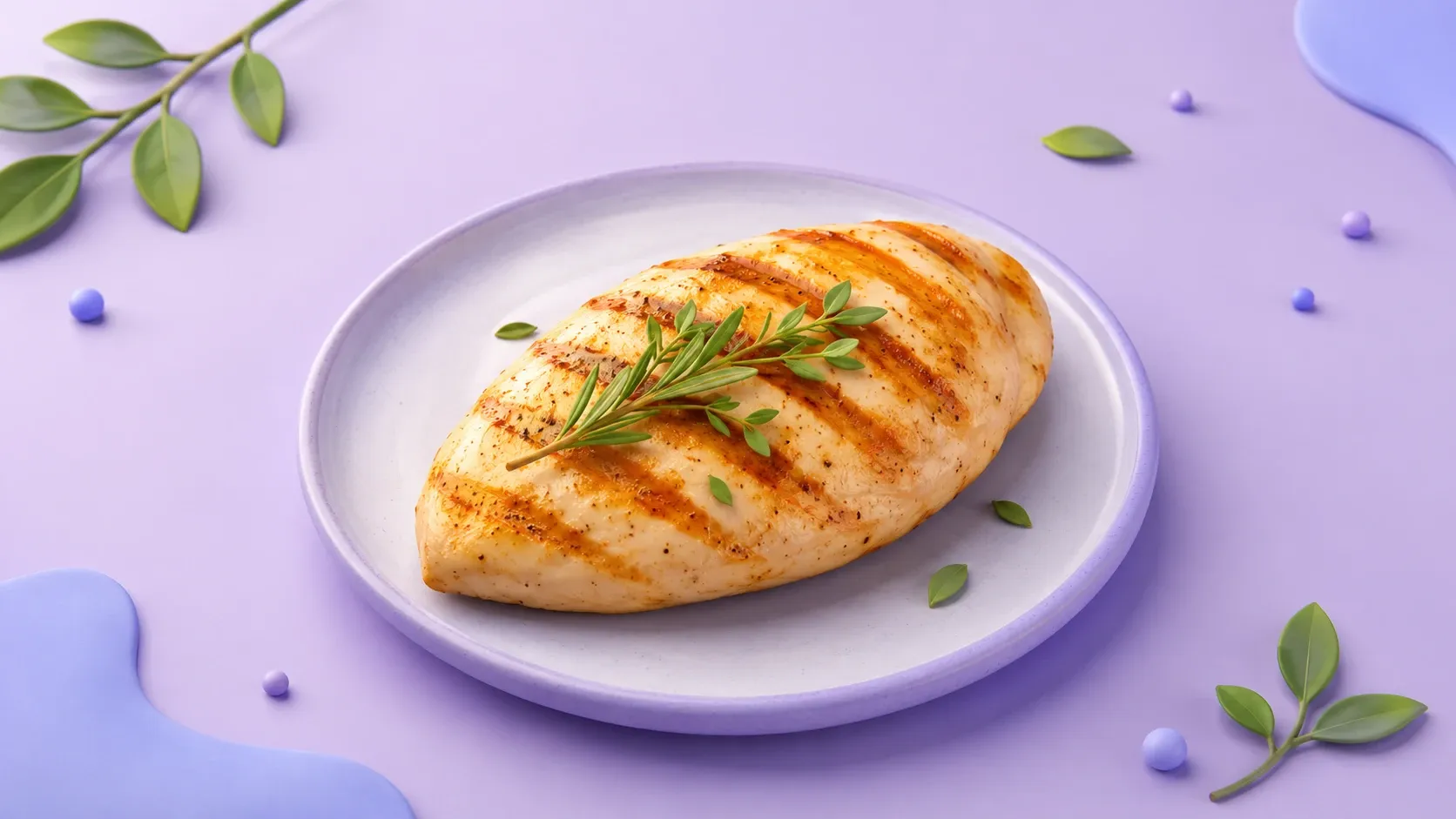

Cooked skinless chicken breast has about 165 calories per 100 grams, along with roughly 31 grams of protein and just 3.6 grams of fat, according to USDA FoodData Central. That combination of high protein and low fat is exactly why chicken breast is a staple for anyone counting calories or chasing a protein target. The total on your plate comes down to one thing more than any other: how much it weighs.
The quick answer: calories in chicken breast
A plain, skinless chicken breast that is grilled, baked, or roasted with no added fat lands at about 165 calories per 100 grams cooked. Because the meat is so lean, the calories track almost perfectly with weight, so the size of the breast is what moves the number.
Here is how the macros break down for 100 grams of cooked skinless breast:
- Calories: about 165 kcal
- Protein: about 31 g
- Fat: about 3.6 g
- Carbohydrate: 0 g
With essentially no carbohydrate and very little fat, chicken breast is close to pure protein. At roughly 31 grams of protein for 165 calories, it is one of the most protein-dense foods you can build a meal around, which is why it shows up on almost every list of high-protein foods.
Calories by serving size
“One chicken breast” is not a fixed amount, so the calories swing a lot depending on the size you buy and how much you actually eat. The table below applies the USDA per-100-gram value for cooked skinless breast (165 calories, 31 g protein, 3.6 g fat) to common serving sizes.
| Serving | Calories | Protein | Fat |
|---|---|---|---|
| 1 oz (28 g) | about 47 | 8.7 g | 1.0 g |
| 3 oz (85 g), standard serving | about 140 | 26 g | 3.1 g |
| 100 g | about 165 | 31 g | 3.6 g |
| Small breast (4 oz / 113 g) | about 187 | 35 g | 4.1 g |
| Medium breast (6 oz / 170 g) | about 280 | 53 g | 6.1 g |
| Large breast (8 oz / 227 g) | about 375 | 70 g | 8.2 g |
The takeaway: a large cooked breast can easily carry more than twice the calories and protein of a standard 3 oz serving. If you are tracking carefully, weighing the cooked chicken beats guessing, because “one breast” can mean anywhere from about 140 to 375 calories. For more reference numbers like these, our Food and Calorie Guides hub keeps them in one place.
Raw versus cooked: why the number changes
This trips a lot of people up. Raw skinless chicken breast is only about 120 calories per 100 grams, lower than the cooked figure. Cooking does not add calories, but chicken loses roughly a quarter of its weight as water when you cook it, and that concentrates the nutrition. So 100 grams of raw breast becomes about 75 grams of cooked breast, with the same calories packed into less weight.
What this means in practice:
- Weigh chicken after cooking when you can, and use cooked-food values. It is the most accurate way to log it.
- If you weigh it raw, use the raw value (about 120 calories per 100 grams) so you do not over- or undercount.
- Do not mix the two. Logging a cooked weight against a raw value (or the reverse) is one of the most common tracking mistakes, and it can be off by 25 percent or more.
Chicken breast macros: a lean protein standout
Chicken breast earns its reputation as a clean protein source. A 100-gram cooked portion gives you about 31 grams of complete protein, meaning it contains all nine essential amino acids your body cannot make on its own. There is no carbohydrate and only a few grams of fat, most of it unsaturated.
That profile is what makes it so useful on a calorie budget. Protein is the most filling macronutrient per calorie, and reviews of higher-protein eating patterns link them to better appetite control and easier weight management (Leidy et al., 2015). Few foods deliver as much protein for as few calories as a skinless breast, which is why it is a favorite for both fat loss and muscle building. If you are working out your daily target, our guide on how much protein you need per day walks through the numbers.
Calories by cooking method and cut
The breast itself stays around 165 calories per 100 grams. What changes the total is the skin and the fat you cook it in. The table below shows how that plays out for a 100-gram portion.
| Preparation | What changes | Approx. calories (per 100 g) |
|---|---|---|
| Skinless, grilled / baked / roasted | Nothing added | about 165 |
| Skinless, poached or boiled | Nothing added (water only) | about 165 |
| With skin, roasted | Skin adds fat | about 197 |
| Pan-fried in 1 tbsp oil (per breast) | about 1 tbsp oil (120 kcal) | add about 120 to the breast |
| Breaded and deep-fried | Coating plus absorbed oil | about 250 to 290 |
A few practical points fall out of this:
- Skinless and dry-cooked is the leanest option. Grilling, baking, roasting, poaching, and air-frying add essentially nothing.
- Removing the skin is an easy win. It saves roughly 30 calories per 100 grams and most of the saturated fat, with zero loss of protein.
- The oil is the variable, not the chicken. Measuring cooking oil with a spoon instead of free-pouring can save a surprising number of calories over a week. A tracking app like CalcEat lets you log the chicken and the oil separately so the math stays honest.
How chicken breast fits weight loss and protein goals
Chicken breast is a go-to for a reason when you are cutting calories or building muscle. Three things work in its favor.
It is extremely filling for its calories. High protein plus low calorie density means a big, satisfying portion for relatively few calories, which makes a calorie deficit easier to sustain. If you are figuring out your own intake, our guide on how many calories you should eat to lose weight lays out the math.
It makes protein targets simple. Aiming for 120 grams of protein a day? A single medium breast can cover roughly 50 grams of that in one meal, with almost no fat or carbs to budget around. That leaves room for the rest of your plate.
It is flexible and meal-prep friendly. Cook a batch, portion it out, and you have lean protein ready for the week. Keep it skinless and dry-cooked to hold the calories near the baseline, then build flavor with herbs, spices, citrus, and low-calorie sauces instead of heavy oils.
A few simple ways to keep chicken breast working for your goals:
- Weigh it cooked and log the oil too. Those are the two numbers people most often miss.
- Go skinless when calories count. Save the crispy skin or breading for when it fits your budget.
- Lead with protein, then fill the plate. Pair the breast with vegetables and a smart carb to build a balanced, protein-forward meal. Our macros and protein guides cover how to balance the rest.
The bottom line
Cooked skinless chicken breast is about 165 calories and 31 grams of protein per 100 grams, and the meat stays roughly that whether you grill, bake, roast, or poach it. The calories that creep in come from the skin, the oil, and the breading, and the size of the breast sets the baseline. For most people, chicken breast is one of the best high-protein, low-calorie foods to build meals around.
Keep it simple: weigh it after cooking, go easy on the added fat when calories matter, and lean on chicken breast to hit your protein without blowing your budget. Track the chicken and the oil, stay consistent, and the numbers will take care of themselves.
This article is general information, not medical or dietary advice for your specific situation.