A plain baked potato with the skin has about 93 calories per 100 grams, along with roughly 2.5 grams of protein, 21 grams of carbohydrate, and just 0.1 grams of fat, according to USDA FoodData Central. So a medium baked potato lands at about 160 calories. The potato itself is naturally low in calories and filling. What changes the number on your plate, more than anything else, is how you cook it and what you put on top.
The quick answer: calories in a potato
A plain potato, baked or boiled with nothing added, is a low-fat, carbohydrate-rich food. Because it has almost no fat, the calories come mostly from starch, and the total tracks closely with size.
Here is how the macros break down for 100 grams of baked potato with the skin:
- Calories: about 93 kcal
- Carbohydrate: about 21 g
- Protein: about 2.5 g
- Fat: about 0.1 g
- Fiber: about 2.2 g
That is a lot of food for under 100 calories, with useful fiber, potassium, and vitamin C. The potato is not the problem people sometimes assume it is. It earns a spot among low-calorie, filling foods precisely because you get a satisfying portion for very few calories, as long as you keep the toppings in check.
Calories by serving size
“One potato” is not a fixed amount, so the calories swing with the size you bake. The table below applies the USDA per-100-gram value for baked potato with skin (93 calories) to common potato sizes.
| Serving | Calories | Carbs | Protein |
|---|---|---|---|
| 100 g | about 93 | 21 g | 2.5 g |
| Small (5 oz / 138 g) | about 128 | 29 g | 3.5 g |
| Medium (6 oz / 173 g) | about 160 | 37 g | 4.3 g |
| Large (10.5 oz / 299 g) | about 278 | 63 g | 7.5 g |
The takeaway: a large baked potato carries well over twice the calories of a small one, all before toppings. If you are tracking carefully, weighing the potato beats eyeballing it, because “a potato” can mean anywhere from about 128 to 278 calories. For more reference numbers like these, our Food and Calorie Guides hub keeps them in one place.
Calories by preparation method
This is where potatoes earn their reputation, fairly or not. The potato stays low in calories. The cooking method and the fat you add are what move the total. The table below shows roughly how that plays out per 100 grams.
| Preparation | What changes | Approx. calories (per 100 g) |
|---|---|---|
| Boiled, no skin, no salt | Nothing added (water only) | about 87 |
| Baked, flesh and skin, no salt | Nothing added | about 93 |
| Mashed, with whole milk and butter | Milk and butter add fat | about 113 |
| French fried in vegetable oil | Absorbed frying oil | about 312 |
A few practical points fall out of this:
- Boiled and baked are the leanest options. Both stay under 100 calories per 100 grams with nothing added.
- Mashing with milk and butter adds up. The dairy and fat lift a plain potato by roughly 20 to 30 percent, and heavier recipes go higher.
- Frying is the big jump. French fries run about 312 calories per 100 grams, more than three times a plain baked potato, because the potato soaks up oil. A medium fast-food serving of about 117 grams is roughly 365 calories. The oil, not the potato, is the variable.
The pattern here is the same one behind a lot of smart food swaps: keep the base food, change the cooking method, and the calories fall into place.
Potato versus sweet potato
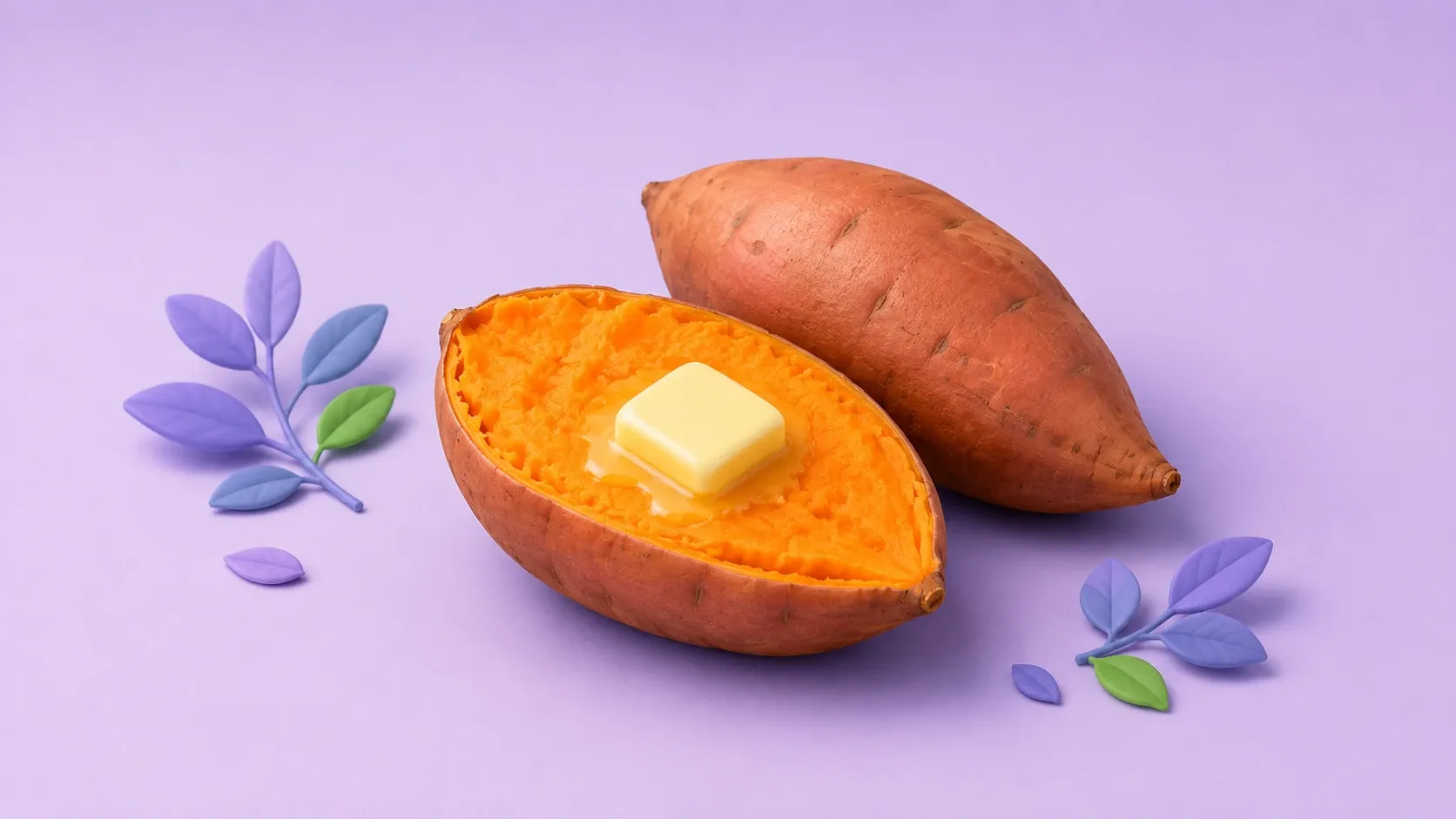
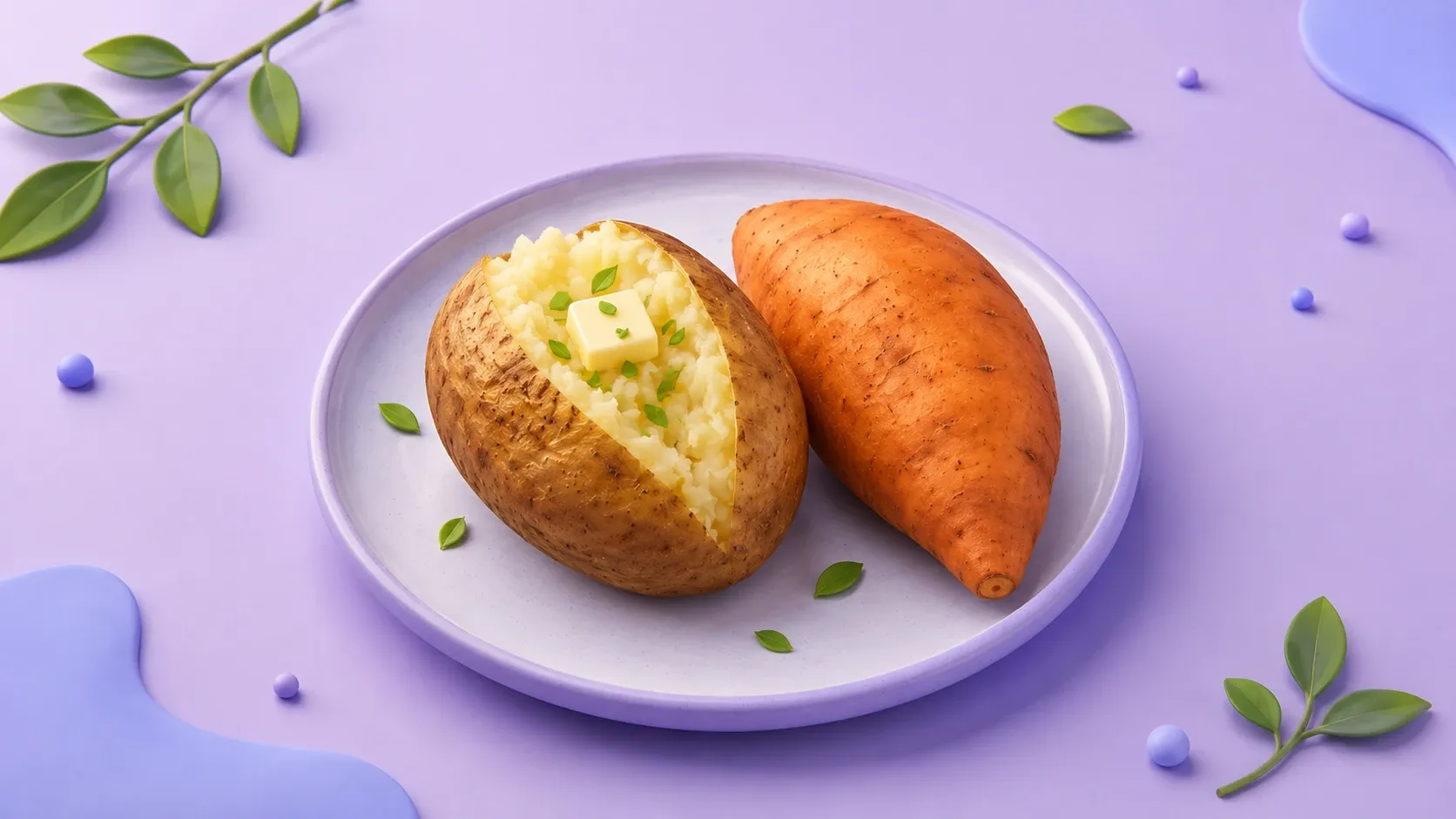
People often assume the sweet potato is the dramatically “healthier” choice. On calories, the two are close. A baked sweet potato has about 90 calories per 100 grams, just a touch under a white potato, with a similar macro profile.
Here is the comparison per 100 grams, baked with the skin:
| Food | Calories | Carbs | Fiber | Standout nutrient |
|---|---|---|---|---|
| Baked potato (skin) | about 93 | 21 g | 2.2 g | Potassium, vitamin C |
| Baked sweet potato | about 90 | 21 g | 3.3 g | Fiber, vitamin A |
A medium sweet potato of about 114 grams comes to roughly 103 calories, and a large one of about 180 grams is around 162 calories. The differences worth knowing:
- Sweet potatoes have more fiber and are very high in vitamin A from beta-carotene.
- White potatoes have slightly more potassium and a bit more vitamin C.
- For calorie counting, they are nearly interchangeable. Choose based on taste and the rest of your plate, not a big calorie gap, because there is not one.
How potatoes fit weight loss and a calorie budget
A plain potato is more friend than foe when you are watching calories. Three things work in its favor.
It is filling for its calories. Potatoes have a low calorie density, plenty of water and fiber, and they score near the top of satiety research, meaning they help you feel full on fewer calories. That makes a calorie deficit easier to hold. If you are figuring out your own intake, our chicken breast guide pairs a lean protein with a potato for a balanced, satisfying plate.
The toppings are the budget, not the potato. A medium baked potato is about 160 calories. A tablespoon of butter adds roughly 100, a couple tablespoons of sour cream another 50 or so, and cheese climbs from there. Logging the potato and each topping separately keeps the math honest, and it shows exactly where the calories are coming from.
Cooking method sets the ceiling. Baked or boiled, a potato stays modest. Fried, it can triple. Choosing the preparation is the single biggest lever you have.
A few simple ways to keep potatoes working for your goals:
- Bake or boil instead of frying when calories matter, and save fries for when they fit your budget.
- Go light on the high-fat toppings. Try Greek yogurt for sour cream, or season with herbs, salsa, and spices instead of butter.
- Eat the skin. It adds fiber and nutrients for almost no extra calories. A tracking app like CalcEat lets you log the potato and the toppings separately so nothing slips through.
The bottom line
A plain baked potato with the skin is about 93 calories per 100 grams, so a medium one is roughly 160 calories, naturally low in fat and rich in carbohydrate, fiber, and potassium. A sweet potato is almost identical on calories, with more fiber and vitamin A. The big swings come from preparation: boiling and baking keep potatoes light, while frying and heavy toppings can multiply the calories several times over.
Keep it simple: bake or boil, eat the skin, go easy on the butter and oil, and a potato is a filling, budget-friendly food rather than one to avoid. Track the potato and what you put on it, stay consistent, and the numbers will take care of themselves.
This article is general information, not medical or dietary advice for your specific situation.