

The official answer is 0.8 grams of protein per kilogram of body weight per day, but that number is a floor, not a goal. It is the amount set to keep the average healthy adult from running short, and most people who are active, watching their weight, or trying to build muscle do better aiming higher. This guide turns that into real targets you can use, with a quick table by goal and worked examples in both kilograms and pounds.
The quick answer
The Recommended Dietary Allowance (RDA) for protein, set by the National Academies’ Institute of Medicine, is 0.8 grams per kilogram of body weight per day (Institute of Medicine). For a 68 kg (150 lb) adult, that is about 55 grams a day.
Here is the part most people miss: the RDA is the minimum designed to prevent deficiency in nearly everyone, not the amount that helps you feel full, hold on to muscle, or recover from training. Think of it like the lowest passing grade rather than the score you are aiming for.
If you are sedentary, the RDA still covers the basic need, but the 2025–2030 Dietary Guidelines for Americans now set a higher everyday goal of 1.2 to 1.6 grams per kilogram (Dietary Guidelines for Americans, 2025–2030). If you exercise, are cutting calories, or want to build or keep muscle, the research points clearly toward eating more, somewhere in the range of 1.2 to 2.2 grams per kilogram depending on your goal. The rest of this guide shows you where you fit.
Why protein matters more than the minimum
Protein is the macronutrient that does the most work per gram when your goal is body composition. Three benefits stand out.
It keeps you full
Of the three macronutrients, protein is the most satiating, calorie for calorie. Higher-protein meals tend to blunt appetite and keep hunger away longer, which makes it easier to eat fewer total calories without feeling like you are white-knuckling it. In practice, swapping some of the refined carbs on your plate for protein often means you reach for fewer snacks later in the afternoon. That is a big reason protein-forward eating helps with weight control, and why it tends to make a calorie deficit feel less like a constant battle.
It protects muscle
When you lose weight, some of what you lose can come from muscle unless you give your body a reason to keep it. Adequate protein, paired with some resistance training, tilts that balance toward holding on to lean mass while you shed fat. This matters for how you look and how you feel: losing fat while keeping muscle is what gives the “toned” result most people are actually after, rather than simply becoming a smaller version of the same shape. Keeping muscle also helps your metabolism stay steadier as the scale moves, since muscle is more metabolically active than fat.
It costs more energy to digest
Your body burns calories just breaking food down, an effect called the thermic effect of food. Protein has the highest thermic effect of the three macronutrients, so a meaningful slice of the calories you eat as protein is spent simply processing it. The effect is modest rather than magic, but it is one more point in protein’s favor.
For a deeper tour of the macronutrients, see What Are Macros? and the hub on Macros and Protein.
How much protein you need by goal
Your target depends on what you are trying to do. The table below translates the science into grams per kilogram and grams per pound so you can pick your row and run the math. The higher ranges for active people, fat loss, and muscle are supported by the International Society of Sports Nutrition’s position stand and by Morton and colleagues’ meta-analysis of resistance-training studies (ISSN; Morton 2018).
| Goal | Grams per kg/day | Grams per lb/day |
|---|---|---|
| Sedentary / general health (RDA floor) | 0.8 | 0.36 |
| Active / general fitness | 1.2 – 1.6 | 0.55 – 0.73 |
| Fat loss while preserving muscle | 1.6 – 2.0 | 0.73 – 0.91 |
| Building muscle | 1.6 – 2.2 | 0.73 – 1.0 |
A few notes on reading the table. The ranges overlap on purpose, because the goals overlap; someone losing fat while lifting is well served anywhere from 1.6 to 2.2 g/kg. Going above roughly 2.2 g/kg has not been shown to add muscle in the pooled data, so there is little reason to chase higher numbers (Morton 2018). And all of these targets sit comfortably inside the protein Acceptable Macronutrient Distribution Range of 10 to 35 percent of calories set by the National Academies (Institute of Medicine).
Worked examples
Numbers are easier to trust when you see them run. Here is a person who weighs 68 kg (150 lb) across each goal:
- Sedentary (0.8 g/kg): 68 x 0.8 = about 55 g/day
- Active (1.2 to 1.6 g/kg): 68 x 1.2 to 1.6 = about 82 to 109 g/day
- Fat loss with muscle preservation (1.6 to 2.0 g/kg): 68 x 1.6 to 2.0 = about 109 to 136 g/day
- Building muscle (1.6 to 2.2 g/kg): 68 x 1.6 to 2.2 = about 109 to 150 g/day
And here is a larger person at 91 kg (200 lb):
- Sedentary (0.8 g/kg): 91 x 0.8 = about 73 g/day
- Active (1.2 to 1.6 g/kg): about 109 to 145 g/day
- Fat loss with muscle preservation (1.6 to 2.0 g/kg): about 145 to 182 g/day
- Building muscle (1.6 to 2.2 g/kg): about 145 to 200 g/day
To do this for your own body weight, convert pounds to kilograms by dividing by 2.2, then multiply by the grams-per-kilogram figure for your goal. If you prefer to skip the math entirely, the grams-per-pound column lets you multiply straight from your weight in pounds.
A note for higher body weights
If you carry a lot of extra body fat, multiplying your full body weight by these factors can produce a target that is higher than you actually need, since fat tissue does not demand much protein. A common workaround is to base your target on a goal weight or a lean-leaning estimate rather than your current weight. It does not need to be precise; pick a sensible number and adjust as you go.
How to spread protein across the day
Total protein over the day is what matters most. That said, spacing it out is a useful bonus, especially if you train, because your body can only put so much toward building muscle from a single sitting.
A practical rule is to aim for roughly 20 to 40 grams of protein per meal, across three or four meals. Research on muscle protein synthesis suggests a dose in this range at each meal is a sound way to cover the amount the body uses effectively at one time, with around 0.4 grams per kilogram per meal a reasonable per-sitting guide (Schoenfeld and Aragon 2018). In plain terms, a palm-sized portion of meat, fish, tofu, or a cup of Greek yogurt or beans at each meal gets most people most of the way there.
You do not need to obsess over even splits. If your daily total lands in your target range, you are winning, whether that came from three balanced meals or a lighter breakfast and a bigger dinner.
One more nuance worth knowing: not all protein is equal gram for gram. Animal sources such as meat, fish, eggs, and dairy supply the full set of essential amino acids in generous amounts, while most single plant foods are a little lighter in one or two of them. This does not mean plant eaters fall short. Eating a variety of legumes, grains, soy, nuts, and seeds across the day lets the amino acids add up, and soy foods like tofu, tempeh, and edamame are complete on their own. The takeaway is simply to lean on a mix of quality sources rather than relying on one food for everything.
Can you eat too much protein?
This is the question that worries people most, usually because of something they heard about kidneys. Here is the honest picture.
For healthy people, the kidney fear is a myth. A 2018 meta-analysis pooling 28 trials found that higher-protein diets did not harm kidney function, measured by glomerular filtration rate, in healthy adults (Devries 2018). The idea that normal high-protein eating wears down healthy kidneys is not supported by the evidence.
The real caveat is for existing kidney disease. If you already have chronic kidney disease, protein is a different conversation, and the right amount for you may be lower and carefully managed. If that is you, follow the target your doctor or a renal dietitian sets rather than a general guideline like this one. This article is general information, not medical advice; anyone with a diagnosed kidney condition, or who is pregnant or managing another health condition, should check with their clinician before making big changes.
Beyond the kidney question, there is little benefit to pushing protein far above the ranges in the table. Extra protein past roughly 2.2 g/kg simply gets used for energy rather than building more muscle, so you are better off spending those calories on the rest of a balanced plate.
How to actually hit your target
Knowing your number is step one; the trick is building meals that reach it without much fuss.
- Anchor every meal with a protein source. Chicken, fish, lean beef, eggs, Greek yogurt, cottage cheese, tofu, tempeh, lentils, and beans all pull their weight. Our guide to High-Protein Foods lists 40-plus options with the calories and protein per serving so you can mix and match.
- Front-load it a little. Many people under-eat protein at breakfast and scramble to catch up at dinner. Adding eggs, Greek yogurt, or a scoop of protein to your morning makes the rest of the day easier.
- Keep easy wins on hand. Canned tuna, edamame, jerky, a tub of cottage cheese, or a protein shake turn a near-miss day into a hit with almost no effort.
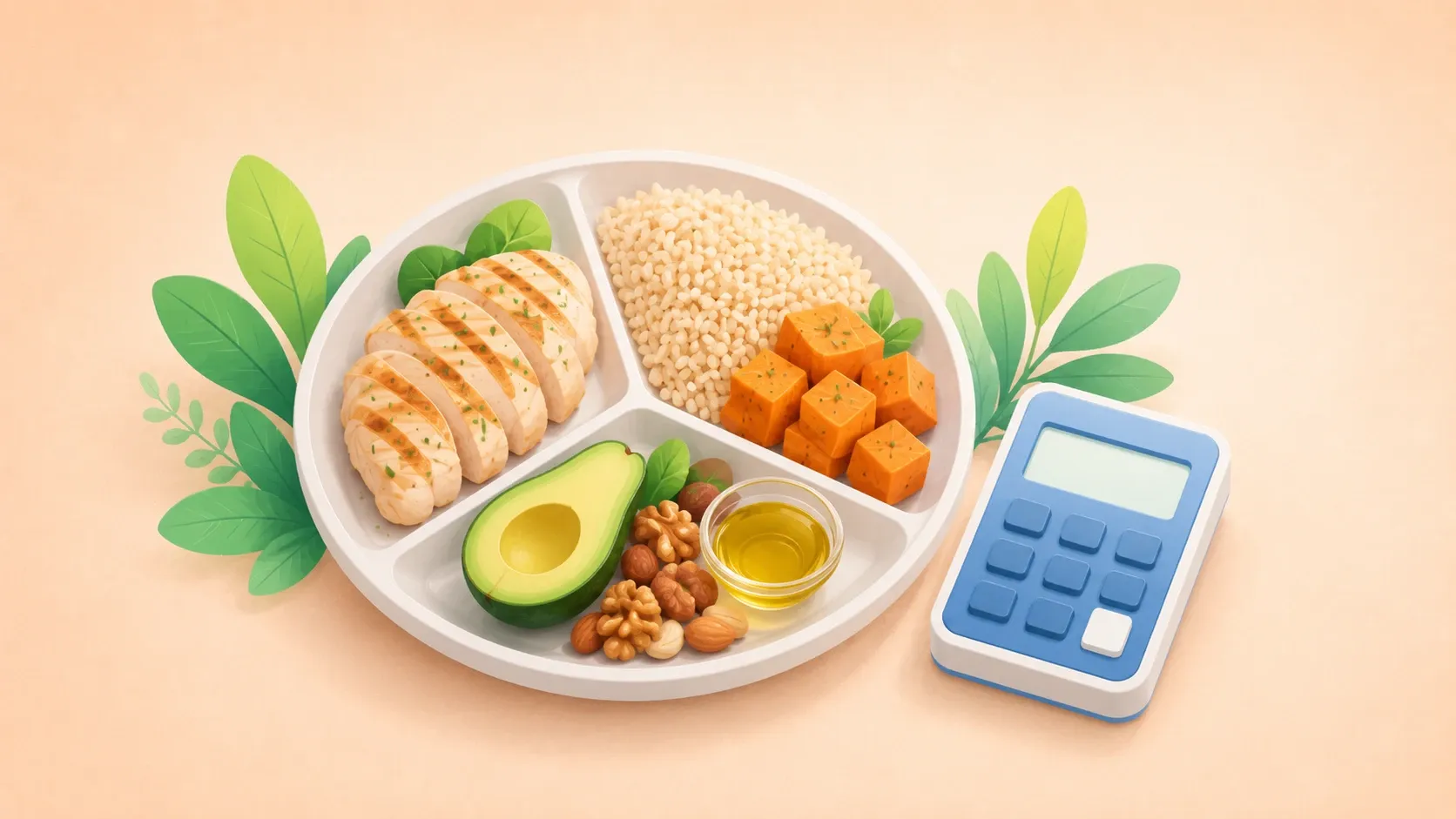
- Track it for a week or two. You do not have to count forever, but logging long enough to learn what your meals actually contain is eye-opening. The free CalcEat app lets you snap a photo of your plate to estimate protein and calories, scan barcodes, or log manually, which takes the guesswork out of seeing whether you are reaching your target.
If macro tracking is new to you, How to Count Macros walks through setting your numbers and following them without it taking over your life.
The bottom line
The RDA of 0.8 g/kg keeps you from falling short, but it is a floor. Most people who are active, losing weight, or building muscle do better in the range of about 1.2 to 2.2 grams per kilogram, with the sweet spot depending on the goal. Pick your row in the table, run the quick math on your body weight, spread it across the day in roughly 20-to-40-gram servings, and you will be eating protein like someone who knows exactly what they are doing. Start with your next meal; that is genuinely all it takes to begin.