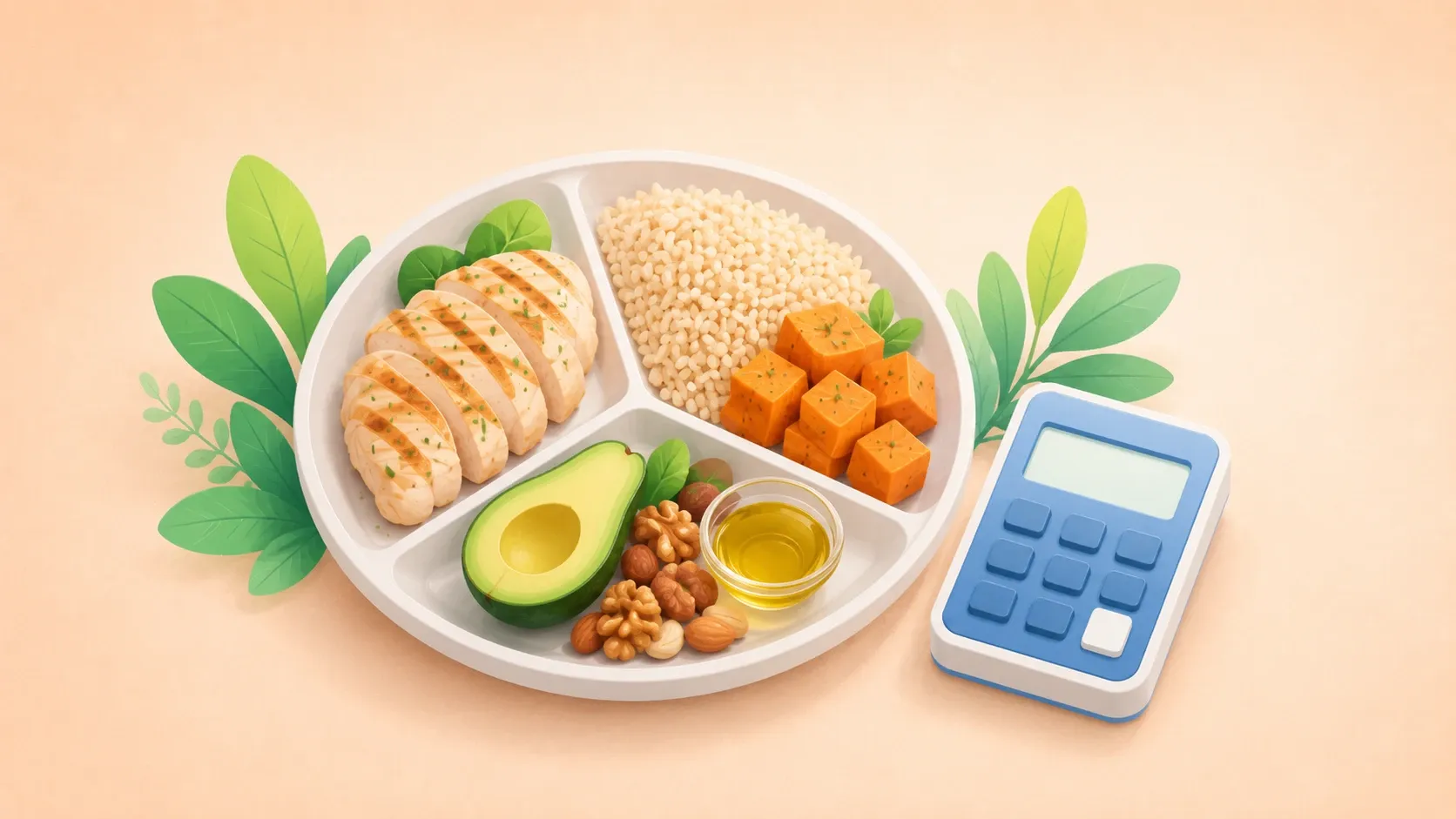

Counting macros means tracking the grams of protein, carbohydrate, and fat you eat, not just the total calories. It is one of the most popular ways to take real control of your nutrition, and the basic idea is simpler than it sounds. If you can count calories, you can count macros.
This guide explains what counting macros actually means, why so many people do it, and a clear four-step method to set your own targets, complete with a worked example. By the end you will know how to turn grams into calories and how to track it all without turning every meal into a math problem.
What “counting macros” actually means
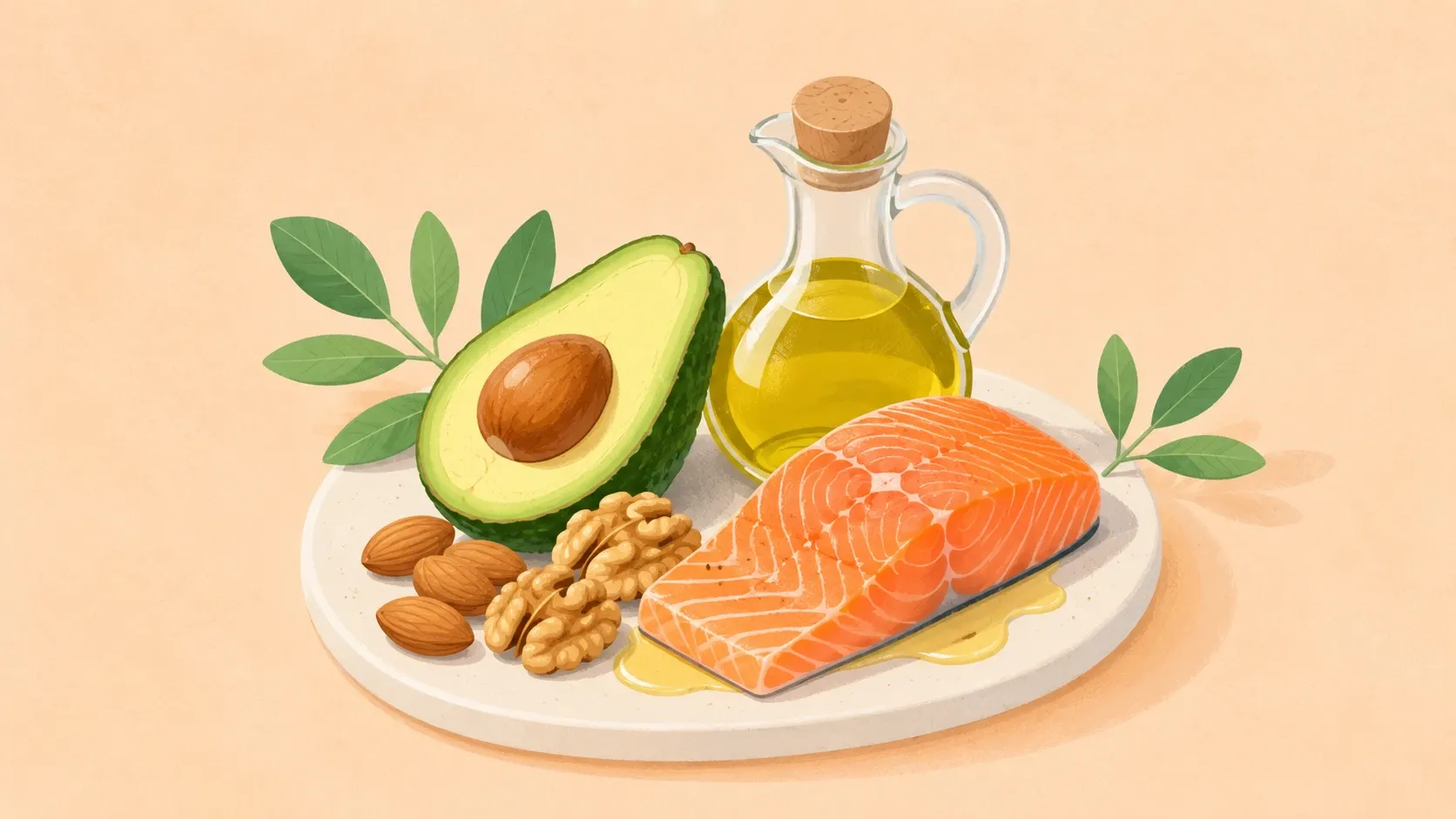
“Macros” is short for macronutrients, the three nutrients your body needs in large amounts: protein, carbohydrate, and fat. Almost everything you eat is some mix of these three, and together they supply all the calories in your food.
Counting macros means keeping track of how many grams of each you eat in a day, usually against a target. Instead of only asking “how many calories was that?”, you also ask “how much of it was protein, carbs, and fat?” That is the whole concept. For a fuller primer on the nutrients themselves, see What Are Macros?.
If you are brand new to this, it helps to know that macros and calories are not two separate things to track. They are two views of the same food, which is the key idea in the next section.
How counting macros differs from just counting calories
Counting calories tracks one number: the total energy you eat. Counting macros tracks that same energy and how it is split across the three macronutrients. In other words, when you count macros, you are tracking what your calories are made of.
This works because each macro carries a known amount of energy. According to the NIH, oxidation of one gram of dietary carbohydrate and one gram of dietary protein each yield approximately 4 calories, while one gram of dietary fat yields approximately 9 calories (NIH). Those numbers, often shortened to the “4-4-9 rule,” are the bridge between grams and calories. Add up the calories from your protein, carbs, and fat, and you get your total calorie intake.
Here is why the distinction matters. Two meals can have exactly the same calories but completely different macros. A breakfast of a plain bagel and a breakfast of eggs with a slice of toast might land at similar calorie totals, yet the egg breakfast delivers far more protein. That difference changes how full you feel, how steady your energy is, and how well you hold onto muscle, even though a pure calorie count would call them equal.
So counting macros is not a rival to counting calories. It is a more detailed version of it. You still keep an eye on the total, but you also steer the makeup of that total toward your goal.
Why people count macros
Tracking grams of protein, carbs, and fat takes a little more effort than tracking calories alone. People take it on because that extra detail buys real advantages.
- Protecting muscle. Getting enough protein is the single biggest reason people count macros, especially when losing weight. Adequate protein helps you keep lean muscle while the scale goes down, so more of the weight you lose is fat. The International Society of Sports Nutrition states that a daily protein intake in the range of 1.4 to 2.0 grams per kilogram of body weight is sufficient for most exercising individuals to build and maintain muscle (ISSN). Hitting a protein target is far easier when you are actually tracking it.
- Staying full and satisfied. Protein and fiber-rich carbs tend to be more filling than the same calories from refined carbs or fat alone. Setting a protein floor and being deliberate about your carbs helps you build a day of eating that keeps hunger in check on the same calorie budget.
- Flexibility, or “if it fits your macros.” Many beginners are first drawn to macro counting by the idea of “if it fits your macros,” sometimes shortened to IIFYM. The principle is that no single food is off-limits as long as it fits within your daily targets, so a square of chocolate or a slice of pizza can work if the grams still add up. That flexibility makes healthy eating feel sustainable instead of restrictive.
- Better feedback and awareness. Tracking macros simply teaches you what is in your food. After a couple of weeks, most people are surprised by how little protein they were eating, or by how quickly fat calories add up, and that awareness alone nudges their choices in a better direction.
How to count macros in 4 steps
Here is a straightforward method to set your own macro targets. The order matters: you anchor your total calories first, then build protein, fat, and carbs on top of it.
Step 1: Find your daily calories
Everything starts with a calorie target, because your macros have to add up to it. Your number depends on your body, your activity level, and your goal, whether that is losing fat, maintaining, or gaining.
If your goal is fat loss, our guide on how many calories you should eat to lose weight walks through the full calculation, including how to set a sensible deficit. Lock in this number before you touch the macros, since it is the budget everything else fits inside.
Step 2: Set protein first
Protein is the macro to decide first, because it does the most for muscle and fullness, and because it is the one people most often fall short on. A common, evidence-aligned approach for active people is to aim for somewhere around 1.4 to 2.0 grams of protein per kilogram of body weight, in line with the ISSN range above (ISSN). If you prefer pounds, that is roughly 0.6 to 0.9 grams per pound.
Whatever target you pick, it should sit inside the official Acceptable Macronutrient Distribution Range (AMDR) for protein, which the National Academies set at 10 to 35 percent of total calories for adults (Institute of Medicine). For help choosing your exact number, see How Much Protein Do You Need a Day?.
Step 3: Set your fat
With protein set, choose your fat target next. Fat is essential: your body needs it to absorb certain vitamins and to make hormones, so this is not a macro to drive into the ground.
A reasonable starting point is to set fat somewhere within its AMDR, which is 20 to 35 percent of total calories for adults (Institute of Medicine). Many people pick a point in the middle of that range and adjust from there based on how they feel and what they like to eat.
Step 4: Let carbs fill the remainder
Carbohydrate is the flexible macro, so it goes last. Once protein and fat are accounted for, whatever calories are left over become your carbs. Carbohydrate is your body’s main everyday fuel, especially for exercise, and its AMDR is 45 to 65 percent of total calories for adults (Institute of Medicine).
To find your carb grams, subtract your protein and fat calories from your total, then divide what remains by 4. The worked example below shows exactly how that math comes together.
A worked example: turning grams into calories
Let’s run the numbers for a sample day. Say you have settled on a daily target of 2,000 calories, and you weigh about 70 kilograms (roughly 154 pounds).
- Protein. You choose 1.6 grams per kilogram: 70 kg times 1.6 equals 112 grams of protein. At 4 calories per gram, that is 112 times 4, or 448 calories.
- Fat. You set fat at 30 percent of your 2,000 calories: 0.30 times 2,000 equals 600 calories. At 9 calories per gram, that is 600 divided by 9, or about 67 grams of fat.
- Carbohydrate. Add your protein and fat calories: 448 plus 600 equals 1,048 calories. Subtract that from 2,000 to get 952 calories left for carbs. At 4 calories per gram, that is 952 divided by 4, or about 238 grams of carbohydrate.
So your daily targets land at roughly 112 g protein, 67 g fat, and 238 g carbohydrate. As a quick gut check, multiply each back out: 112 x 4 is 448, 67 x 9 is 603, and 238 x 4 is 952. Added together that is about 2,003 calories, right on target. The few extra calories come from rounding the grams, which is completely normal and nothing to worry about.
These are starting targets, not sacred numbers. After a week or two, you can nudge them based on your results, your hunger, and your energy.
How to track your macros day to day
Setting targets is the planning part. Hitting them comes down to logging what you eat. You have a few options, and you can mix them.
Read the Nutrition Facts label
Packaged foods do a lot of the work for you. The FDA notes that the first thing to check on a Nutrition Facts label is the serving size, because every nutrient amount on the label, including protein, total carbohydrate, and total fat, applies to one serving, not the whole package (FDA). If you eat two servings, you double the grams. Grab the protein, carb, and fat numbers, adjust for how much you actually ate, and log them.
Weigh or estimate your portions
For foods without a label, like a chicken breast or a scoop of rice, you need a way to gauge the amount. A kitchen scale is the most accurate option, and it is especially worth using for calorie-dense foods like oils, nut butters, and cheese, where a small misjudgment can hide a lot of fat and calories.
That said, weighing every gram is optional. Measuring cups, your hand as a rough guide, or the estimates in a food database all work, particularly for lower-calorie foods like most vegetables. If you want a deeper look at eyeballing portions well, we cover it in how to count calories without weighing your food. Consistency beats precision, so use the method you will actually keep up with.
Use photo logging
The fastest option for many beginners is to skip the manual math. With a tool like CalcEat, you snap a photo of your plate and get an instant estimate of calories and all three macros. You can also scan a barcode for packaged items or log foods by hand. Photo logging trades a little precision for a lot less friction, which matters, because the best tracking method is the one you will still be using in a month.
Common beginner mistakes
A few predictable stumbles trip people up early. Knowing them in advance makes them easy to sidestep.
- Ignoring serving sizes. Logging “one serving” when you actually ate two is the most common error, and it quietly doubles the grams. Always check the serving size first, as the FDA advises (FDA).
- Forgetting the extras. Cooking oil, butter, dressings, sauces, and the splash of cream in your coffee are easy to overlook, yet they are mostly fat and add up fast. Log them too.
- Chasing perfect numbers. You do not need to hit your macros to the gram. Landing within five to ten grams of each target is plenty for real-world results, and stressing over the last few grams is a fast way to burn out.
- Treating protein as optional. Because carbs fill the remainder, it is tempting to let protein slide on a busy day. But protein is the macro doing the heavy lifting for muscle and fullness, so it is the one worth protecting.
- Letting “if it fits your macros” override food quality. Flexibility is a feature, but a day of candy that technically fits your macros will leave you short on fiber, vitamins, and minerals. Aim to build most of your intake from whole foods, then use the flexibility for the extras.
Do you even need to count macros?
Here is the honest part. Counting macros is a useful tool, not a rule everyone must follow. Plenty of people eat well and reach their goals without ever logging a gram.
If you are new to nutrition, you may get most of the benefit from two simple habits: eating enough protein and building your meals mostly from whole foods. Those alone tend to improve your diet a lot, no spreadsheet required. Macro counting earns its keep when you have a specific, more demanding goal, like gaining muscle, losing fat while staying full, or breaking through a plateau.
You also do not have to count forever. Many people track for a few weeks to learn what their food actually contains, then carry that knowledge forward and count only when they want to dial things in again. Used that way, macro counting is less a life sentence and more a skill you pick up once.
The bottom line
Counting macros simply means tracking the grams of protein, carbohydrate, and fat behind your calories, so you can steer not just how much you eat but what it is made of. The method is repeatable: find your calories, set protein first, then fat, and let carbs fill the rest, using 4, 4, and 9 calories per gram to move between grams and calories.
You do not need perfect numbers or a food scale to start. Pick a tracking method you can stick with, give it a couple of weeks, and let what you learn guide your adjustments. For more on protein, satiety, and building a plan that lasts, explore the Macros & Protein hub. You have got this.
This article is general information, not medical advice. If you have a health condition, are pregnant or breastfeeding, or are planning a major change to how you eat, talk with your doctor or a registered dietitian first.