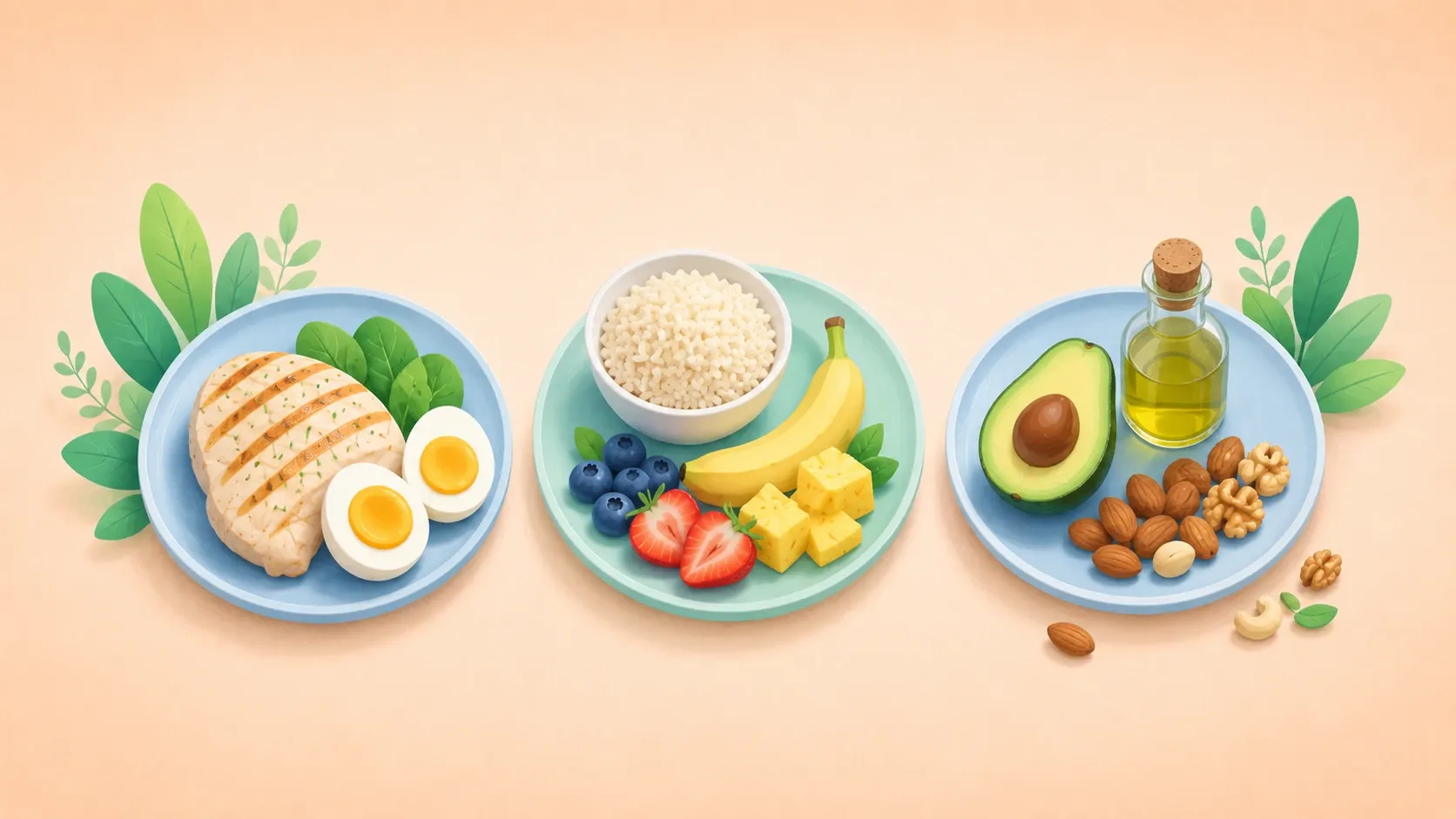

If you have ever heard someone talk about “hitting their macros” and quietly wondered what on earth they meant, you are in the right place. Macros are just protein, carbs, and fat, the three nutrients that make up every calorie you eat. Once you understand what each one does, the rest of nutrition starts to make a lot more sense.
What are macronutrients?
Macronutrients, or macros for short, are the nutrients your body needs in large amounts to function and to fuel itself. There are exactly three: protein, carbohydrate, and fat. Almost everything you eat is some combination of these, and together they supply all the energy, measured in calories, that keeps you alive and moving.
The word breaks down neatly. “Macro” means large, so macronutrients are the nutrients you need in big quantities, gram by gram, every day. That is what separates them from micronutrients.
Macronutrients vs. micronutrients
Micronutrients are vitamins and minerals, and the “micro” means small: you need them in tiny amounts, often just milligrams or micrograms a day. Think vitamin C, vitamin D, iron, calcium, and potassium. They are essential for health, but here is the key difference for our purposes.
Micronutrients do not give you any calories. Only the three macronutrients, plus alcohol, provide energy. So when you are looking at how much energy a food gives you, you are really looking at its macros. Vitamins and minerals matter enormously for staying healthy, but they are not where your calories come from.
How many calories are in each macro?
Every gram of a macronutrient carries a fixed amount of energy, and these numbers are the foundation of everything that follows. They come straight from how your body breaks each one down.
| Macronutrient | Calories per gram |
|---|---|
| Protein | 4 |
| Carbohydrate | 4 |
| Fat | 9 |
| Alcohol | 7 |
Protein and carbohydrate each deliver about 4 calories per gram. Fat is the most energy-dense, with about 9 calories per gram, more than twice as much as the same weight of protein or carbs (MedlinePlus). Alcohol is not a macronutrient your body needs, but it does supply energy, about 7 calories per gram, which is why drinks can add up quickly (NIAAA).
These per-gram values never change. A gram of protein in a chicken breast and a gram of protein in a lentil both give you 4 calories. That consistency is exactly what makes it possible to add up the calories in any meal, which we will do a little further down.
Protein
Protein is the body’s main building material. While we often link it to muscle, its job is much broader, and understanding that helps explain why it matters so much.
What protein does
Proteins are made of smaller units called amino acids, strung together in long chains, and your body uses them to build and maintain an enormous range of tissues (MedlinePlus Genetics). Muscle, skin, hair, and the structures inside your cells are all built from protein. But protein also does work you cannot see: enzymes that drive the chemical reactions of digestion and metabolism are proteins, antibodies that fight off viruses and bacteria are proteins, and many hormones that carry signals around your body are proteins too (MedlinePlus Genetics).
For anyone trying to manage their weight, protein has one more standout quality: it is the most filling of the three macros. A protein-rich meal tends to keep hunger away longer than the same calories from carbs or fat, which makes it a quiet ally when you are trying to eat a little less without feeling deprived.
Where to find protein
Animal foods like meat, poultry, fish, eggs, and dairy are rich, concentrated sources. Plant foods such as beans, lentils, soy, nuts, and some grains supply protein too (MedlinePlus). Animal proteins are “complete,” meaning they contain all the essential amino acids your body cannot make on its own, while most single plant foods are lower in one or two, so plant-focused eaters simply enjoy a variety across the day to cover everything.
If you want the full picture on targets and the best sources, see our guide to how much protein you need a day.
Carbohydrates
Carbohydrates have a bad reputation in some corners of the internet, and it is largely undeserved. Carbs are your body’s main and most readily available source of energy.
What carbs do
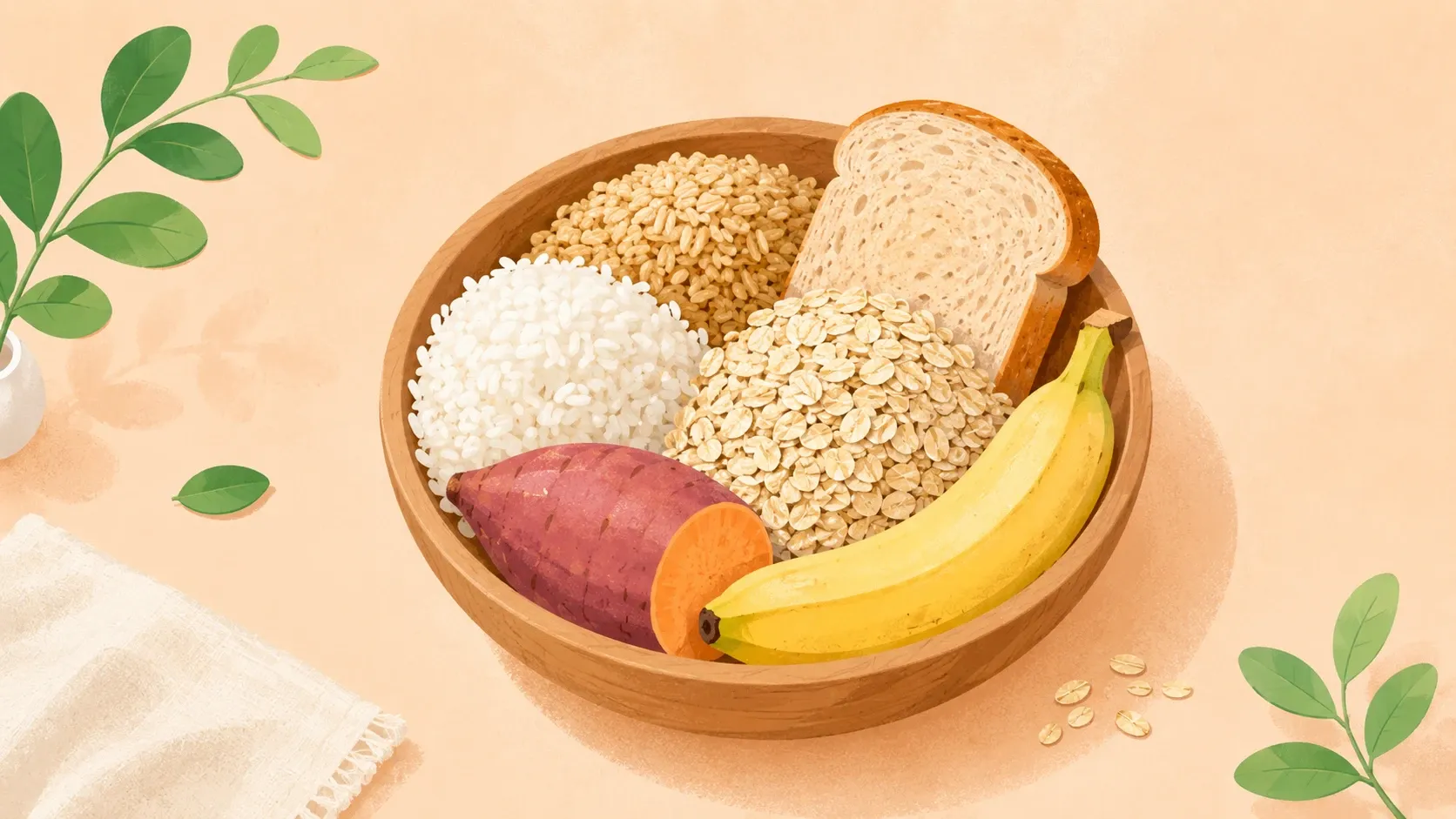
When you eat carbohydrates, your body breaks most of them down into glucose, a simple sugar that circulates in your blood and fuels your cells, tissues, and organs (MedlinePlus). Glucose is the preferred quick fuel for your brain and your muscles, especially during harder activity. Any glucose you do not use right away gets stored in your liver and muscles for later, which is why carbs are so closely tied to energy and performance.
Fiber vs. sugar
Not all carbs behave the same way, and this is where quality comes in. Carbohydrates come in three forms: sugars, starches, and fiber (MedlinePlus).
- Fiber is a type of carbohydrate your body cannot fully break down. Because it passes through largely intact, it helps you feel full, supports healthy digestion, and is found in vegetables, fruit, beans, nuts, seeds, and whole grains (MedlinePlus).
- Sugars are the simplest carbs. They occur naturally in fruit and milk, but they are also added to candy, soft drinks, and many processed foods, where they pile on calories with little else.
This is the real distinction worth caring about, far more than “carbs” as a blanket category. Fiber-rich, less-processed carbs like oats, beans, fruit, and whole grains come bundled with nutrients and fullness, while lots of added sugar gives you energy and not much more.
Carbs are not the enemy
It is worth saying plainly: carbohydrate is an essential, useful nutrient, not something to fear. You can absolutely lose weight while eating carbs, because weight change is driven by your total calories, not by any single macro. The smarter move than cutting carbs entirely is choosing more of the fiber-rich kind and being mindful of added sugar.
Fat
Fat may be the most misunderstood macro of all. For years it was blamed for everything, but your body genuinely needs fat to function, and several of its jobs cannot be done by anything else.
What fat does
Fat is a concentrated source of energy, and it plays roles that go well beyond fuel. Your body needs fat to absorb the fat-soluble vitamins A, D, E, and K, to keep your skin and hair healthy, and to supply essential fatty acids it cannot make itself (MedlinePlus). Fat is also a building block for cell membranes and is involved in making certain hormones. In other words, cut fat too low and you compromise things that have nothing to do with weight.
Unsaturated vs. saturated fat
As with carbs, the type of fat matters more than the word “fat” itself.
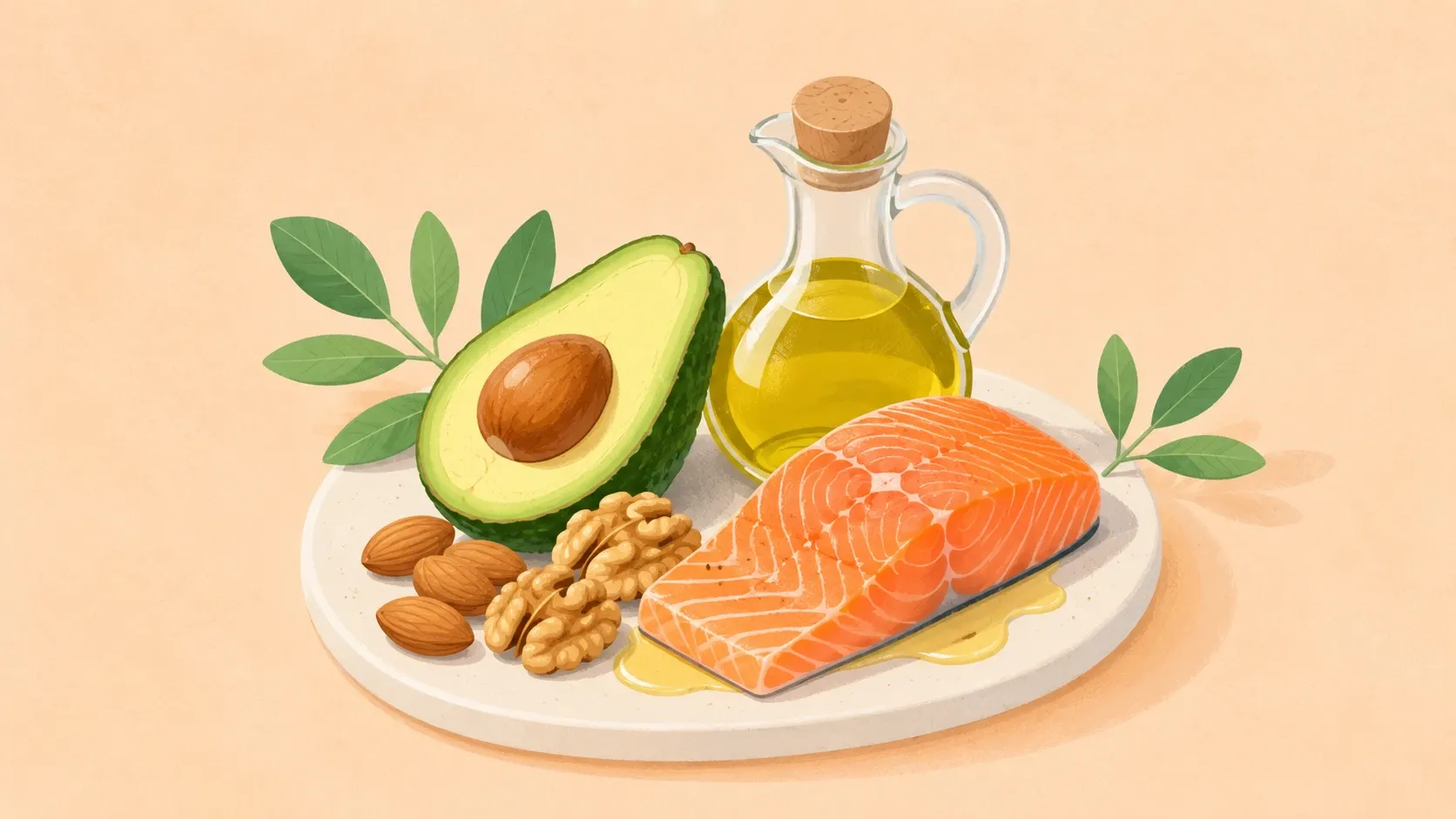
- Unsaturated fats are usually liquid at room temperature and come mainly from plants, such as olive oil, canola oil, nuts, seeds, and avocados, as well as fatty fish. These are the fats to favor; they can help lower LDL, the so-called “bad” cholesterol (MedlinePlus).
- Saturated fats are typically solid at room temperature and come mostly from animal products and some tropical oils. Health guidance recommends keeping these more limited, because they can raise LDL cholesterol (MedlinePlus).
Fat is not the enemy either
The takeaway mirrors the one for carbs. Fat is essential, so the goal is not to avoid it but to lean toward unsaturated sources while keeping saturated fat more modest. And because fat carries 9 calories per gram, a little awareness of portions, especially with oils, nuts, and dressings, goes a long way when you are watching calories.
How macros add up to your calories
Here is where it all clicks together. Because each macro has a fixed calorie value, the macros in a food are not separate from its calories; they are what its calories are made of.
Take a meal with 30 grams of protein, 45 grams of carbohydrate, and 15 grams of fat. Multiply each by its calories per gram:
- Protein: 30 g x 4 = 120 calories
- Carbohydrate: 45 g x 4 = 180 calories
- Fat: 15 g x 9 = 135 calories
Add those up and the meal is about 435 calories. That is the entire relationship in one example: your calories come from your macros, and your macros are just your calories broken down into what kind of fuel they are. Counting macros simply means tracking that breakdown rather than the single total, so you can see whether you are getting enough protein, plenty of fiber, and a sensible amount of fat, not just hitting a calorie number.
A free tool like CalcEat does this math for you: snap a photo of your plate and it estimates the calories and the protein, carbs, and fat, so you can watch the numbers add up without doing arithmetic at every meal.
What does a reasonable macro split look like?
A natural next question is how much of each macro you should aim for. The honest answer is that there is no single perfect split, and anyone who promises one is overselling it.
National guidance reflects this by giving ranges, not a single rule. The National Academies set Acceptable Macronutrient Distribution Ranges (AMDR) for adults at 45 to 65 percent of daily calories from carbohydrate, 20 to 35 percent from fat, and 10 to 35 percent from protein (Institute of Medicine). Any combination inside those ranges can support a healthy diet, which is a reassuring amount of room.
Within that space, a common, balanced starting point looks something like 30 percent protein, 40 percent carbohydrate, and 30 percent fat. From there, people adjust to fit their goals and tastes. Someone focused on building or keeping muscle while losing fat often nudges protein toward the higher end, while someone who is very active may want more carbohydrate to fuel training. The “best” split is largely the one that keeps you satisfied, supports your goal, and is genuinely easy to stick with day after day.
The one part most experts agree is worth prioritizing is getting enough protein, since it protects muscle and keeps you full. Beyond that, the exact balance of carbs and fat is more about personal preference than any magic ratio.
Putting it all together
So, what are macros? They are protein, carbs, and fat, the three nutrients that make up every calorie you eat. Protein builds and repairs and keeps you full, carbohydrate is your body’s main quick energy, and fat powers essential jobs from hormones to vitamin absorption. None of them is the enemy, and you need all three.
Once these basics feel familiar, the natural next step is learning to set your own targets and track them in a way that fits your life. Our guide on how to count macros walks you through exactly that, step by step, and you can always return to the Macros & Protein hub for more. Understanding your macros is one of the most empowering things you can do for your nutrition, and you have just taken the first step.