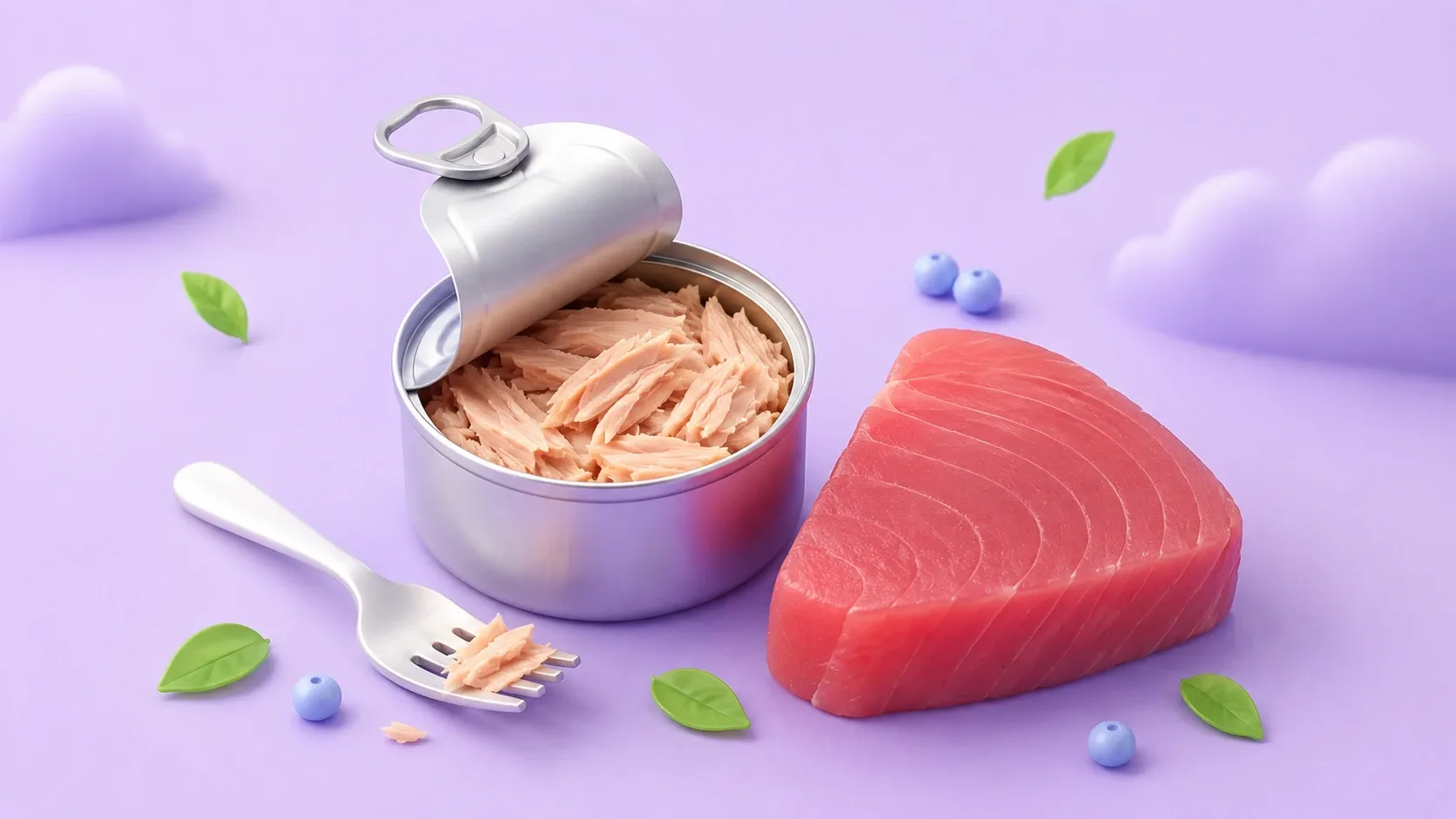

Light tuna canned in water, drained, has about 86 calories per 100 grams, along with roughly 19 grams of protein and almost no fat, according to USDA FoodData Central. Pack that same tuna in oil and the drained meat climbs to about 198 calories per 100 grams, while fresh cooked yellowfin lands near 131 calories with about 29 grams of protein. Tuna is one of the leanest, most protein-dense foods people log, and the single biggest lever on its calorie count is not the fish at all; it is what the can is packed in and what you stir in afterward.
The quick answer: calories in tuna
Plain canned tuna in water is one of the lowest-calorie protein sources you can buy, at about 86 calories per 100 grams drained. Because tuna is essentially pure protein with no carbohydrate and very little fat, the calories track closely with two things: whether it is packed in water or oil, and any high-fat add-ons like mayonnaise.
Here is how the macros break down per 100 grams, drained, using USDA values:
- Light tuna, canned in water: about 86 kcal, 19 g protein, 1 g fat, 0 g carbohydrate
- Light tuna, canned in oil: about 198 kcal, 29 g protein, 8 g fat, 0 g carbohydrate
- Fresh yellowfin tuna, cooked: about 131 kcal, 29 g protein, 0.6 g fat, 0 g carbohydrate
With no carbohydrate and almost no fat in the water-packed version, canned tuna is about as close to a pure protein food as the grocery store offers. That puts it comfortably among the high-protein foods worth building a meal around, which is exactly why it shows up so often in our Food and Calorie Guides hub.
Calories by serving size
“A serving of tuna” is not a fixed amount, so the calories swing with the can or pouch size and how much you scoop. The table below applies the USDA per-100-gram value for drained light tuna in water (86 calories, 19 g protein) to common servings.
| Serving | Calories | Protein | Fat |
|---|---|---|---|
| 1 oz (28 g) | about 24 | 5 g | 0.3 g |
| 2.6 oz pouch (74 g) | about 64 | 14 g | 0.7 g |
| 3 oz (85 g), standard serving | about 73 | 17 g | 0.8 g |
| 100 g drained | about 86 | 19 g | 1 g |
| 5 oz can (142 g, drained) | about 122 | 28 g | 1.4 g |
The takeaway: even a whole drained can of water-packed tuna stays around 120 calories while delivering close to 28 grams of protein. That is an exceptional protein-to-calorie ratio. A drained “can” of tuna can mean anywhere from about 65 calories for a small pouch to roughly 145 for a larger 6 oz (170 g) can, so check the net weight on the label when you are tracking closely.
Water versus oil: why the numbers differ so much
This is where canned tuna trips people up. The exact same fish can carry less than half or more than double the calories depending on the packing liquid, and draining does not erase the difference. Tuna in oil absorbs some of that oil into the meat, so even well-drained oil-packed tuna stays far higher in calories and fat. The table below compares 100 grams of each, drained, using USDA values.
| Per 100 g drained | Light, in water | Light, in oil |
|---|---|---|
| Calories | about 86 | about 198 |
| Protein | about 19 g | about 29 g |
| Fat | about 1 g | about 8 g |
| Carbohydrate | 0 g | 0 g |
A few practical points fall out of this:
- The calorie gap is huge and it comes from fat. Oil-packed tuna carries roughly 7 extra grams of fat per 100 grams, which is most of the extra 112 calories. If calories are your priority, water-packed is the obvious pick.
- Draining matters more for oil. Pressing the lid to drain oil-packed tuna removes free oil, but the meat keeps what it absorbed. The protein per gram looks higher on oil-packed tuna partly because draining concentrates the solids.
- Both are excellent protein. Whichever you choose, a drained can delivers a large dose of complete protein. Oil simply adds calories without adding more of what makes tuna valuable.
Canned versus fresh tuna
Fresh tuna and canned tuna are nutritionally close once you account for the packing liquid, because both are lean fish. Fresh yellowfin tuna, cooked with dry heat, is about 131 calories per 100 grams with roughly 29 grams of protein and well under a gram of fat, according to USDA data. That is leaner than oil-packed canned tuna and only modestly higher in calories than water-packed, mostly because cooking concentrates the meat.
A few things to keep in mind when comparing the two:
- Fresh tuna is a lean steak, not a fatty fish. Unlike salmon, which carries a lot of heart-healthy fat, common tuna like yellowfin is very low in fat. It is prized for lean protein rather than for omega-3 density, though it still contributes some.
- Preparation changes the total. A seared tuna steak stays near 131 calories per 100 grams only if you cook it with little or no added fat. A tablespoon of oil in the pan adds about 120 calories, and rich sauces or a sweet glaze add more.
- Canned is the convenient, budget protein. For everyday high-protein meals, a drained can of water-packed tuna gives you nearly the same lean protein as a fresh steak for a fraction of the cost and effort.
What actually drives the calories in a tuna meal
The fish itself stays low; the calories that creep into tuna dishes almost always come from what you mix in. A classic tuna salad can swing from lean to indulgent depending on a single ingredient. The table below shows how a drained 5 oz can of water-packed tuna (about 120 calories on its own) changes with common add-ons.
| Preparation | What changes | Approx. calories |
|---|---|---|
| Drained, water-packed, plain | Nothing added | about 120 |
| With 1 tbsp regular mayonnaise | about 1 tbsp mayo (90 kcal) | about 210 |
| With 2 tbsp regular mayonnaise | about 2 tbsp mayo (180 kcal) | about 300 |
| Oil-packed instead of water, drained | absorbed oil in the meat | about 280 |
A few practical points:
- Mayonnaise is usually the biggest variable. A heaping spoon of full-fat mayo can add more calories than the tuna itself. Swapping in light mayo, Greek yogurt, or mustard keeps a tuna salad lean.
- Choose the pack liquid deliberately. Picking water-packed over oil-packed saves roughly 100 to 160 calories per can before you add anything else.
- Log the extras separately. A tracking app like CalcEat lets you record the tuna and the mayo, oil, or dressing as separate items so the math stays honest, and the calorie calculator gives you a personalized daily target to fit them into.
How tuna fits weight loss and protein goals
Tuna, especially the water-packed kind, is one of the most efficient protein sources for anyone cutting calories or chasing a protein target. Two things make it stand out, and one is worth a note of caution.
It is exceptionally protein-dense for the calories. A drained can of water-packed tuna delivers close to 28 grams of complete protein for around 120 calories, which is filling and helps protect muscle in a calorie deficit. If you are working out your daily target, our guide on how much protein you need per day walks through the numbers, and for very lean alternatives a skinless chicken breast plays a similar role.
It is shelf-stable and easy to portion. A can or pouch is a ready-made protein serving with a label that tells you exactly what you are getting. That makes tuna one of the simplest foods to budget into your macros without any cooking.
Mind the sodium and the mercury guidance. Canned tuna can be high in sodium, so low-sodium versions or a rinse help if that matters to you; our sodium guide compares regular and no-salt-added tuna. Tuna also carries more mercury than many fish, so health authorities suggest limiting how much you eat per week, particularly for people who are pregnant. The FDA places light canned tuna among its “best choices” with albacore and yellowfin eaten less often, and recommends a couple of servings of fish per week overall.
The bottom line
Light tuna canned in water is about 86 calories and 19 grams of protein per 100 grams, so a drained can stays near 120 calories while giving you close to 28 grams of protein. Pack that same tuna in oil and the drained meat roughly doubles to about 198 calories per 100 grams from the absorbed oil, while fresh cooked yellowfin sits in between at about 131 calories with around 29 grams of protein. Across all three, the fish is nearly pure lean protein with no carbohydrate.
Keep it simple: choose water-packed over oil to halve the calories, go easy on the mayonnaise, and weigh or read the net drained weight when you log it. Track the tuna and its add-ons separately, watch the sodium and weekly servings, and tuna will be one of the leanest, most reliable protein sources in your rotation.
This article is general information, not medical or dietary advice for your specific situation.