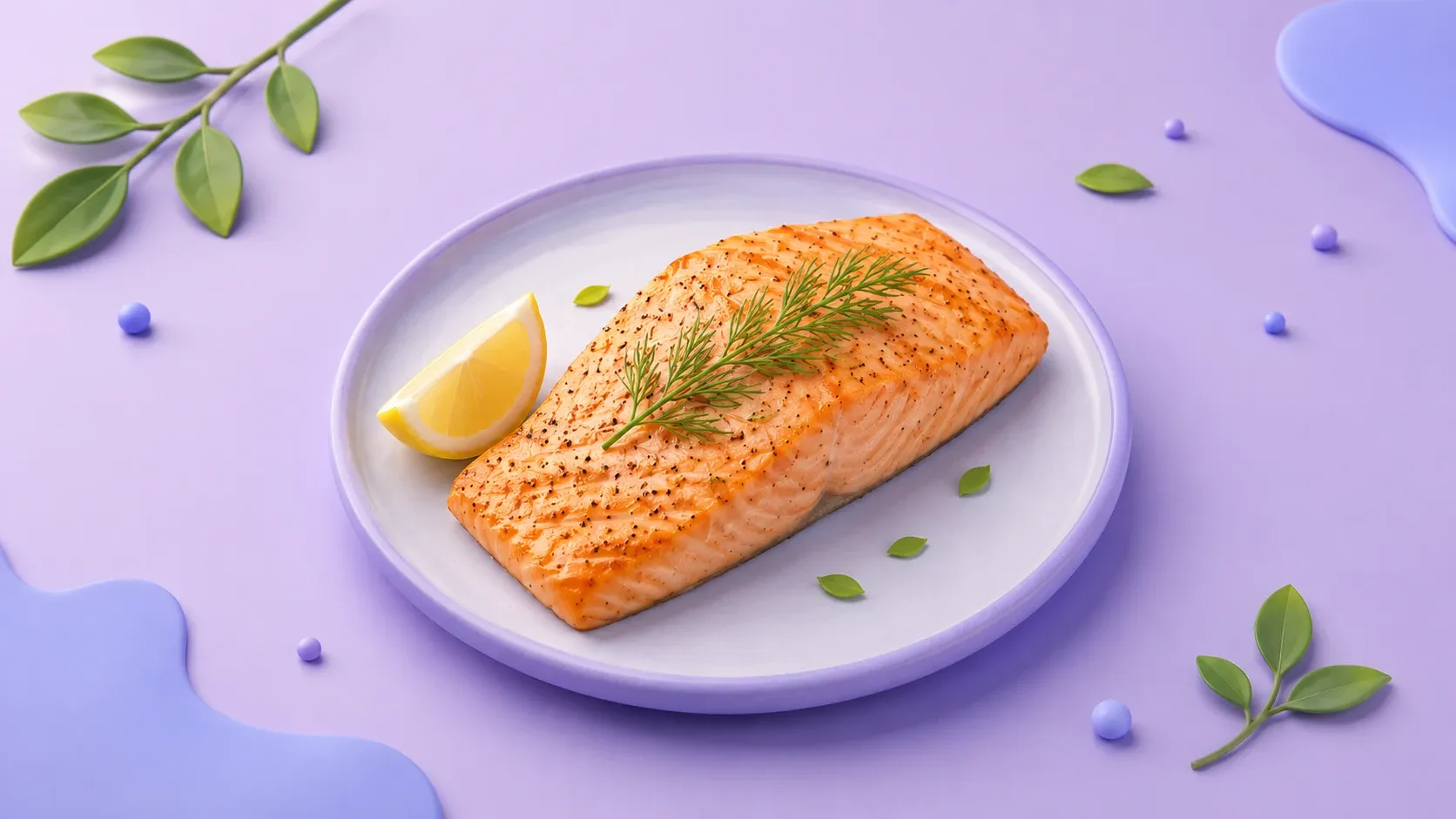
Cooked farmed Atlantic salmon has about 206 calories per 100 grams, along with roughly 22 grams of protein and 12 grams of fat, according to USDA FoodData Central. Wild Atlantic salmon is leaner, at about 182 calories, 26 grams of protein, and 8 grams of fat per 100 grams. Unlike a very lean meat, much of the fat in salmon is heart-healthy omega-3, which is exactly why it earns a spot in so many healthy-eating plans even though it carries more calories than skinless poultry.
The quick answer: calories in salmon
A plain salmon fillet that is baked, grilled, broiled, or poached with no added fat lands between about 180 and 210 calories per 100 grams cooked, depending on whether it is wild or farmed. The big variables are the type of salmon and the size of the piece, plus anything you cook it in.
Here is how the macros break down for 100 grams of cooked Atlantic salmon:
- Farmed: about 206 kcal, 22 g protein, 12 g fat, 0 g carbohydrate
- Wild: about 182 kcal, 26 g protein, 8 g fat, 0 g carbohydrate
There is no carbohydrate in plain salmon, so the calories come from protein and fat alone. The protein is complete, meaning it contains all nine essential amino acids, which puts salmon comfortably among the high-protein foods worth building a meal around, with the bonus of omega-3 fats that lean meats do not provide.
Calories by serving size
“A piece of salmon” is not a fixed amount, so the calories swing with portion size. The table below applies the USDA per-100-gram value for cooked farmed Atlantic salmon (206 calories, 22 g protein, 12 g fat) to common servings.
| Serving | Calories | Protein | Fat |
|---|---|---|---|
| 1 oz (28 g) | about 58 | 6 g | 3.4 g |
| 3 oz (85 g), standard serving | about 175 | 19 g | 10.5 g |
| 100 g | about 206 | 22 g | 12 g |
| Small fillet (4 oz / 113 g) | about 233 | 25 g | 14 g |
| Medium fillet (6 oz / 170 g) | about 350 | 38 g | 21 g |
The takeaway: a generous 6 oz fillet of farmed salmon carries roughly twice the calories and protein of a standard 3 oz serving. If you are tracking carefully, weighing the cooked fish beats eyeballing it, because a “fillet” can mean anywhere from about 175 to 350 calories. For more reference numbers like these, our Food and Calorie Guides hub keeps them in one place.
Farmed versus wild: why the numbers differ
Both farmed and wild salmon are excellent, but they are not identical on the label. Farmed Atlantic salmon is fattier, which makes it slightly higher in calories, while wild salmon is leaner and a touch higher in protein per gram. The table below compares 100 grams of each, cooked, using USDA values.
| Per 100 g cooked | Farmed Atlantic | Wild Atlantic |
|---|---|---|
| Calories | about 206 | about 182 |
| Protein | about 22 g | about 26 g |
| Fat | about 12 g | about 8 g |
| Omega-3 (EPA + DHA) | about 2 g | about 2 g |
A few practical points fall out of this:
- The calorie gap is real but modest. Farmed salmon runs about 24 calories higher per 100 grams. Over a 6 oz fillet that is roughly 40 extra calories, not a deal-breaker.
- Both are omega-3 powerhouses. A single 100-gram serving of either delivers close to 2 grams of combined EPA and DHA, the long-chain omega-3 fats linked to heart health.
- Wild edges ahead on protein per calorie. If you are chasing a protein target on a tight budget, wild salmon gives a little more protein for fewer calories, while farmed gives a bit more of the healthy fat.
Why the fat in salmon is a feature, not a flaw
Salmon has more fat than a skinless chicken breast, and that is the point. Most of that fat is unsaturated, including the long-chain omega-3 fatty acids EPA and DHA that the body uses for heart, brain, and cell health. A 100-gram cooked serving supplies roughly 2 grams of EPA plus DHA, far more than most foods provide in a day.
Health authorities lean into this. The Harvard T.H. Chan School of Public Health links eating one to two servings of fatty fish such as salmon per week to a lower risk of dying from heart disease, and the FDA lists salmon among its “best choices,” recommending two to three servings of lower-mercury fish each week. So while salmon is more calorie-dense than lean poultry, the calories buy a nutrient profile that lean meats cannot match.
Calories by cooking method and add-ons
The fish itself stays around 180 to 210 calories per 100 grams. What changes the total on your plate is the fat you cook it in and the sauces you add. The table below shows how that plays out for a 3 oz (85 g) serving of farmed salmon.
| Preparation | What changes | Approx. calories (3 oz serving) |
|---|---|---|
| Baked, grilled, broiled, or poached | Nothing added | about 175 |
| Pan-seared in 1 tbsp oil | about 1 tbsp oil (120 kcal) | about 295 |
| Brushed with butter | about 1 tbsp butter | about 275 |
| Glazed with teriyaki or honey | added sugar in the glaze | about 225 to 325 |
A few practical points:
- Dry-cooked is the leanest option. Baking, grilling, broiling, poaching, and air-frying add essentially nothing, so the salmon stays near its baseline.
- The oil and the glaze are the variables, not the fish. Measuring cooking oil with a spoon instead of free-pouring, and going easy on sweet sauces, is where the easy savings are.
- Log the extras separately. A tracking app like CalcEat lets you record the salmon and the oil or sauce as separate items so the math stays honest.
How salmon fits weight loss and protein goals
Salmon is a strong choice when you are cutting calories or building muscle, with one caveat: it is more calorie-dense than a lean meat, so portion size matters more.
It is filling and protein-rich. Around 19 to 22 grams of protein in a 3 oz serving helps with appetite control and protects muscle in a calorie deficit. If you are working out your daily target, our guide on how much protein you need per day walks through the numbers.
The fat works for you, within your budget. Unlike empty calories, the fat in salmon brings omega-3s, so it earns its place on the plate. Just account for it: a 6 oz fillet is about 350 calories before any oil, so fit the portion to your daily total rather than treating it as a free food.
It is flexible and meal-prep friendly. Bake or grill a batch, portion it, and you have a high-protein, omega-3-rich option ready for the week. Build flavor with lemon, herbs, garlic, and spices instead of heavy oils or sugary glazes to keep the calories near the baseline.
For days when calories are tight, a skinless chicken breast gives more protein for fewer calories, while salmon brings the healthy fats. Rotating both is a sensible way to cover your bases.
The bottom line
Cooked farmed Atlantic salmon is about 206 calories, 22 grams of protein, and 12 grams of fat per 100 grams, while wild Atlantic salmon is leaner at about 182 calories, 26 grams of protein, and 8 grams of fat. Either way, much of that fat is heart-healthy omega-3, which is what sets salmon apart from a plain lean protein. The fish stays near its baseline whether you bake, grill, broil, or poach it; the calories that creep in come from added oil and sweet glazes.
Keep it simple: weigh the cooked portion, go easy on the cooking fat and sugary sauces when calories matter, and lean on salmon for high-quality protein plus omega-3s. Pick wild for a touch fewer calories or farmed for a bit more healthy fat, track the extras, and stay consistent.
This article is general information, not medical or dietary advice for your specific situation.