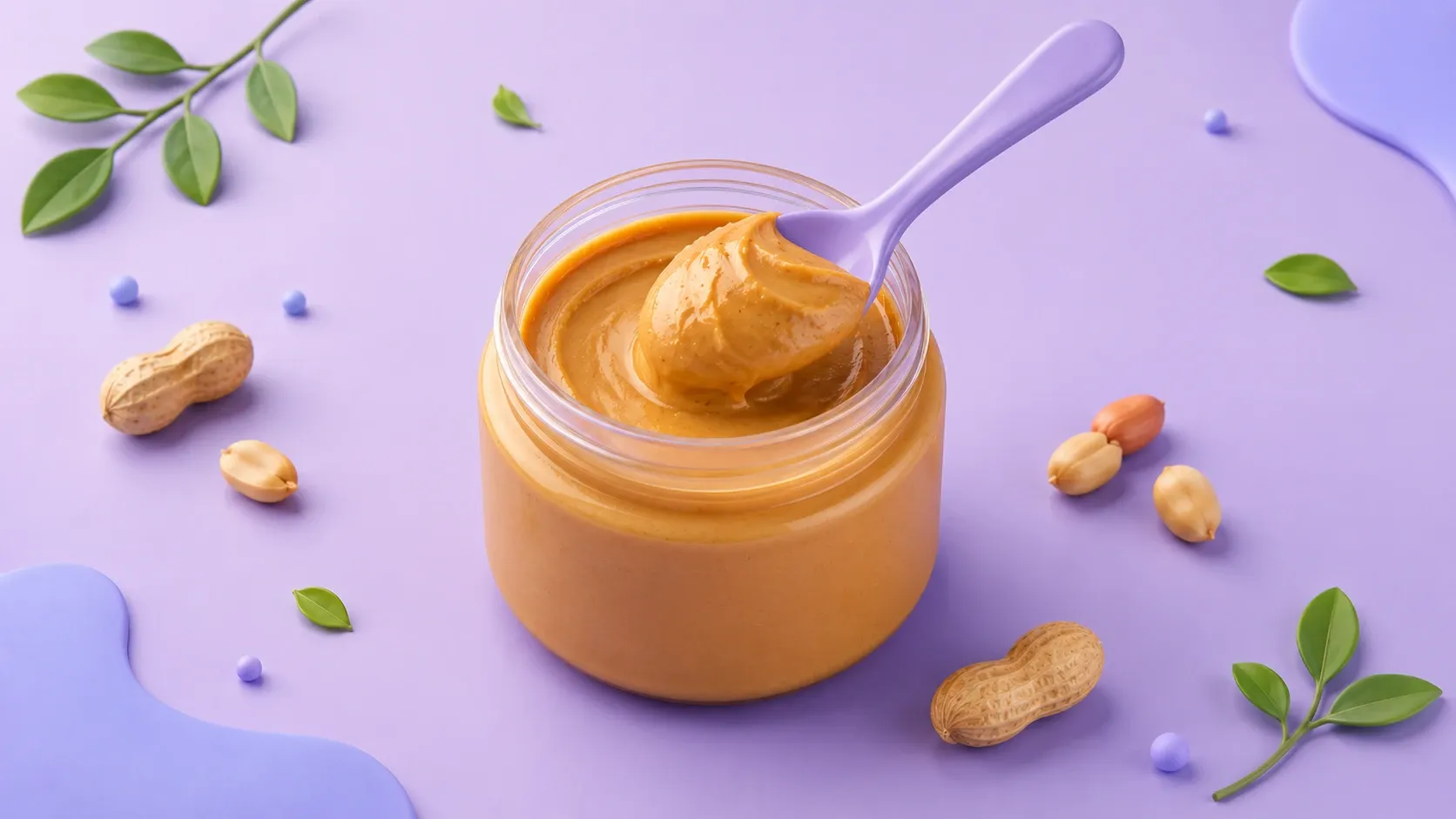

Peanut butter has about 94 calories per tablespoon and around 188 calories in a standard 2 tablespoon serving, along with roughly 7 grams of protein and 16 grams of fat in that serving, according to USDA FoodData Central. It is a genuinely nutritious food, rich in protein, fiber, and mostly unsaturated fat. The trouble is that it is also one of the most calorie-dense things in your kitchen, and the number on your plate depends almost entirely on how heavy your spoon is.
The quick answer: calories in peanut butter
A level tablespoon of peanut butter is about 94 calories. The serving size on most jars is 2 tablespoons, which comes to roughly 188 calories. Because peanut butter is so concentrated, those calories add up fast, and a heaping spoon can quietly turn one serving into nearly two.
Here is how the macros break down for a standard 2 tablespoon serving (about 32 grams):
- Calories: about 188 kcal
- Protein: about 7 g
- Fat: about 16 g
- Carbohydrate: about 7 g
- Fiber: about 2 g
Most of those calories come from fat, which is why two small spoonfuls carry as much energy as two slices of bread. The fat is mostly mono- and polyunsaturated, the kind linked to better heart health, so peanut butter is far from an empty-calorie food. It just needs to be measured rather than free-poured.
Calories by serving size
“A spoon of peanut butter” is one of the easiest portions in the world to underestimate, because it spreads, it sticks, and it rarely lands as a clean, level tablespoon. The table below applies the USDA per-100-gram value for smooth peanut butter (588 calories, 22 g protein, 50 g fat) to the amounts people actually eat.
| Serving | Calories | Protein | Fat |
|---|---|---|---|
| 1 tbsp (16 g) | about 94 | 3.5 g | 8 g |
| 2 tbsp (32 g), standard serving | about 188 | 7 g | 16 g |
| 100 g | about 588 | 22 g | 50 g |
The takeaway: the per-tablespoon number is small, but it climbs quickly, and 100 grams of peanut butter, which is only about six tablespoons, packs nearly 600 calories. If you tend to eat it straight from the jar, that is worth keeping in mind. For more reference numbers like these, our Food and Calorie Guides hub keeps them in one place.
Why peanut butter is so easy to over-pour
Peanut butter is energy dense, meaning it carries a lot of calories in a small volume. That is exactly what makes it satisfying, and exactly what makes it easy to overdo. A “tablespoon” scooped by eye is often a tablespoon and a half or more, and the difference between a measured serving and a generous one can be 50 to 100 calories every time.
A few habits keep the portion honest:
- Measure it, at least at first. Use an actual measuring spoon or, better, a food scale, until you know what a real tablespoon looks like. Sixteen grams is the reference weight.
- Level the spoon, do not heap it. A heaping tablespoon can hold close to two level ones.
- Watch the “spread.” The amount that disappears into a sandwich or a stalk of celery is usually more than it feels like.
If you are tracking, weighing peanut butter in grams is the single most accurate way to log it, because the volume is so hard to eyeball. A tracking app like CalcEat lets you log it by weight so the math stays honest.
Protein, fiber, and healthy fats
Peanut butter earns its place in a balanced diet. A 2 tablespoon serving gives you about 7 grams of plant protein and 2 grams of fiber, along with vitamin E, magnesium, and B vitamins. Most of its fat is unsaturated, the type that helps lower LDL cholesterol when it replaces saturated fat in the diet. Research from the Harvard T.H. Chan School of Public Health links regular nut and peanut intake to a lower risk of heart disease, and the Dietary Guidelines for Americans count nuts and seeds among recommended protein foods.
That said, peanut butter is not a high-protein-per-calorie food the way lean meat is. Its protein comes wrapped in a lot of fat, so it works best as part of a meal rather than your main protein source. If hitting a protein target is the goal, peanut butter is a supporting player, and our roundup of high-protein foods covers the staples that do the heavy lifting.
Natural vs regular, and the powdered swap
People often assume “natural” peanut butter is lighter. It is not, at least not in calories. Natural and regular peanut butter both sit around 90 to 100 calories per tablespoon, because the calories come from the peanuts, not from the small amount of added sugar, salt, or stabilizer. Natural versions have a shorter ingredient list and skip the added oils, which is a fair reason to prefer them, but for calorie purposes you should treat the two the same.
If you genuinely want fewer calories, powdered peanut butter is the real swap. Brands like PB2 press most of the oil out of the roasted peanuts, leaving a powder you mix with water. A 2 tablespoon serving of the powder runs about 60 calories with roughly 1.5 grams of fat, versus about 188 calories and 16 grams of fat for the same amount of regular peanut butter. You lose some of the creamy richness, but it shines in smoothies, oatmeal, yogurt, and sauces where texture matters less. It is one of the simplest healthy food swaps for anyone who eats peanut butter every day and wants to trim the calories.
How peanut butter fits a calorie budget
Peanut butter can absolutely fit a weight-loss plan; it just needs a defined portion. Here is how to make it work.
Decide the amount before you scoop. One tablespoon (about 94 calories) is a reasonable everyday portion that adds flavor and staying power without dominating your budget. Two tablespoons (about 188 calories) is satisfying but is a real chunk of a day’s calories, so plan for it.
Use it where it earns its keep. Peanut butter shines as a filling addition to oats, fruit, or whole-grain toast, where its fat and fiber slow digestion and keep you full. That satiety is its biggest advantage on a calorie deficit.
Reach for the powder when you need volume. If you love the flavor but the calories are crowding your day, powdered peanut butter lets you keep the taste for a fraction of the energy.
A few simple ways to keep peanut butter working for your goals:
- Weigh it in grams. The volume is too easy to misjudge, and grams remove the guesswork.
- Pre-portion it. Scooping a measured tablespoon into a bowl beats eating straight from the jar with a spoon.
- Count it as a fat, not a freebie. Knowing where peanut butter sits among your daily fats and calories makes it easy to budget. If you are new to balancing fat, protein, and carbs, our guide to what macros are breaks it down.
The bottom line
Peanut butter is about 94 calories per tablespoon and around 188 per standard 2 tablespoon serving, with roughly 7 grams of protein and 16 grams of mostly unsaturated fat in that serving. It is a nutritious, heart-friendly food, but it is calorie dense, so the portion is everything. Natural and regular versions have nearly the same calories, while powdered peanut butter is the genuine lower-calorie swap.
Keep it simple: measure your spoon, log it by weight, and treat peanut butter as a satisfying part of your fat budget rather than a food to eat by the jarful. Do that, and it stays a tasty, useful part of a calorie-aware diet.
This article is general information, not medical or dietary advice for your specific situation.