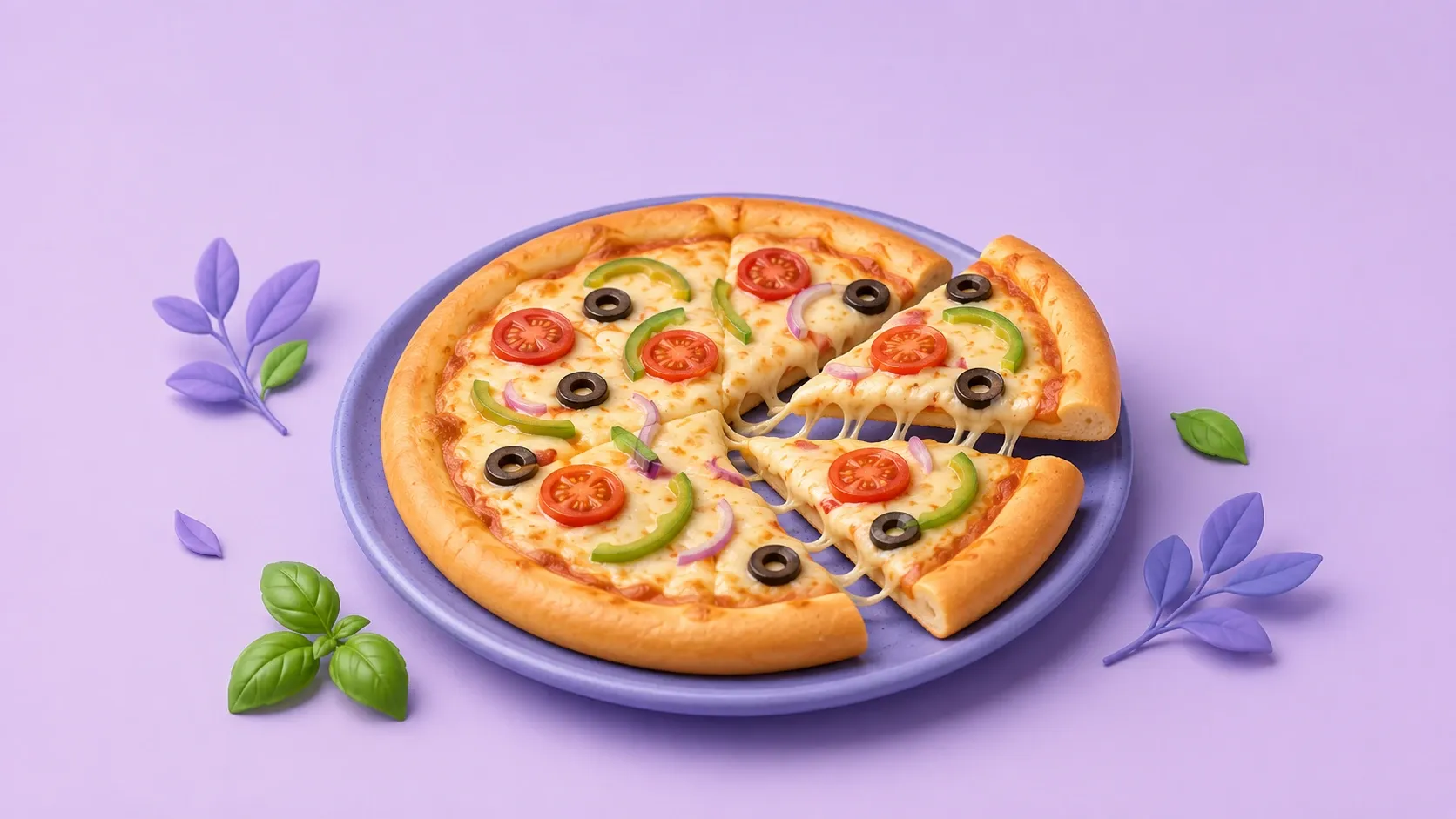

A typical slice of cheese pizza has about 285 calories, and a slice of pepperoni is a little higher at about 300 calories, based on USDA FoodData Central data for a slice that is one eighth of a 14 inch pie. Pizza is a mix of all three macronutrients: carbohydrate from the crust, protein and fat from the cheese, and extra fat from meat toppings. That makes it more calorie dense than bread alone, and because a “slice” can mean almost anything, the number on your plate comes down to two things: the type of pizza and how big the slice actually is.
The quick answer: calories in pizza
Per 100 grams, cheese pizza is about 268 calories, pepperoni about 274, and a meat-and-vegetable combo about 276, according to USDA FoodData Central. But nobody orders pizza by the 100 grams, so the slice is the unit that matters. A standard slice cut as one eighth of a 14 inch pizza weighs roughly 107 grams, which is where the per-slice numbers below come from.
Here is how a single slice breaks down:
- Cheese (about 107 g): about 285 kcal, 12 g protein, 36 g carbs, 10 g fat
- Pepperoni (about 110 g): about 300 kcal, 13 g protein, 34 g carbs, 12 g fat
- Veggie (about 110 g): about 280 kcal, 11 g protein, 35 g carbs, 9 g fat
- Thin crust cheese (about 70 g): about 185 kcal, 8 g protein, 20 g carbs, 8 g fat
The headline pattern is simple. Meat toppings add fat and nudge the count up, vegetables barely move it, and the crust does most of the heavy lifting. For more reference numbers like these, our Food and Calorie Guides hub keeps them in one place.
Calories by type of pizza, per slice
“A slice of pizza” is not a fixed amount, and the type of crust and toppings both matter. The table below shows typical calories per slice for the most common pizzas, using a standard slice that is one eighth of a 14 inch pie. The per-100 gram figures come from USDA FoodData Central; the per-slice numbers scale those to a real slice weight, so treat them as solid estimates rather than exact for any one pizzeria.
| Pizza (per slice) | Slice weight | Calories | Protein | Carbs | Fat |
|---|---|---|---|---|---|
| Cheese, regular crust | about 107 g | about 285 | 12 g | 36 g | 10 g |
| Pepperoni, regular crust | about 110 g | about 300 | 13 g | 34 g | 12 g |
| Veggie, regular crust | about 110 g | about 280 | 11 g | 35 g | 9 g |
| Thin crust cheese | about 70 g | about 185 | 8 g | 20 g | 8 g |
| Meat lovers, regular | about 120 g | about 360 | 15 g | 33 g | 17 g |
A few things stand out. Pepperoni and other meat toppings add roughly 15 to 25 calories per slice over plain cheese, almost all of it from fat, and a loaded “meat lovers” slice can climb past 350. Vegetables, on the other hand, add volume and nutrients but very little energy, so a veggie slice often comes in at or below a plain cheese slice. The biggest single lever is the crust: a thin crust slice can carry barely two thirds the calories of a regular slice simply because there is less dough.
Why slice size is the number that really matters
The most common reason a pizza estimate goes wrong is the slice itself. “One slice” can mean a thin 70 gram triangle, a standard 107 gram slice, or a giant 200 gram fold-it-in-half New York slice. That range alone takes a single cheese slice from about 185 calories to well over 500.
What this means in practice:
- Count slices, not “some pizza.” Three slices of cheese is already about 850 calories, and four is over 1,100, before any soda or sides. The slices add up much faster than they feel like they do.
- Big-chain and New York slices are larger than the standard slice. A single oversized slice can be the calorie equivalent of two normal ones, so it pays to notice the size, not just the count.
- Deep dish and stuffed crust are in a different league. Extra dough, oil, and cheese can push a single deep dish square to 500 to 700 calories, far above a regular flat slice.
If you are tracking carefully, the honest move is to count the actual number of slices and notice how big they are, because “a slice of pizza” can mean anywhere from about 185 to 600 calories.
Toppings: where the calories shift
The crust and cheese set the baseline, and the toppings move it from there. Vegetables like peppers, onions, mushrooms, and spinach are mostly water, so they add flavor, fiber, and volume for almost no extra calories. Meat and extra cheese are where the count climbs.
Roughly speaking, compared with a plain cheese slice:
- Pepperoni or sausage adds about 15 to 40 calories per slice, mostly fat. A heavily layered meat slice adds more.
- Extra cheese adds about 50 to 70 calories per slice, since cheese is calorie dense and fatty.
- Vegetable toppings add only a handful of calories each and improve the nutrition of the slice, which is why a veggie pizza is one of the better-value choices.
This is the same logic behind our guide to low-calorie, filling foods: water-rich, high-volume foods like vegetables let you eat more for fewer calories, and piling them onto pizza is an easy way to make a slice more satisfying without adding much energy.
How pizza compares to its parts
Pizza is essentially bread plus cheese plus toppings, so it helps to see where the calories come from. The crust alone is close to plain bread: our guide to the calories in bread puts a slice of white bread near 75 calories, and a pizza crust is in the same family of mostly-carbohydrate dough. The jump to roughly 285 calories for a cheese slice comes almost entirely from the cheese and oil on top.
That cheese is doing two jobs: it adds protein, but it also adds the bulk of the fat. A typical slice carries the equivalent of a generous portion of cheese, and as our guide to the calories in cheese explains, cheese runs roughly 350 to 400 calories per 100 grams. So if you want to trim a pizza without giving it up, easing back on extra cheese moves the number more than almost anything else except the crust.
How pizza fits a calorie budget
Pizza fits weight loss and maintenance perfectly well; it just needs accounting for, because it is calorie dense and very easy to overeat. The trick is to decide on a portion before you start rather than grazing slice by slice.
A few simple ways to keep pizza working for your goals:
- Decide on a slice count up front. Two slices of cheese is about 570 calories, a reasonable meal for many people. Plating your portion instead of eating from the box makes that far easier to stick to. If you are figuring out your own intake, our guide on how many calories you should eat to lose weight lays out the math.
- Go thinner and greener. Thin crust trims the calories per slice, and veggie toppings add volume and nutrients without much energy, so a thin crust veggie slice is one of the lightest ways to enjoy pizza.
- Add a salad, not a soda. Pairing pizza with a big salad fills you up so one or two slices feel like enough, while a large soda can quietly add 200-plus calories. Major dietary guidance consistently points toward more vegetables and fewer sugary drinks for exactly this reason (Dietary Guidelines for Americans).
A tracking app like CalcEat lets you log each slice and any sides separately, so the math stays honest instead of disappearing into a vague “had some pizza.” You can estimate your own daily target with our free calorie calculator, or get a personalized plan built around foods you actually eat at CalcEat’s free plan.
The bottom line
A slice of cheese pizza is about 285 calories and a pepperoni slice about 300, with pizza overall sitting near 268 to 276 calories per 100 grams depending on the toppings. Meat toppings add a little fat, vegetables barely move the count, and thin crust meaningfully lowers it, but the single biggest factor is how many slices you eat and how big they are.
Keep it simple: choose thinner crust and veggie toppings when you can, decide on your slice count before you dig in, and add a salad to round out the meal. Log each slice honestly, stay consistent, and pizza fits a healthy diet just fine.
This article is general information, not medical or dietary advice for your specific situation.