
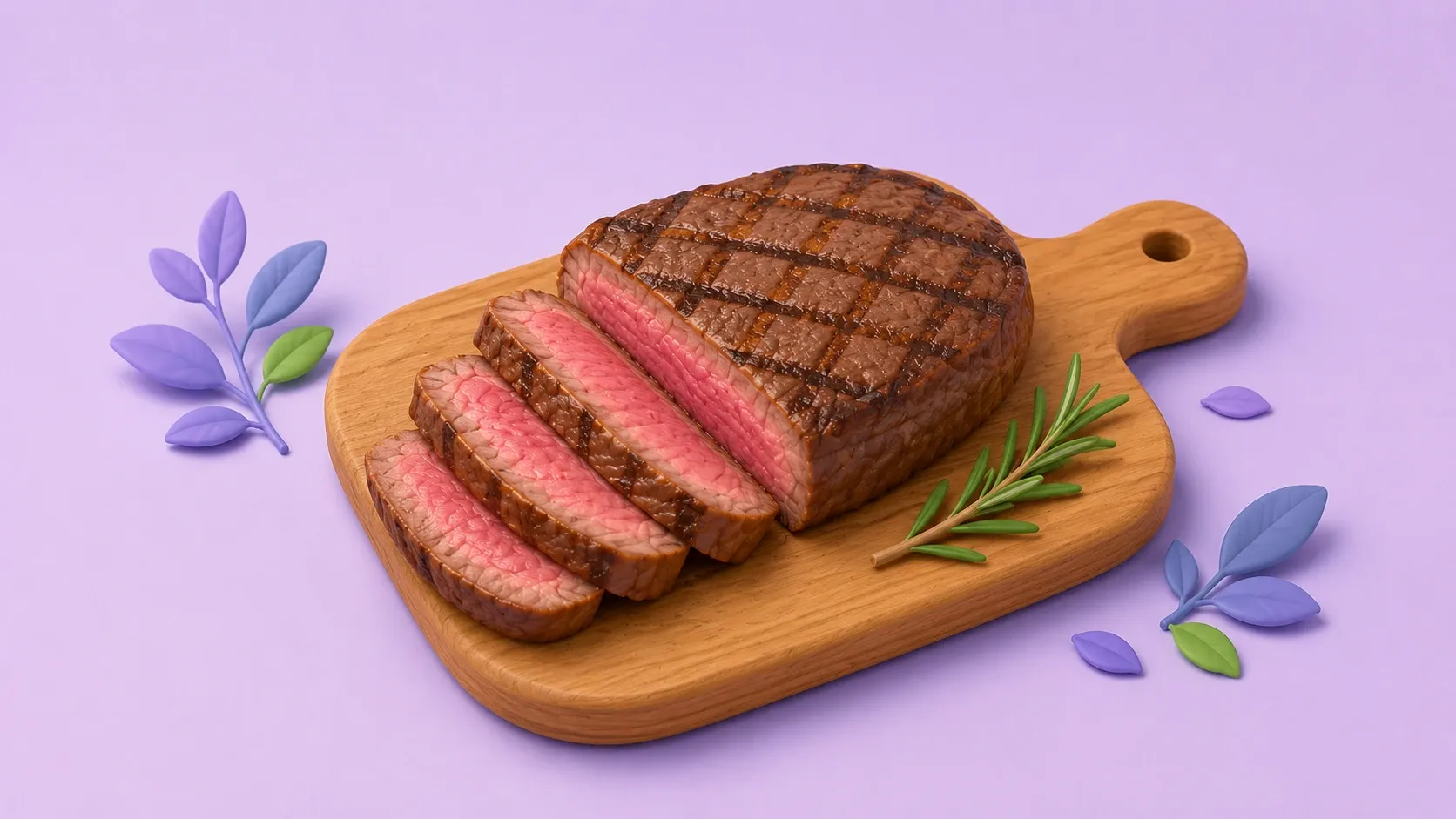

Cooked top sirloin has about 219 calories per 100 grams, along with roughly 29 grams of protein and 10.5 grams of fat, according to USDA FoodData Central. A marbled ribeye runs higher at about 271 calories per 100 grams, while a lean cut like flank is closer to 178. With steak, the number on your plate comes down to two things more than any other: which cut you choose, and how much it weighs.
The quick answer: calories in steak
Steak is not one food. The cut sets how much fat is woven through the muscle, and that marbling is the single biggest driver of the calorie count. Fat carries more than twice the calories of protein per gram, so a richly marbled ribeye lands well above a lean flank or a trimmed sirloin even though both are “steak.”
Here is how some of the most common cuts compare per 100 grams cooked, straight from USDA FoodData Central:
- Flank: about 178 kcal, 28 g protein, 6.5 g fat
- Top sirloin (lean and fat): about 219 kcal, 29 g protein, 10.5 g fat
- Filet mignon (tenderloin): about 211 kcal, 31 g protein, 8.9 g fat
- Ribeye (lean and fat): about 271 kcal, 25 g protein, 19 g fat
- New York strip (top loin): about 278 kcal, 26 g protein, 18 g fat
Notice that the leaner cuts actually carry as much protein per 100 grams, or more, because there is less fat taking up space in the meat. Steak has essentially no carbohydrate, so the calories track with protein and, mostly, fat, which is why it shows up so often in our Food and Calorie Guides hub.
Calories by cut
The table below shows USDA values for several popular cuts, cooked, per 100 grams and per 8 oz (227 g) cooked. Eight ounces is a common restaurant and steakhouse portion, so these are close to what many people actually eat in a sitting.
| Cut (cooked) | Calories (100 g) | Protein (100 g) | Fat (100 g) | Calories (8 oz / 227 g) | Protein (8 oz) |
|---|---|---|---|---|---|
| Flank, lean | about 178 | 28.0 g | 6.5 g | about 404 | 64 g |
| Top sirloin, lean only | about 178 | 29.4 g | 5.8 g | about 404 | 67 g |
| Filet mignon (tenderloin) | about 211 | 30.5 g | 8.9 g | about 479 | 69 g |
| Top sirloin, lean and fat | about 219 | 29.0 g | 10.5 g | about 497 | 66 g |
| Skirt, lean | about 268 | 28.6 g | 17.1 g | about 608 | 65 g |
| Ribeye, lean and fat | about 271 | 24.8 g | 19.0 g | about 615 | 56 g |
| New York strip (top loin) | about 278 | 26.2 g | 18.4 g | about 631 | 59 g |
The takeaway: at the same 8 oz portion, a ribeye carries more than 200 calories above a lean flank or trimmed sirloin, almost entirely because of fat. The lean cuts also tend to deliver more protein per serving, since less of the weight is fat. If you are tracking carefully, weighing the cooked steak beats eyeballing it, because the gap between an “8 oz steak” of one cut and another is large.
Lean versus marbled: where the calories live
Within a single cut, trimming the fat changes the number a lot. The marbling and the fat cap around the edge are where most of the extra calories hide, so a cut sold “lean only” or trimmed close lands well below the same cut with its fat left on.
Put a ribeye side by side with itself per 100 grams cooked. The full lean-and-fat ribeye is about 271 calories with 19 grams of fat. Trim it to the lean only and it drops to about 191 calories with roughly 8 grams of fat, while the protein actually rises to about 29 grams because fat is no longer displacing the muscle. That is roughly an 80-calorie swing per 100 grams from trimming alone, on the very same steak.
The same pattern holds for sirloin: lean-and-fat top sirloin is about 219 calories per 100 grams, while the trimmed lean-only version is about 178. None of this makes a marbled steak “bad.” The fat is what makes a ribeye rich and tender, and many people happily budget for it. The point is simply that marbling is a calorie dial, so you can pick the cut, and how closely it is trimmed, to fit both the meal and your day.
Why fat drives the calories
Steak is essentially protein and fat with no carbohydrate, so the split between those two macros sets the calorie total. Protein has about 4 calories per gram, while fat has about 9, more than double. That is why a fattier cut climbs so much faster than a lean one, even when the protein is similar.
Compare a lean flank with a marbled ribeye per 100 grams cooked. The flank has about 6.5 grams of fat and the ribeye about 19, a difference of roughly 12 grams. That fat gap alone is worth more than 100 calories, which is most of the distance between the flank’s 178 calories and the ribeye’s 271. The protein, meanwhile, barely changes. This is also why “lean” cuts and trimmed steaks exist: they are really telling you how much fat, and therefore how many calories, you are getting.
Raw versus cooked: why the weight changes
This trips a lot of people up. Steak loses both water and rendered fat as it cooks, so a cooked portion weighs noticeably less than the raw steak you started with. A steak that weighed 8 oz raw does not weigh 8 oz once it comes off the grill; it shrinks. That means cooked steak is more calorie dense per gram than raw, and the two are not interchangeable on a food scale.
The USDA cooked values used throughout this guide, about 219 calories per 100 grams for sirloin, already reflect the cooked state. What this means in practice:
- Pick one reference and stick to it. Weigh cooked steak against cooked values, or raw steak against raw values, but never mix the two.
- Account for shrinkage if you weigh raw. A steak that started at 8 oz raw yields less than 8 oz cooked, so logging it against a cooked 8 oz value will slightly overcount.
- Trimming and rendering matter. When you cut away the fat cap or let the marbled fat drip off on the grill, you remove some calories that the in-package raw number would otherwise include.
How to enjoy steak while watching calories
If you want steak in the rotation without blowing your budget, the levers are the cut, the trim, and what you cook and top it with. A few practical habits:
- Choose the cut for the day. Lean cuts like flank, top sirloin, and filet mignon give you steakhouse protein for fewer calories, so save the ribeye or strip for when you have the room.
- Trim the visible fat. Cutting off the fat cap and the heaviest marbling before or after cooking removes calories you will barely miss, especially on richer cuts.
- Watch what goes on top, not just the steak. A pat of butter, a tablespoon of oil in the pan, and a creamy sauce can together add more calories than the difference between a sirloin and a ribeye. A tracking app like CalcEat lets you log the steak and each add-on separately so nothing slips through.
For comparison, leaner everyday proteins like chicken breast and ground beef give you a different protein-to-fat profile, and rotating among them keeps meals varied while you manage the overall fat in your week.
How steak fits your calories and protein
Steak is a protein-dense staple that fits almost any eating pattern once the cut and portion match your goals. Two things work in its favor and one is worth watching.
It is genuinely high in protein. An 8 oz cooked steak delivers roughly 56 to 69 grams of complete protein depending on the cut, which makes it easy to build a meal around. Protein is the most filling macronutrient, and higher-protein eating patterns are linked to better appetite control (Harvard, The Nutrition Source). Steak earns a spot on almost any list of high-protein foods, and if you are setting a daily target, our guide on how much protein you need per day walks through the numbers.
It slots cleanly into your macros. With zero carbohydrate, steak is just protein and fat, so it is simple to budget once you know your targets. Our guides on what macros are and how to count macros cover how to fit a protein like steak around the rest of your plate.
Fat is the variable to watch. Because the marbled cuts carry more saturated fat, leaning toward lean cuts most of the time, and trimming the fat cap on richer steaks, keeps both calories and saturated fat in check. If you are figuring out your overall intake, our guide on how many calories you should eat to lose weight lays out the math, and the calorie calculator gives you a personalized starting point. To turn those numbers into a full daily plan, you can get a free plan in a couple of minutes.
The bottom line
Cooked top sirloin is about 219 calories per 100 grams and roughly 497 per 8 oz, while the cut you pick moves the number a lot: a marbled ribeye lands near 271 per 100 grams and a lean flank near 178. Marbling is the dial that drives the calories, and the leaner cuts even nudge the protein up. For most people, steak is a solid high-protein food; the calories come down to the cut and the trim, not to steak being inherently fattening.
Keep it simple: pick the cut to suit the day, trim the visible fat on richer steaks, weigh the cooked meat, and account for the butter, oil, and sauces. Track the steak and its add-ons, stay consistent, and the numbers will take care of themselves.
This article is general information, not medical or dietary advice for your specific situation.