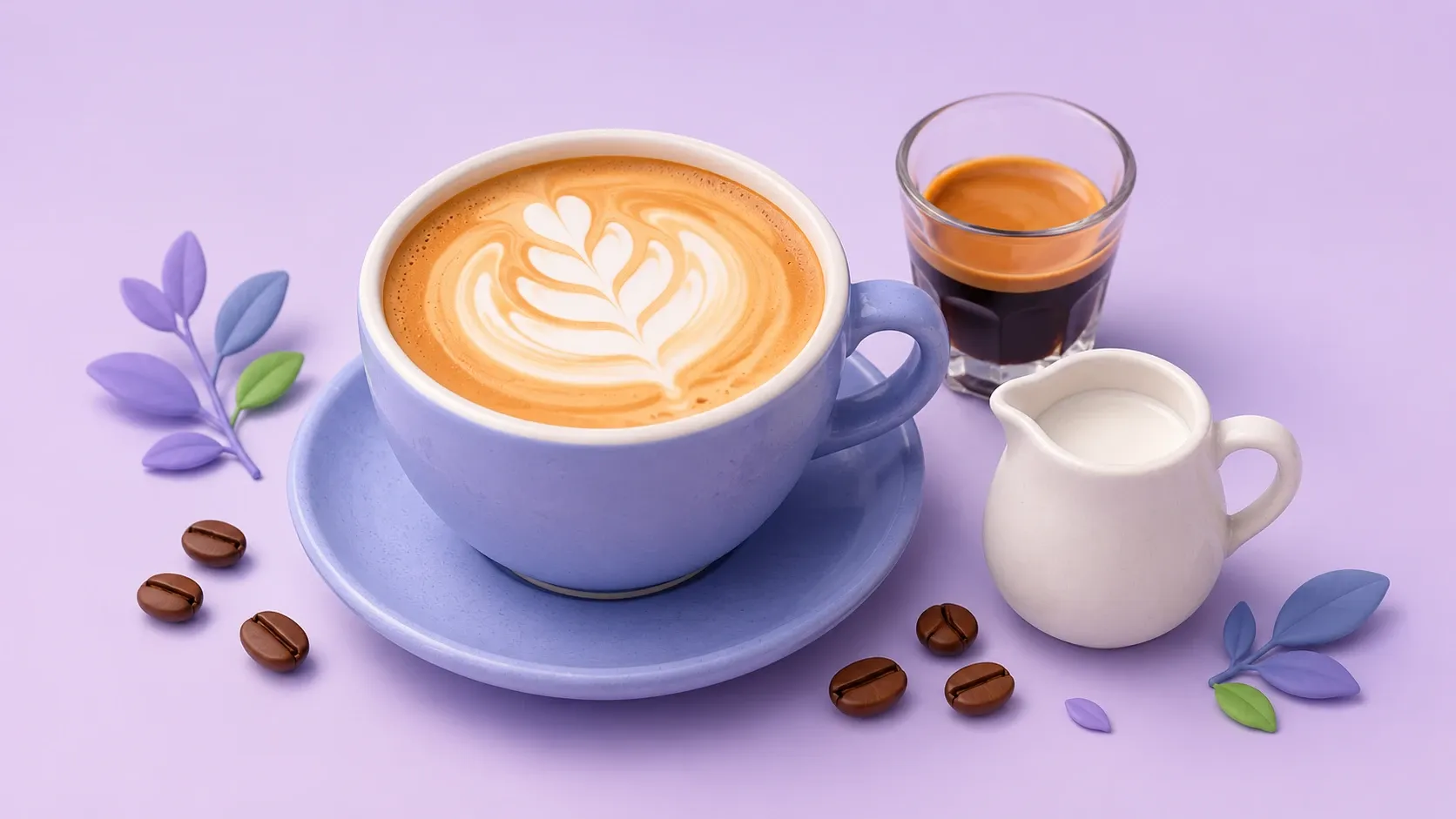
A cup of plain black coffee has about 2 calories, and a shot of espresso about 4, with essentially no fat, carbohydrate, or protein, according to USDA FoodData Central. In other words, coffee itself is one of the lowest-calorie drinks there is. The reason a coffee can range from 2 calories to over 400 is everything you add to it: the milk, sugar, syrup, and cream are where the calories live, not the coffee.
The quick answer: calories in black coffee and espresso
Brewed black coffee and espresso are both nearly calorie-free. They are mostly water, with only trace amounts of the compounds that carry calories.
Here is what USDA FoodData Central shows for plain, unsweetened coffee:
- Black brewed coffee (8 fl oz cup): about 2 kcal, 0 g fat, 0 g carbohydrate, 0.3 g protein
- Black brewed coffee (per 100 g): about 1 kcal
- Espresso (single shot, 1.5 fl oz): about 4 kcal
- Espresso (per 100 g): about 9 kcal, 0.2 g fat, 1.7 g carbohydrate, 0.1 g protein
The takeaway is simple: if you drink your coffee black, you can essentially ignore it in your calorie count. That makes plain coffee a natural fit alongside low-calorie, filling foods when you are trying to stay full without spending much of your budget. Espresso is slightly higher than drip coffee only because it is far more concentrated, but a single shot is still just a few calories.
Where the calories actually come from
Because the coffee itself is so low, every calorie in a milk-based or sweetened drink comes from what you add. This is the single most useful thing to understand about coffee calories. The table below shows the common add-ins, with USDA values.
| Add-in | Typical amount | Approx. calories |
|---|---|---|
| Whole milk | splash (2 tbsp / 30 g) | about 18 |
| Skim (nonfat) milk | splash (2 tbsp / 30 g) | about 10 |
| Whole milk | 1/2 cup (122 g) | about 74 |
| Granulated sugar | 1 tsp (4 g) | about 16 |
| Granulated sugar | 2 tsp | about 32 |
| Half-and-half | 1 tbsp (15 g) | about 20 |
| Heavy cream | 1 tbsp (15 g) | about 51 |
| Flavored syrup (vanilla, caramel) | 1 pump (about 1 tbsp) | about 20 to 40 |
A few practical points fall out of this:
- Milk is usually the biggest line item in a coffee-shop drink, because it is measured in cups, not tablespoons. The more milk, the more calories.
- Sugar and syrup are pure carbohydrate. They add up fast when a flavored drink uses two, three, or four pumps of syrup.
- Cream is the most calorie-dense splash. A tablespoon of heavy cream carries more calories than a tablespoon of half-and-half or a splash of whole milk, because it is mostly fat.
If you want to see exactly how these numbers appear on a carton or bottle, our guide on how to read a nutrition label walks through the serving sizes and the “per serving” math that trips people up.
Calories in popular coffee drinks
Once milk enters the picture, the drink’s calories track the amount and type of milk far more than anything else. The espresso underneath adds only about 4 calories. The table below shows typical calories for common drinks made with whole milk and no added sugar, at a usual café size. Because milk volume varies by shop and cup size, treat these as close approximations.
| Drink | Typical size | Approx. calories (whole milk) |
|---|---|---|
| Black coffee | 8 fl oz | about 2 |
| Espresso | single shot | about 4 |
| Americano (espresso + water) | 8 fl oz | about 5 to 15 |
| Cappuccino | 6 to 8 fl oz | about 60 to 90 |
| Flat white | 6 fl oz | about 110 to 170 |
| Caffe latte | 12 fl oz | about 120 to 180 |
| Caffe latte | 16 fl oz | about 180 to 190 |
| Caffe mocha (no whip) | 16 fl oz | about 290 to 370 |
What the pattern shows:
- Cappuccino is usually the lightest milk drink. It is roughly one-third espresso, one-third steamed milk, and one-third airy foam, so it uses less milk than a same-size latte and lands lower in calories.
- A flat white sits just above a cappuccino. It is a small drink built on steamed milk with a thin layer of foam, so it is richer than a cappuccino but smaller than most lattes.
- A latte is mostly steamed milk, which is why a 16 ounce whole-milk latte approaches 190 calories before any syrup. Most of that is the milk, which is why our calories in milk guide is the best companion to this one.
- A mocha is the highest of the common drinks, because it is essentially a latte plus chocolate syrup or sauce. The milk supplies the base, and the chocolate adds roughly 100 to 180 calories of mostly sugar on top.
For comparison, a black coffee or a plain espresso barely registers next to any of these. The jump from a 2-calorie drink to a 350-calorie one is entirely the milk and the chocolate.
How the milk choice changes a latte
Since milk is the main source of calories in a milk-based coffee, the type of milk you choose is the biggest lever you have. The table below shows roughly how a 16 ounce latte changes with the milk, using USDA milk values for the steamed milk it contains.
| Latte (16 fl oz), no added sugar | Approx. calories |
|---|---|
| With whole milk | about 190 |
| With 2% reduced-fat milk | about 160 |
| With skim (nonfat) milk | about 110 |
Stepping from whole milk down to skim saves roughly 80 calories on a large latte while keeping nearly all of the protein and calcium the milk provides, because almost the entire saving is fat. Unsweetened plant milks vary: nonfat-style almond milk can be lower than skim, while oat and barista blends are often similar to or higher than whole milk, so the label is worth a look. The same logic drives a lot of smart food swaps: keep the drink, change one ingredient, and the calories fall into place.
Add-ins stack on top of whichever milk you pick. Two pumps of vanilla syrup add roughly 40 to 80 calories, and a swirl of whipped cream on a mocha adds another 70 to 110, so a “skinny” order is really about the milk, the syrup, and the whip all at once.
How coffee fits a calorie budget
Coffee is one of the easiest places to save calories without giving up the habit, because the drink itself costs almost nothing. A few simple ideas:
Black or near-black is effectively free. Plain coffee and espresso are about 2 to 4 calories, so an Americano, a black drip, or a long black can be enjoyed freely on any plan. If you like a splash of milk, even a couple of tablespoons keeps the total under about 20 calories.
The add-ins are the budget, not the coffee. A daily large flavored latte can run 250 to 400 calories, which is a real slice of a day’s intake for a drink that does not fill you up. Logging the milk and each pump of syrup separately keeps the math honest and shows exactly where the calories are coming from. A tracking app like CalcEat lets you record the coffee and its add-ins as separate lines so nothing slips through.
Small daily swaps compound. Moving from whole to skim milk, dropping from two sugars to none, or skipping the whipped cream each save 30 to 100 calories a day. Over a week or a month that adds up, and it is often easier to sustain than cutting food. If you want to put a number on your own target first, our calorie calculator estimates your daily needs, and you can build a personalized plan around them. To see where those two sugars sit against a daily limit, read how much sugar you should eat a day.
A few easy ways to keep coffee working for your goals:
- Order black or with a splash of milk when calories are tight, and save the flavored drinks for when they fit your budget.
- Ask for fewer pumps of syrup, or sugar-free syrup, to cut the sweetened calories without losing the flavor.
- Choose lower-fat milk and skip the whip, the two changes that move a milk drink the most.
The bottom line
Black coffee and espresso are nearly calorie-free, about 2 and 4 calories, so plain coffee is one of the most budget-friendly drinks there is. Everything above that comes from what you add: milk drives most of the calories in a latte, cappuccino, or flat white, sugar and syrup pile on quickly, and a mocha tops the list because it adds chocolate. A whole-milk latte runs about 120 to 190 calories depending on size, and switching to skim or cutting the syrup brings it down fast.
Keep it simple: enjoy the coffee freely, watch the milk and the syrup, and log the add-ins rather than the brew. Done that way, coffee fits almost any calorie budget without a second thought.
This article is general information, not medical or dietary advice for your specific situation.