
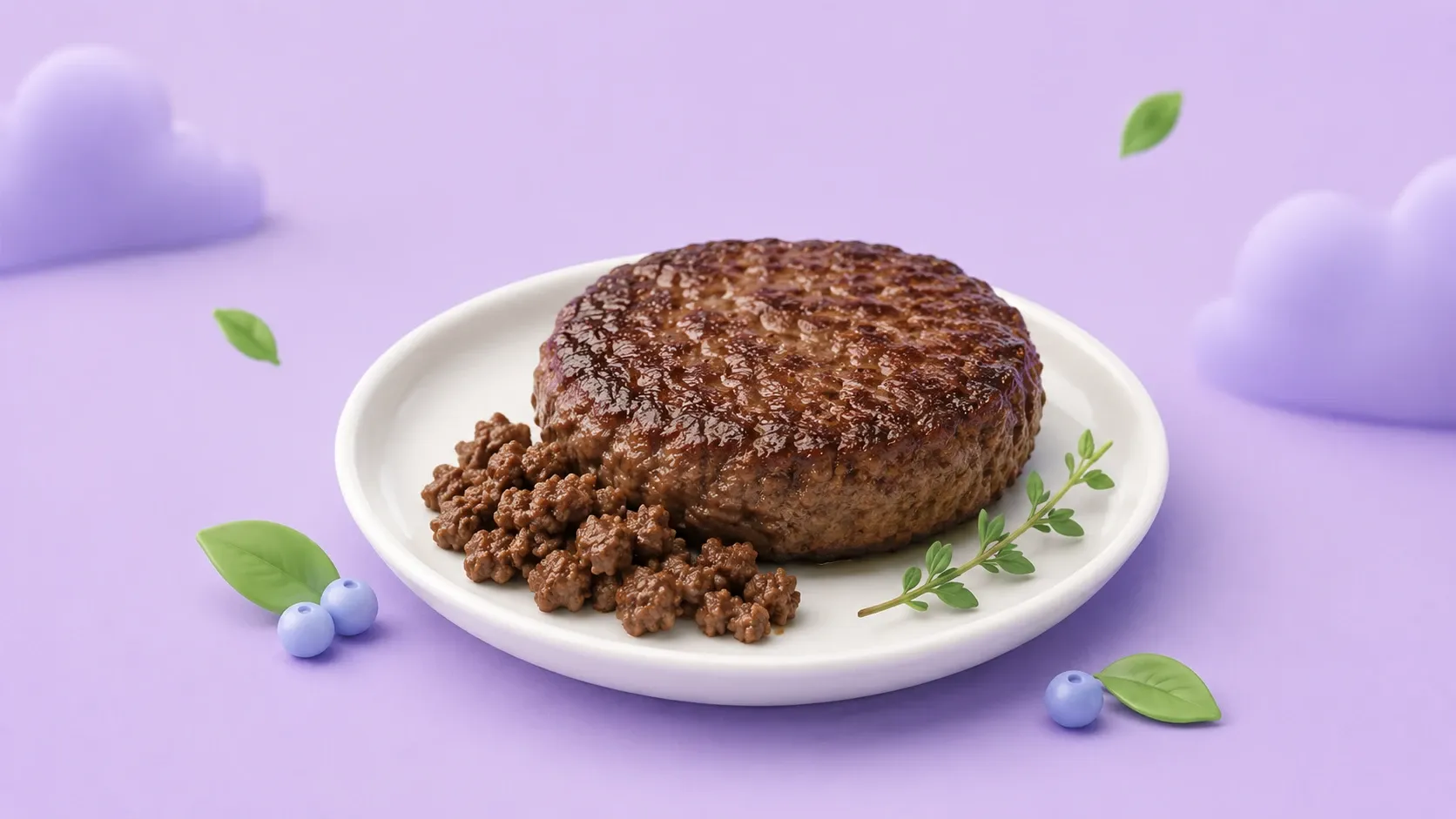

Cooked, pan-broiled 80/20 ground beef has about 246 calories per 100 grams, along with roughly 24 grams of protein and 16 grams of fat, according to USDA FoodData Central. Leaner blends drop quickly: 90/10 is about 204 calories per 100 grams and 93/7 about 182. With ground beef, the number on your plate comes down to two things more than any other: the lean-to-fat ratio you buy, and how much it weighs.
The quick answer: calories in ground beef
Ground beef is sold by its lean-to-fat ratio, and that ratio is the single biggest driver of the calorie count. Fat carries more than twice the calories of protein per gram, so a fattier blend like 80/20 lands higher than a lean one like 93/7 even though both are “beef.”
Here is how cooked, pan-broiled ground beef compares per 100 grams, straight from USDA FoodData Central:
- 70/30: about 238 kcal, 23 g protein, 16 g fat
- 80/20: about 246 kcal, 24 g protein, 16 g fat
- 90/10: about 204 kcal, 25 g protein, 11 g fat
- 93/7: about 182 kcal, 26 g protein, 8 g fat
Notice that the leaner blends actually carry slightly more protein per 100 grams, because there is less fat taking up space in the meat. Ground beef has essentially no carbohydrate, so the calories track with protein and, mostly, fat, which is why it shows up so often in our Food and Calorie Guides hub.
Calories by lean-to-fat ratio
The table below shows the USDA values for cooked, pan-broiled ground beef at the four most common ratios, per 100 grams and per 4 oz (113 g) cooked. These are the figures most people are tracking when they log a cooked burger or a serving of taco meat.
| Lean / Fat | Calories (100 g) | Protein (100 g) | Fat (100 g) | Calories (4 oz / 113 g) | Protein (4 oz) |
|---|---|---|---|---|---|
| 70 / 30 | about 238 | 22.9 g | 15.5 g | about 269 | 25.8 g |
| 80 / 20 | about 246 | 24.0 g | 15.9 g | about 278 | 27.2 g |
| 90 / 10 | about 204 | 25.2 g | 10.7 g | about 231 | 28.5 g |
| 93 / 7 | about 182 | 25.6 g | 8.0 g | about 206 | 28.9 g |
The takeaway: moving from 80/20 to 93/7 saves roughly 70 calories per 4 oz cooked while actually adding a little protein. Interestingly, 70/30 comes out slightly below 80/20 here, because more of its fat renders out during pan-broiling, but it is still a high-fat blend. If you are tracking carefully, weighing the cooked beef beats eyeballing it, because a “quarter-pound” patty can mean very different things once cooked.
Why the fat percentage drives the calories
Ground beef is essentially protein and fat with no carbohydrate, so the split between those two macros sets the calorie total. Protein has about 4 calories per gram, while fat has about 9, more than double. That is why adding fat moves the number so much faster than adding lean meat.
Put it side by side per 100 grams cooked. Going from 93/7 to 80/20 adds about 8 grams of fat and only changes protein by roughly a gram and a half, yet the calories climb from about 182 to 246. Almost the entire jump is the fat. This is also why “lean” and “extra lean” labels exist: they are really telling you how much fat, and therefore how many calories, you are getting.
None of this makes fattier beef “bad.” The fat is what makes 80/20 juicy and flavorful, and it holds a burger together better than very lean blends. The point is simply that the ratio is a calorie dial, so you can pick the blend that fits both the dish and your budget for the day.
Raw versus cooked: why the weight changes
This trips a lot of people up. Ground beef loses both water and rendered fat as it cooks, so a cooked portion weighs noticeably less than the raw meat you started with. A patty pressed from 4 oz of raw beef does not weigh 4 oz once it comes off the heat; it shrinks. That means cooked beef is more calorie dense per gram than raw, and the two are not interchangeable on a food scale.
The USDA cooked, pan-broiled values used throughout this guide, about 246 calories per 100 grams for 80/20, already reflect the cooked state. What this means in practice:
- Pick one reference and stick to it. Weigh cooked beef against cooked values, or raw beef against raw values, but never mix the two.
- Account for shrinkage if you weigh raw. A patty made from 4 oz of raw beef yields less than 4 oz cooked, so logging it against a cooked 4 oz value will slightly overcount.
- Draining matters for fatty blends. When you brown 80/20 or 70/30 and pour off the rendered fat, you remove some calories that the in-package raw number would otherwise include.
How to cut calories without losing the beef
If you want the flavor of ground beef while trimming the calories, the levers are the ratio, the drippings, and what you pile on top. A few practical habits:
- Choose the ratio for the job. Use 90/10 or 93/7 for chili, taco meat, and pasta sauces where fat is not doing structural work, and save 80/20 for burgers and meatballs that benefit from it.
- Drain and even rinse the fat. After browning fattier beef, tipping off the rendered fat removes calories you will not miss in a sauce. For very fatty blends, a quick hot-water rinse of the crumbles cuts even more.
- Watch the add-ons, not just the meat. A slice of cheese, a tablespoon of oil in the pan, and a bun can together add more calories than the difference between 80/20 and 93/7. A tracking app like CalcEat lets you log the beef and each topping separately so nothing slips through.
For comparison, leaner proteins like chicken breast and salmon give you a different protein-to-fat profile, and rotating among them keeps meals varied while you manage the overall fat in your week.
How ground beef fits your calories and protein
Ground beef is a flexible, protein-dense staple that fits almost any eating pattern once the portion and ratio match your goals. Two things work in its favor and one is worth watching.
It is genuinely high in protein. A 4 oz cooked patty delivers roughly 26 to 29 grams of complete protein depending on the blend, which makes it easy to build a meal around. Protein is the most filling macronutrient, and higher-protein eating patterns are linked to better appetite control (Harvard, The Nutrition Source). If you are setting a daily target, our guide on how much protein you need per day walks through the numbers.
It slots cleanly into your macros. With zero carbohydrate, ground beef is just protein and fat, so it is simple to budget once you know your targets. Our guides on what macros are and how to count macros cover how to fit a protein like beef around the rest of your plate.
Fat is the variable to watch. Because the fattier blends carry more saturated fat, leaning toward 90/10 or 93/7 most of the time, and draining the drippings on fattier beef, keeps both calories and saturated fat in check. If you are figuring out your overall intake, our guide on how many calories you should eat to lose weight lays out the math, and the calorie calculator gives you a personalized starting point.
The bottom line
Cooked 80/20 ground beef is about 246 calories per 100 grams and roughly 278 per 4 oz, while leaner blends drop meaningfully: 90/10 lands near 204 per 100 grams and 93/7 near 182. The fat percentage is the dial that moves the calories, and leaner beef even nudges the protein up. For most people, ground beef is a solid high-protein staple; the calories are driven by the ratio you choose and what you add to it, not by beef being inherently fattening.
Keep it simple: pick the ratio to suit the dish, drain the fat on fattier blends, weigh the cooked beef, and account for the cheese, oil, and buns. Track the beef and its add-ons, stay consistent, and the numbers will take care of themselves.
This article is general information, not medical or dietary advice for your specific situation.