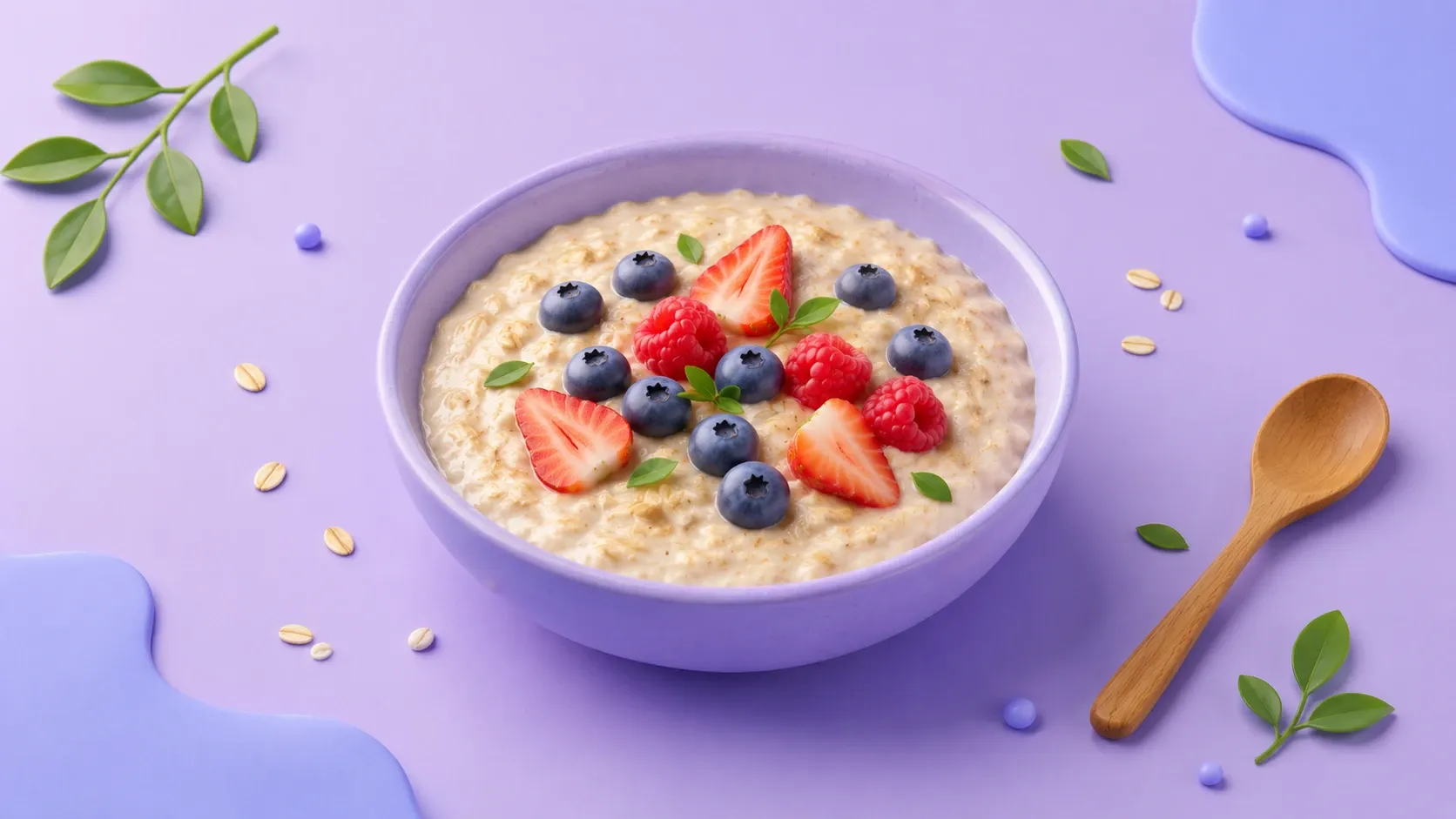
Half a cup of dry oats, the standard serving, has about 150 calories, along with roughly 7 grams of protein, 27 grams of carbohydrate, and 4 grams of fiber, according to USDA FoodData Central. Cooked in water, that same scoop becomes a full bowl of about 166 calories because the oats soak up liquid and expand. Oatmeal is a high-fiber, filling base, but the final number on your plate depends on two things: how much you measure and what you pile on top.
The quick answer: calories in oatmeal
Plain dry oats run about 389 calories per 100 grams. Since most people do not eat 100 grams in a sitting, the serving that matters is the half-cup scoop, which weighs roughly 40 grams and comes to about 150 calories. The big jump happens when you cook it: the oats do not gain calories, they just absorb water and grow into a bowl that looks much larger.
Here is how the macros break down for a 1/2 cup (about 40 g) serving of dry oats:
- Calories: about 150 kcal
- Carbohydrate: about 27 g
- Protein: about 7 g
- Fiber: about 4 g
- Fat: about 3 g
That fiber number is the headline. Oats are one of the better whole-grain sources of soluble fiber, which is a big part of why a modest bowl keeps you full for hours.
Calories by serving size
“A bowl of oatmeal” is not a fixed amount, so the calories swing with how much dry oats you start from and how much liquid you add. The table below applies the USDA values for plain oats: 389 calories per 100 grams dry, and 71 calories per 100 grams once cooked with water.
| Serving | Calories | Carbs | Protein | Fiber |
|---|---|---|---|---|
| 1/4 cup dry oats (20 g) | about 78 | 13 g | 3.4 g | 2.1 g |
| 1/2 cup dry oats (40 g), standard | about 156 | 27 g | 6.8 g | 4.2 g |
| 1 cup dry oats (81 g) | about 315 | 54 g | 14 g | 8.6 g |
| 1 cup cooked with water (234 g) | about 166 | 28 g | 5.9 g | 4.0 g |
| 100 g dry | about 389 | 66 g | 16.9 g | 10.6 g |
| 100 g cooked with water | about 71 | 12 g | 2.5 g | 1.7 g |
The takeaway: a 1/2 cup of dry oats and the cooked bowl it produces carry almost the same calories, because cooking only adds water. For reference numbers like these on other staples, our Food and Calorie Guides hub keeps them in one place.
Dry versus cooked: measure the oats dry
This is where oatmeal trips people up. Cooked oatmeal is only about 71 calories per 100 grams, far lower than the 389 for dry oats, but that does not mean cooking saves you calories. The difference is water. A 1/2 cup of dry oats roughly triples in volume as it cooks, so the same calories spread across a much heavier, bigger bowl.
What this means in practice:
- Measure the oats dry, before cooking. A 1/2 cup of dry oats is the same 150 calories whether you make it thick or soupy. This is the most reliable way to log it.
- If you only have a cooked weight, use the cooked value (about 71 calories per 100 grams), but expect some guesswork, because the number shifts with how much water you used.
- Do not log it twice. Counting both the dry oats and the cooked volume is a common mistake that can double your count. Pick one, and dry is the cleaner choice.
Steel-cut, rolled, and instant: do they differ?
By calories, barely. Steel-cut, old-fashioned rolled, and quick oats are all just the whole oat groat processed differently, so per gram of dry oats they land within a few calories of each other, near 150 per 1/2 cup. What changes is texture and how fast they digest. Steel-cut oats are the least processed and have a chewier bite and a gentler effect on blood sugar, which is why they get called the healthiest, but they are not lower in calories.
The real outlier is instant flavored packets. Many add sugar, and a single sweetened packet can carry more calories and a lot more added sugar than a plain bowl, in a smaller portion. If you are watching calories or sugar, plain oats you sweeten yourself give you the most control. For sustained energy, whole, minimally processed oats are the kind worth leaning on, as the Harvard Nutrition Source notes for whole grains generally.
Toppings: where the calories really add up
A plain bowl of oats is light. What turns it into a 500-calorie meal is everything you add. The oats are the steady base; the toppings are the variable. Here is roughly what common add-ins contribute.
| Topping | Amount | Approx. calories |
|---|---|---|
| Skim milk | 1 cup | about 80 |
| Whole milk | 1 cup | about 150 |
| Brown sugar | 1 tbsp | about 45 |
| Honey or maple syrup | 1 tbsp | about 60 |
| Banana | 1 medium | about 105 |
| Blueberries | 1/2 cup | about 40 |
| Peanut or almond butter | 1 tbsp | about 95 |
| Raisins or dried fruit | 2 tbsp | about 65 |
| Granola | 1/4 cup | about 120 |
A few practical points fall out of this:
- Liquid is the first big lever. Cooking in water keeps the base at about 150 calories; cooking in whole milk can nearly double it before any other topping.
- Nut butter and granola are calorie-dense. Both are nutritious, but a tablespoon or a sprinkle adds up quickly, so measure rather than free-pour.
- Fruit is the efficient sweetener. Berries and half a banana add flavor, fiber, and bulk for relatively few calories, and they let you cut back on added sugar. A tracking app like CalcEat lets you log the oats and each topping separately so the math stays honest.
How oatmeal fits weight loss and a calorie budget
Oatmeal earns its reputation as a weight-loss-friendly breakfast, and the reason is fiber. Oats are rich in a soluble fiber called beta-glucan, which slows digestion and helps you feel full longer, so a roughly 150-calorie base can hold off hunger for hours. That satiety is what makes a calorie deficit easier to sustain, the same principle behind most low-calorie, filling foods.
A few simple ways to keep oatmeal working for your goals:
- Anchor the base, manage the toppings. Start from a measured 1/2 cup of dry oats and water, then add toppings deliberately. The base is predictable; the extras are where budgets get blown.
- Use fruit and a little protein. Berries for sweetness and bulk, plus a spoon of yogurt or a scoop of protein powder, turn a light bowl into a meal that holds you to lunch.
- Prep it ahead. Overnight oats and big-batch cooking make a consistent, portion-controlled breakfast easy on busy mornings. Our guide to healthy meal prep for beginners covers the basics.
If you are working out how a bowl like this fits your day, our guide on how many calories you should eat to lose weight lays out the math for setting a target.
The bottom line
A 1/2 cup of dry oats is about 150 calories, and that holds whether you cook it thick or thin, because cooking only adds water, not calories. A full cup cooked with water lands near 166 calories. Steel-cut, rolled, and quick oats are nearly identical by weight, so the two things that actually move your number are the size you measure and the toppings you add.
Keep it simple: measure the oats dry, build the bowl with fruit and a splash of milk rather than sugar and granola, and lean on the fiber to stay full. Log the oats and the toppings, stay consistent, and a bowl of oatmeal is one of the easier breakfasts to fit any calorie budget.
This article is general information, not medical or dietary advice for your specific situation.