
Eating well on a tight budget feels like a contradiction, because the loudest health advice usually points at expensive things: cold-pressed juices, grass-fed everything, a cart full of fresh organic produce. The truth is calmer and cheaper. Some of the most nutritious foods in the store, like beans, eggs, oats, and frozen vegetables, are also among the least expensive, and a few simple habits stretch them a long way. This guide gives you practical, evidence-based strategies to eat better for less, plus a cheap healthy staples list and easy meals to build from.
The myth that healthy eating has to be expensive
There is a widespread belief that eating healthy means spending more, and it keeps a lot of people from even trying. It is mostly a myth. What actually drives grocery bills up is rarely whole, nutritious food; it is convenience and extras: pre-made meals, snack foods, sugary drinks, and frequent takeout. Plain, basic ingredients almost always cost less per serving than the packaged or restaurant version of the same thing.
The federal government makes this point in a concrete way. The USDA’s Thrifty Food Plan is designed to show that a nutritious, practical diet is achievable on a limited budget, and it serves as the basis for SNAP food-assistance benefits. Its core assumption is simple: meals are prepared at home from real ingredients, and its nutritional targets come straight from the Dietary Guidelines for Americans (USDA). In other words, eating well on a budget is not a fringe idea; it is the official baseline.
This matters because most of us are not eating enough of the cheap, healthy basics to begin with. CDC data found that in 2019 only about 12 percent of adults met the recommendation for fruit and just 10 percent met it for vegetables, roughly one in ten (CDC / MMWR). Many of those foods, especially frozen and canned produce, beans, and seasonal fruit, are inexpensive. Eating better and spending less often pull in the same direction.
The Dietary Guidelines reinforce this too. The 2025–2030 edition tells Americans to prioritize nutrient-dense foods and home-prepared meals, and it counts frozen, dried, and canned vegetables and fruits with little or no added sugar as good options (Dietary Guidelines for Americans, 2025–2030). You get to choose the affordable forms of each food group. The strategies below show you how.
1. Plan meals and shop with a list
The single highest-leverage habit is to plan before you shop. Decide on a handful of meals for the week, check what you already have, and write a list that covers the staples and the perishables you will actually use. USDA’s MyPlate guidance puts meal planning and a shopping list at the very top of its budget advice for exactly this reason (MyPlate).
A list does two things for your wallet. It keeps you from buying ingredients that quietly rot in the fridge, and it blunts impulse buys, which are where a lot of “where did my money go” grocery spending hides. One more trick from the same playbook: eat something before you shop. Shopping hungry is a reliable way to talk yourself into snacks and extras you did not plan for.
2. Build meals around cheap staples
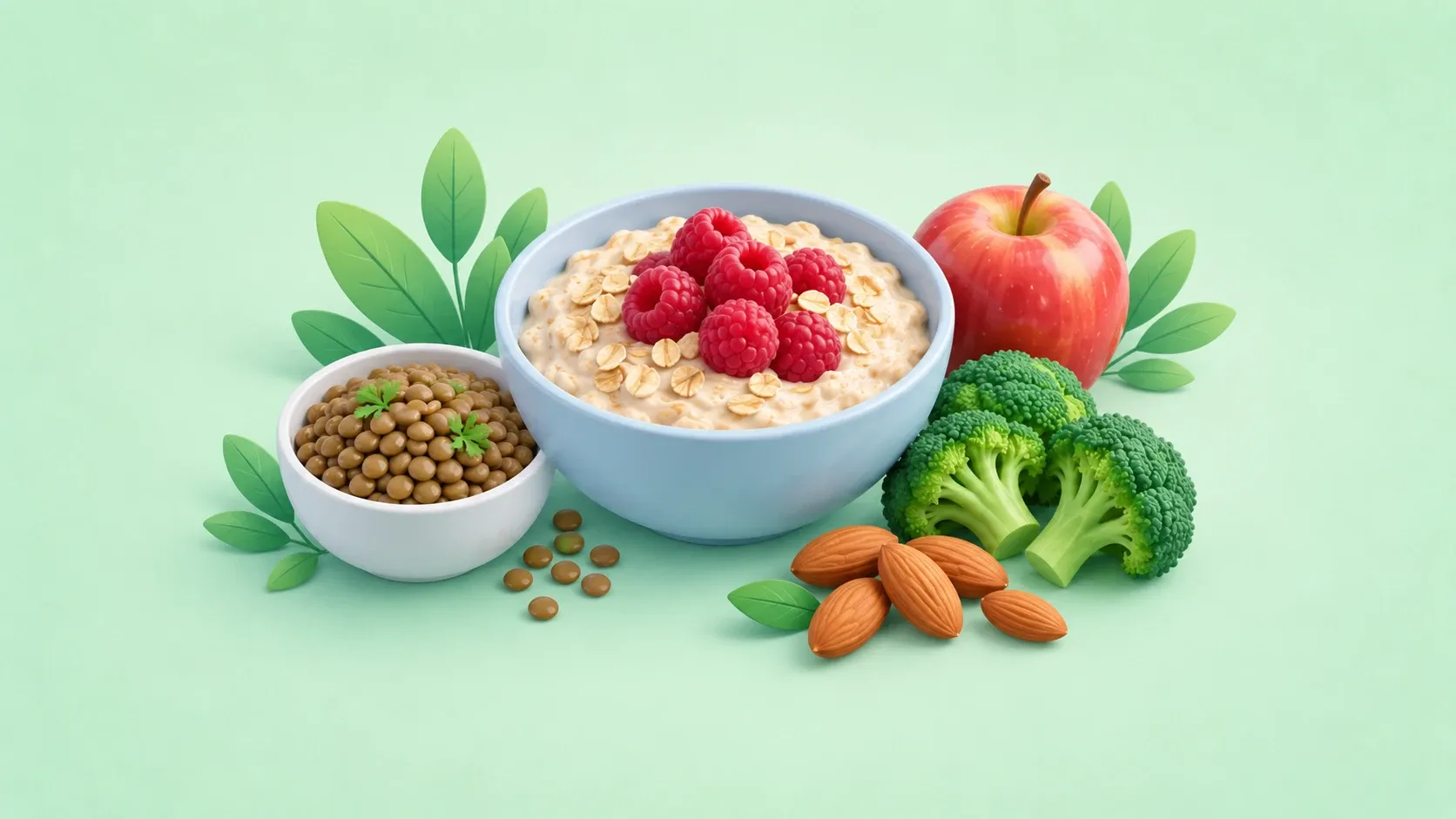
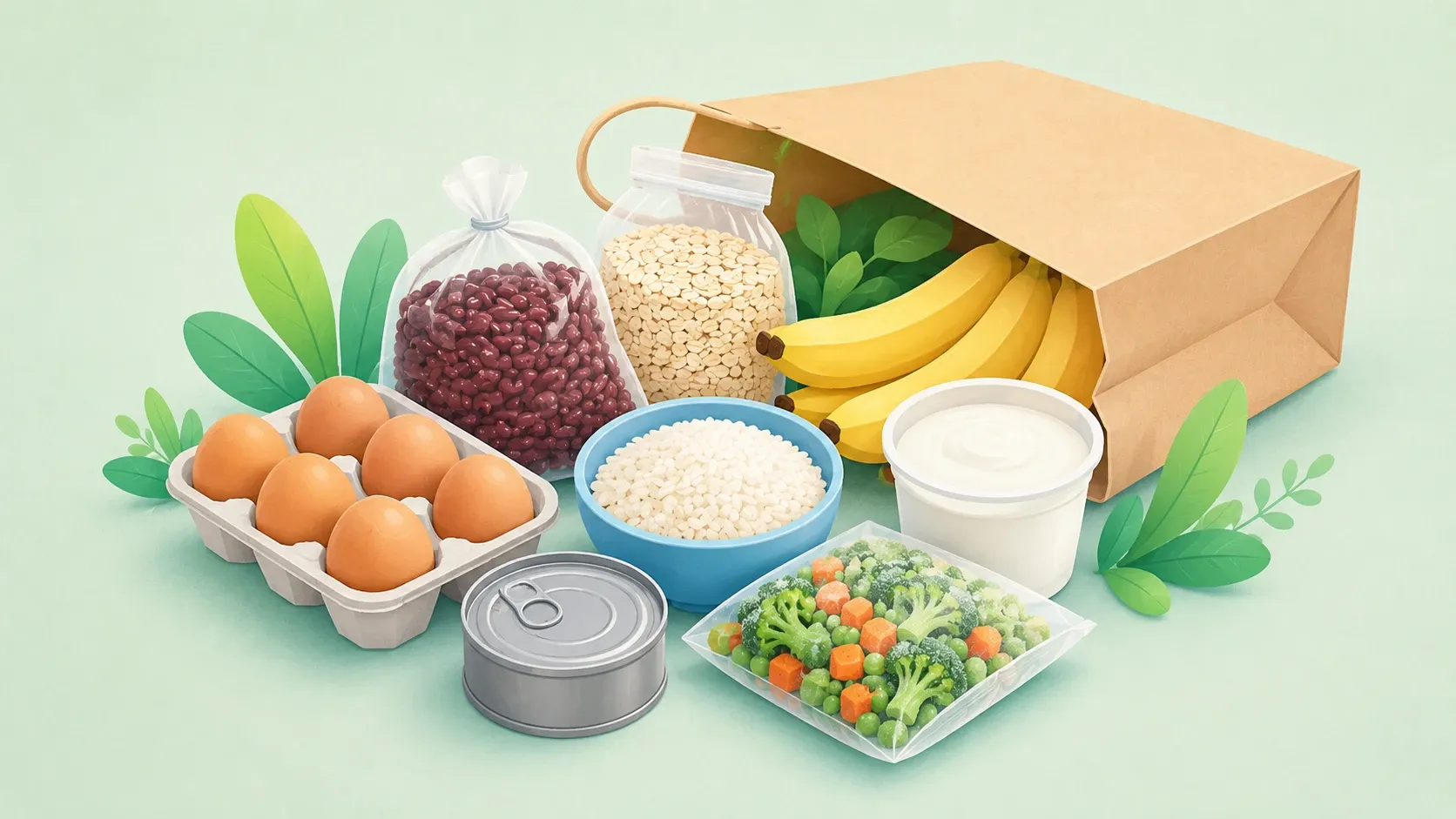
The fastest way to lower your food bill is to make a short list of cheap, nutritious staples the backbone of your meals. Foods like rice, oats, dried beans, lentils, potatoes, eggs, and frozen vegetables cost little per serving, store well, and combine into dozens of different dishes. When these form the base of your plate, the more expensive items, like fresh meat or out-of-season produce, become accents rather than the main event.
This is also how you eat a balanced diet for less. A bowl of rice and beans with frozen vegetables and an egg on top hits protein, fiber, and carbohydrates for a fraction of the cost of a packaged meal, and it is genuinely good for you. The cheap healthy staples list further down gives you a ready-made starting point.
3. Buy in bulk and compare unit prices
For staples you use often and that keep well, buying the larger size usually lowers the cost per serving. Dried beans, lentils, rice, oats, and frozen vegetables are ideal candidates because they last for months. The key skill is reading the unit price, the little “price per ounce” or “per pound” number on the shelf tag, rather than the sticker price. A bigger bag often wins per serving, but not always, so the unit price is what tells you the real deal.
Bulk only saves money if the food gets eaten, so be honest about what you will actually use. For perishables, buy what your meal plan calls for. For shelf-stable and freezer staples, stocking up when there is a sale is a simple, reliable way to cut your average cost.
4. Don’t overlook frozen and canned produce
Frozen and canned fruits and vegetables are some of the best values in the store, and a common myth says they are nutritionally inferior to fresh. They are not. Because they are typically picked at peak ripeness and processed within hours, freezing and canning lock in vitamins and minerals, and the American Heart Association is clear that fresh, frozen, and canned all count toward your daily produce (American Heart Association).
They also waste less, which is money saved. A bag of frozen broccoli or berries waits patiently in the freezer instead of wilting before you get to it. A couple of small things to look for: choose canned vegetables and beans labeled low-sodium or no-salt-added, or drain and rinse them to cut the sodium (our sodium guide has the numbers), and pick fruit canned in water or 100 percent juice rather than heavy syrup. With those easy choices, frozen and canned produce is a smart, affordable way to hit the numbers most of us are missing.
5. Choose budget-friendly proteins
Protein is where people assume they have to spend the most, but some of the best sources are remarkably cheap. You do not need expensive cuts of meat, powders, or bars to eat plenty of protein. These budget proteins do the job for far less:
- Eggs. One of the cheapest complete proteins there is, about 6 grams each, endlessly versatile from breakfast to a quick dinner.
- Canned tuna, salmon, and sardines. Shelf-stable, ready to eat, and packed with protein, with sardines and salmon adding heart-healthy omega-3 fats. A small can of tuna delivers roughly 17 to 20 grams of protein.
- Beans, lentils, and split peas. The champions of cheap nutrition. A cup of cooked lentils brings about 18 grams of protein plus a big dose of fiber, and dried bags cost very little per serving.
- Chicken thighs or a whole chicken. Thighs and whole birds are usually cheaper per pound than breasts and are hard to overcook. Buy family packs and freeze what you will not use right away.
- Plain yogurt and milk. Dairy is an economical way to add protein to breakfast and snacks; plain yogurt avoids the added sugar and cost of flavored cups.
- Tofu. An inexpensive, shelf-stable plant protein that soaks up whatever you cook it with, around 15 grams of protein per serving.
Cooking a pot of beans or lentils and using it across several meals stretches your protein budget even further. For a deeper breakdown of which foods deliver the most protein per serving and per dollar, see our guide to high-protein foods.
6. Cook at home
Cooking at home is the habit that ties all the savings together, and it is the assumption built into the USDA’s lowest-cost food plan in the first place (USDA). A homemade meal made from staples almost always costs a fraction of the takeout or frozen-dinner equivalent, and you control exactly what goes in, which usually means less added sugar, salt, and fat too.
It does not have to be elaborate. A handful of simple, repeatable meals you can make on autopilot, like a stir-fry, a pot of soup, a tray of roasted vegetables and chicken, beats an ambitious recipe you will cook once. The goal is a small rotation of cheap, decent meals you actually enjoy, not restaurant-level cooking.
7. Cut down on food waste
The average household throws away a meaningful share of the food it buys, and every bit of that is money in the trash. Reducing waste is one of the most painless ways to lower your food bill, because you are not buying anything new; you are just using what you already paid for.
A few habits help most:
- Store food properly so it lasts, and keep older items toward the front so you use them first.
- Embrace leftovers. Cook once and eat twice, or repurpose last night’s dinner into today’s lunch.
- Freeze the surplus. Extra cooked beans, soup, bread, or bananas going soft all freeze well for later.
- Plan a “use it up” meal near the end of the week, a stir-fry, soup, or omelet that absorbs the odds and ends in your fridge.
8. Buy store brands
Store brands, also called generic or private-label products, are typically much cheaper than name brands and are often made to the same standards, sometimes in the same facilities. For staples like canned beans, frozen vegetables, oats, rice, milk, and spices, the generic version is usually just as good for noticeably less. Comparing the store brand against the name brand is one of the easiest swaps you can make, and over a full cart it adds up.
9. Shop seasonal produce
Fruits and vegetables are cheapest, freshest, and most flavorful when they are in season and abundant locally. Out-of-season produce has to travel far or grow in expensive conditions, and the price reflects that. Buying what is plentiful right now, and rounding out the rest of the year with frozen and canned options, keeps produce affordable without sacrificing nutrition. If you find a great in-season deal, remember that many fruits and vegetables freeze well for later.
10. Batch cook to save time and money
A little batch cooking turns all of the above into a sustainable routine. Cooking a big pot of beans, a tray of roasted vegetables, a batch of rice, or a pot of soup gives you ready-to-go components for several meals, which makes you far less likely to order takeout on a tired weeknight. It also lets you buy and cook staples in cheaper, larger quantities.
You do not need a complicated system. Pick one or two things to make in bulk at the start of the week, store them in the fridge or freezer, and mix and match through the week. If you want a step-by-step approach to doing this without it taking over your weekend, our guide to healthy meal prep for beginners walks through the whole process.
A cheap healthy staples shopping list
These are the workhorses of an affordable, nutritious kitchen. All store well, stretch across many meals, and deliver strong nutrition per dollar. Calorie and protein figures are rounded values from USDA FoodData Central and vary by brand and preparation, so treat them as close estimates.
| Staple | Why it earns a spot | Rough nutrition note |
|---|---|---|
| Dried or canned beans | Cheap protein and fiber; endlessly versatile | About 15 g protein and 13 g fiber per cooked cup |
| Lentils and split peas | Cook fast, no soaking; great value | About 18 g protein and 15 g fiber per cooked cup |
| Eggs | Cheapest complete protein; works any meal | About 6 g protein each |
| Oats | Filling whole grain; pennies per serving | About 5 g protein per 1/2 cup dry, with fiber |
| Rice (brown or white) | Bulk-friendly base for countless meals | Cheap energy; brown adds fiber |
| Potatoes and sweet potatoes | Filling, nutritious, very low cost | Fiber, potassium, vitamin C |
| Frozen mixed vegetables | As nutritious as fresh; no spoilage | Fiber and vitamins for very little |
| Frozen berries | Cheaper than fresh out of season; long shelf life | Fiber and antioxidants |
| Canned tuna or sardines | Shelf-stable lean protein; omega-3s | About 17 to 20 g protein per can |
| Plain yogurt or milk | Affordable protein and calcium | About 8 g protein per cup of milk |
| Peanut butter | Calorie-dense protein and healthy fat | About 8 g protein per 2 tbsp |
| Cabbage and carrots | Among the cheapest vegetables; keep for weeks | Fiber and vitamins, very low cost |
| Bananas | Usually the cheapest fruit; freeze when ripe | Potassium and quick energy |
| Tofu | Inexpensive, shelf-stable plant protein | About 15 g protein per serving |
Stock even half of these and you can throw together a balanced meal almost any night without a special trip to the store.
A few low-cost, balanced meals
Here is how those staples come together into real, satisfying meals. None require anything fancy.
- Breakfast: oats with banana and peanut butter. Oats cooked with milk or water, topped with a sliced banana and a spoon of peanut butter. Filling, balanced, and costs very little.
- Lunch: tuna and bean salad. Canned tuna mixed with canned beans, a handful of chopped vegetables, and a squeeze of lemon or a light vinaigrette. High protein, no cooking.
- Dinner: rice and beans bowl. Rice and seasoned beans topped with frozen vegetables and a fried egg or some cheese. A complete, protein-rich meal for a fraction of takeout.
- Dinner: sheet-pan chicken thighs and vegetables. Chicken thighs roasted with whatever vegetables are cheap that week and a potato or two. Minimal effort, big batch, easy leftovers.
- Soup night: lentil and vegetable soup. A pot of lentils simmered with carrots, onion, cabbage, and canned tomatoes. Cheap, freezes well, and feeds you for days.
If you want more ideas built around foods that fill you up for very few calories, our list of low-calorie foods that keep you full pairs perfectly with budget cooking, since many of the most filling foods are also among the cheapest.
How tracking helps you spend smarter
Eating well on a budget is really about awareness, knowing what you are buying, eating, and spending, so the small leaks do not add up. The same awareness that helps your wallet also helps your nutrition. When you can see what your meals actually deliver, it is easier to notice that a pot of lentils is quietly covering your protein for the week, or that the impulse snacks are where both the money and the empty calories are going.
This is where a simple tracking habit earns its keep. An app like CalcEat lets you snap a photo of your plate to estimate calories and macros, scan a barcode, or log by hand, so you can see whether your cheap, home-cooked meals are hitting the protein and balance you want. It turns “I think I am eating well” into something you can actually check, which makes it far easier to keep both your diet and your grocery bill on track.
The bottom line
Healthy and cheap are not opposites. The most nutritious staples, like beans, lentils, eggs, oats, frozen produce, and seasonal fruit, are some of the most affordable foods you can buy, and a few habits, planning your meals, cooking at home, buying staples in bulk, and wasting less, turn them into genuinely good eating for less money.
Start with one or two changes this week rather than overhauling everything at once: write a list before you shop, cook one extra batch of something, or swap a name brand for the store version. Small, repeatable habits are what stick, and they add up to real savings and better meals over time. For more practical, evidence-based guidance, explore our Healthy Eating hub. You have got this.