
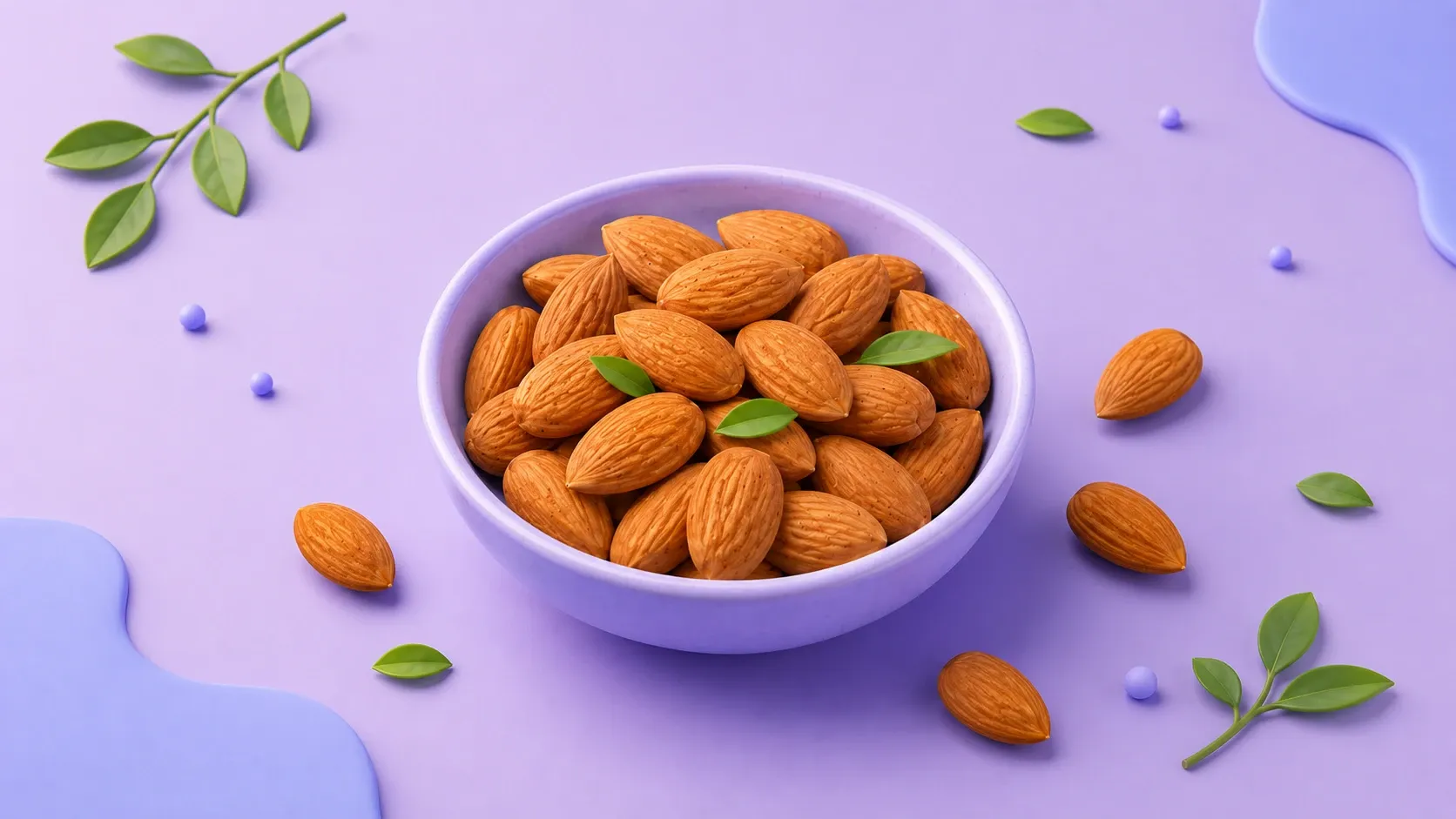

A one-ounce serving of almonds, about 23 nuts or a small handful, has roughly 164 calories, along with about 6 grams of protein, 14 grams of fat, and 3.5 grams of fiber, based on USDA FoodData Central data. Almonds are one of the most nutritious snacks you can reach for, but they are also energy dense, so the number on your plate comes down to one thing: how big your handful is.
The quick answer: calories in almonds
A level one-ounce (28 g) portion of almonds is about 164 calories. That works out to roughly 7 calories per almond, since a one-ounce serving is around 23 nuts. Per 100 grams, almonds come in at about 579 calories, which is high because nearly half of an almond by weight is fat.
Here is how the macros break down for a one-ounce serving:
- Calories: about 164 kcal
- Protein: about 6 g
- Fat: about 14 g
- Carbohydrate: about 6 g (of which about 3.5 g is fiber)
The fat is the headline, but it is mostly the heart-healthy monounsaturated kind, the same type found in olive oil. Pair that with a solid hit of protein and fiber and you get a snack that is genuinely good for you, as long as the portion stays sensible. Almonds show up on most lists of high-protein foods for a reason.
Calories by serving size
“A handful of almonds” is not a fixed amount, and that is exactly where the calories get away from people. The table below applies the USDA values to common portions, from a single nut up to 100 grams.
| Serving | Calories | Protein | Fat | Fiber |
|---|---|---|---|---|
| 1 almond | about 7 | 0.3 g | 0.6 g | 0.2 g |
| 1 oz (28 g), about 23 almonds | about 164 | 6 g | 14 g | 3.5 g |
| Large handful (about 35 almonds) | about 250 | 9 g | 21 g | 5 g |
| 1/2 cup (about 68 g) | about 395 | 14 g | 34 g | 8.5 g |
| 100 g | about 579 | 21 g | 50 g | 12.5 g |
The takeaway: a generous handful eaten straight from the bag can quietly hit 250 calories, and half a cup is nearly 400. That is not a problem if it fits your day, but it is easy to underestimate. For more reference numbers like these, our Food and Calorie Guides hub keeps them in one place.
Why almonds are so energy dense
Almonds pack a lot of calories into a small weight because they are roughly 50 percent fat, and fat carries more than twice the calories per gram of protein or carbohydrate. That is what makes 100 grams of almonds add up to nearly 579 calories, more than three times the same weight of cooked chicken breast.
Energy density is not a reason to avoid almonds. It just means a little goes a long way, and that the difference between a measured portion and a free pour is large. A few practical points:
- Portion by weight or count, not by feel. A level one-ounce serving is about 23 almonds. Counting them out once gives you a visual you can reuse.
- Snack from a small bowl, not the bag. Pre-portioning is the single easiest way to keep the calories where you want them.
- Watch the oil-roasted and flavored kinds. Honey-roasted, candied, and chocolate-covered almonds add sugar and fat on top of the nut itself, so the calories climb. Check the label on anything packaged.
The “not all calories absorbed” nuance
Here is an interesting wrinkle. The 164-calorie figure comes from the standard Atwater factors used to estimate food energy. But a USDA study of whole almonds found your body may not absorb all of those calories, because some of the fat stays locked inside the nut’s cell walls and passes through undigested. In that controlled study, whole almonds delivered roughly 20 percent fewer calories than the label math predicted (Novotny et al., 2012).
A couple of caveats keep this honest. The effect is strongest for whole, raw almonds; grinding them into almond butter or chewing very thoroughly breaks down those cell walls and frees more of the fat, so the savings shrink. And the standard USDA value of 164 calories per ounce is still the right number to log, because it is the established reference and the absorption effect varies from person to person. Think of it as a small bonus working in your favor, not a license to add a couple of extra handfuls.
What almonds give you nutritionally
Beyond the calories, almonds earn their place as a snack. A one-ounce serving delivers:
- Protein: about 6 grams of plant protein, which helps with fullness and supports muscle.
- Fiber: about 3.5 grams, more than most tree nuts, which slows digestion and feeds a healthy gut.
- Healthy fats: about 14 grams, around 80 percent monounsaturated, the type linked to better heart health.
- Vitamin E: roughly 7 mg, about half a day’s worth in a single ounce, plus magnesium, calcium, and riboflavin.
That combination of protein, fiber, and fat is why almonds are so satisfying despite the calories. The Harvard Nutrition Source notes that the fat and fiber in nuts improve feelings of fullness, and that regular nut eaters tend to gain less weight over time, not more. If you are curious how protein, carbs, and fat work together on your plate, our guide on what macros are breaks it down.
How almonds fit a calorie budget
Almonds reward a little planning. Because they are filling, a small portion can do a lot of work, but because they are dense, an unmeasured portion can blow a hole in your day. Three ways to make them fit:
Use them as a satisfying mini-snack. A measured ounce at roughly 164 calories bridges the gap between meals and curbs the urge to grab something less nutritious. Protein and fiber make it stick. If you tend to snack out of boredom, our list of low-calorie filling foods pairs well with a small handful of almonds.
Log them honestly. This is where most of the slip happens. Weighing or counting almonds and logging the real portion in a tracking app like CalcEat keeps the math accurate, so a 250-calorie handful does not get recorded as a 100-calorie one.
Trade up, not just add. Swapping chips or crackers for a measured ounce of almonds usually upgrades the nutrition for a similar calorie cost. Adding almonds on top of everything else, ungoverned, is what quietly stalls a calorie deficit.
The bottom line
A one-ounce serving of almonds, about 23 nuts, is roughly 164 calories with 6 grams of protein, 14 grams of mostly healthy fat, and 3.5 grams of fiber. Per 100 grams they reach about 579 calories, which makes them energy dense, but also nutrient dense and genuinely filling. There is even decent evidence your body does not absorb every calorie in a whole almond.
Keep it simple: portion them out, log the real amount, and let a small handful do its job. Treated that way, almonds are one of the better snacks you can build into a calorie budget, not one to fear.
This article is general information, not medical or dietary advice for your specific situation.