
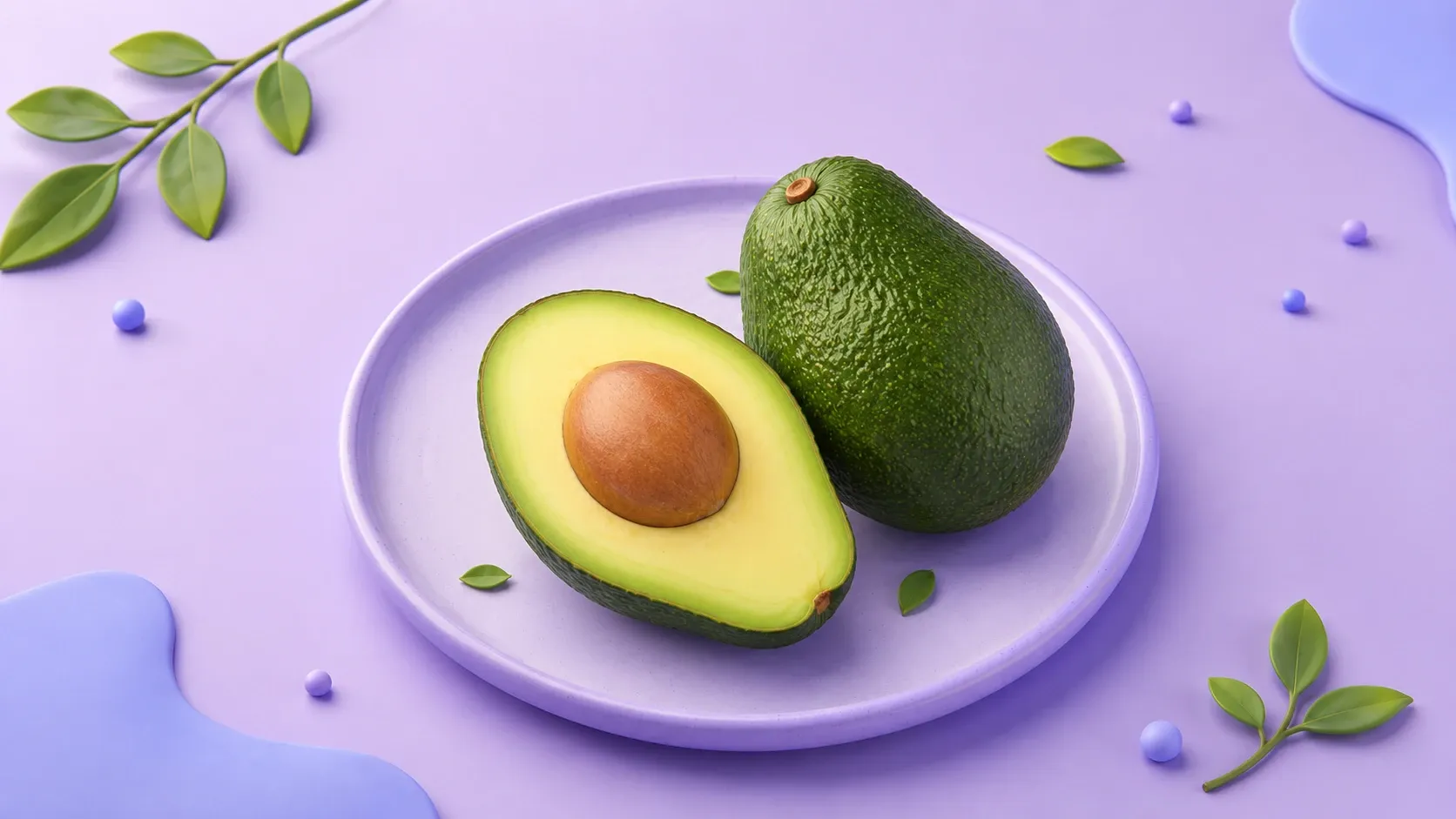

Raw avocado has about 160 calories per 100 grams of flesh, along with roughly 14.7 grams of fat, 8.5 grams of carbohydrate, and 6.7 grams of fiber, according to USDA FoodData Central. Unlike most fruit, avocado is mostly fat rather than sugar, which makes it more calorie-dense than an apple or a banana but also a rich source of heart-healthy monounsaturated fat. The total on your plate comes down to one thing more than any other: how much avocado you actually eat.
The quick answer: calories in an avocado
A whole medium avocado yields about 150 grams of edible flesh, which works out to around 240 calories. Half a medium avocado, roughly 75 grams of flesh, is about 120 calories. Because the fat content is high and steady, the calories track closely with how much flesh you scoop out.
Here is how the numbers break down for 100 grams of raw avocado flesh:
- Calories: about 160 kcal
- Fat: about 14.7 g (mostly monounsaturated)
- Carbohydrate: about 8.5 g, of which about 6.7 g is fiber
- Protein: about 2 g
Strip out the fiber and net carbs land near 1.8 grams, so very little of avocado’s energy comes from sugar. The fat is what drives the calorie count, and as we will see, that is not a bad thing.
Calories by serving size
“One avocado” is not a fixed amount, so the calories swing with the size of the fruit and how much you eat. The table below applies the USDA per-100-gram value for raw avocado (160 calories, 14.7 g fat, 6.7 g fiber) to common serving sizes.
| Serving | Calories | Fat | Fiber |
|---|---|---|---|
| 1 oz (28 g) | about 45 | 4.1 g | 1.9 g |
| Half medium (about 75 g flesh) | about 120 | 11.0 g | 5.0 g |
| 100 g flesh | about 160 | 14.7 g | 6.7 g |
| Whole medium (about 150 g flesh) | about 240 | 22.0 g | 10.0 g |
The takeaway: a whole medium avocado carries roughly double the calories of a half, and far more than the small slices you might add to a sandwich. If you are tracking carefully, weighing the flesh beats guessing, because avocados vary a lot in size and “one avocado” can mean anywhere from about 200 to 320 calories. For more reference numbers like these, our Food and Calorie Guides hub keeps them in one place.
Why avocado is energy-dense but still nutritious
Most fruit is mainly water and natural sugar, so it is low in calories. Avocado is the outlier: it is built mostly from fat, and fat carries about 9 calories per gram compared with 4 for carbohydrate. That is the whole reason a single avocado can hold as many calories as a small meal while a whole apple sits near 95.
But calorie density is only half the story. Those calories arrive alongside a lot of nutrition. A whole medium avocado delivers about 10 grams of fiber, close to 500 milligrams of potassium per 100 grams (more per serving than a banana, per Harvard’s Nutrition Source), plus folate, vitamin K, vitamin E, and a range of B vitamins. So avocado is energy-dense and nutrient-dense at the same time, which is exactly why it earns a place in a healthy diet rather than a spot on the avoid list.
The fat in avocado: a monounsaturated standout
This is where avocado really sets itself apart. About two-thirds of its fat is monounsaturated, mostly oleic acid, the same fat that makes olive oil heart-healthy. Of the roughly 14.7 grams of fat per 100 grams, around 9.8 grams is monounsaturated and only about 2.1 grams is saturated.
That profile matters for more than calorie math. Replacing saturated fat with unsaturated fat is linked to lower LDL cholesterol and better heart health, and avocado is one of the easiest whole foods to do that with (Harvard, Types of Fat). Harvard’s Nutrition Source points to a long-running study in which people eating at least two servings a week (one serving is half an avocado) had a lower risk of cardiovascular disease. So while avocado is calorie-rich, the calories come packaged with a fat profile most diets could use more of. If you are swapping foods to upgrade your fats, our guide to healthy food swaps covers more ideas like this.
Avocado, fiber, and staying full
Avocado is filling out of proportion to how it looks, and fiber is a big reason. At about 6.7 grams per 100 grams, avocado is one of the higher-fiber whole foods, and most adults fall short of the 25 to 38 grams a day generally recommended. Fiber slows digestion, blunts blood-sugar spikes, and adds to the feeling of fullness after a meal.
Pair that fiber with the slow-digesting fat and you get a food that helps quiet appetite, which is useful whether you are maintaining or in a deficit. That combination is what puts avocado on most lists of low-calorie, filling foods for its serving size, even though it is not low in calories overall. The trick is the portion: half an avocado gives you most of the satiety benefit for about 120 calories.
How avocado fits a calorie budget
Avocado is easy to enjoy on a calorie target as long as you treat it as a counted ingredient, not a free topping. A few practical points make that simple.
Portion it on purpose. Half an avocado, around 120 calories, adds creaminess to toast, eggs, salads, or a bowl without dominating your day. Scooping straight from the skin makes it easy to eat a whole one without noticing, so portioning first helps.
Mind what you pair it with. The avocado itself is predictable, but guacamole loaded with extra oil, or avocado piled onto an already rich dish, adds up fast. Logging the avocado and the add-ons separately keeps the math honest. A tracking app like CalcEat lets you do exactly that.
Use it to replace, not just add. Swapping mayonnaise for mashed avocado, or butter for avocado on toast, trades saturated fat for unsaturated fat at a similar or lower calorie cost. Used as a swap rather than an extra, avocado can improve a meal’s quality without blowing the budget.
A few simple ways to keep avocado working for your goals:
- Weigh the flesh when calories count. Avocado size varies enough that eyeballing can be off by 100 calories or more.
- Default to half. It covers most of the flavor and satiety for half the calories of a whole one.
- Let it stand in for less healthy fats. Avocado shines as a replacement for butter, mayo, or cheese, not as a pile-on. If you are balancing your day, our macros guide explains how fat fits the bigger picture.
The bottom line
Raw avocado is about 160 calories and 14.7 grams of fat per 100 grams, so half a medium avocado is around 120 calories and a whole one is roughly 240. It is more calorie-dense than other fruit because it is built from fat, but that fat is mostly the heart-healthy monounsaturated kind, and it comes with a lot of fiber, potassium, and vitamins. For most people, avocado is a nutritious food worth fitting in, not avoiding.
Keep it simple: portion it, count it in your budget, and lean on it to upgrade the fats in your meals. Weigh the flesh, favor half over whole when calories are tight, and avocado earns its place on a plate without crowding out your day.
This article is general information, not medical or dietary advice for your specific situation.