
You can count calories accurately without weighing a single thing. The trick isn’t precision at every meal, it’s getting your estimates close enough, often enough, to see the trend that matters. This guide shows you how, using your own hands, a few everyday objects, nutrition labels, and a quick photo when you want a fast estimate.
If you’ve ever felt that tracking has to mean a kitchen scale and a spreadsheet, this is the friendlier path. It’s the one most people actually stick with.
Why “close enough” beats “perfect”
Here’s a freeing truth: your body doesn’t read your food log. It responds to what you eat over days and weeks, not to whether Tuesday’s lunch was 612 calories or 580. Weight change follows the overall pattern, which is exactly why being roughly right most days outperforms being exactly right once in a while.
A kitchen scale is the most precise tool available, and there’s nothing wrong with using one. But precision and usefulness aren’t the same thing. An estimate you’ll actually repeat tomorrow is worth more than a perfect measurement you’ll abandon by Friday.
It also helps to know how the experts think about balance. The NHS Eatwell Guide makes the point plainly: you don’t have to get everything right at every meal, just aim to get the balance right across a day or even a week. The same forgiving logic applies to calorie counting.
Before you estimate portions, it helps to know what you’re aiming for. If you haven’t set a daily number yet, start with How Many Calories Should You Eat to Lose Weight?, and if you want the science behind why that number works, read What Is a Calorie Deficit?. For the bigger picture, our Calorie Counting hub ties these pieces together. With a target in mind, estimation becomes a tool rather than a guessing game.
The hand-portion method
Your hands are a measuring set you never leave at home, and they scale to your body. A bigger person with bigger hands gets slightly larger portions; a smaller person gets smaller ones. That built-in personalization is part of why the method is so practical.
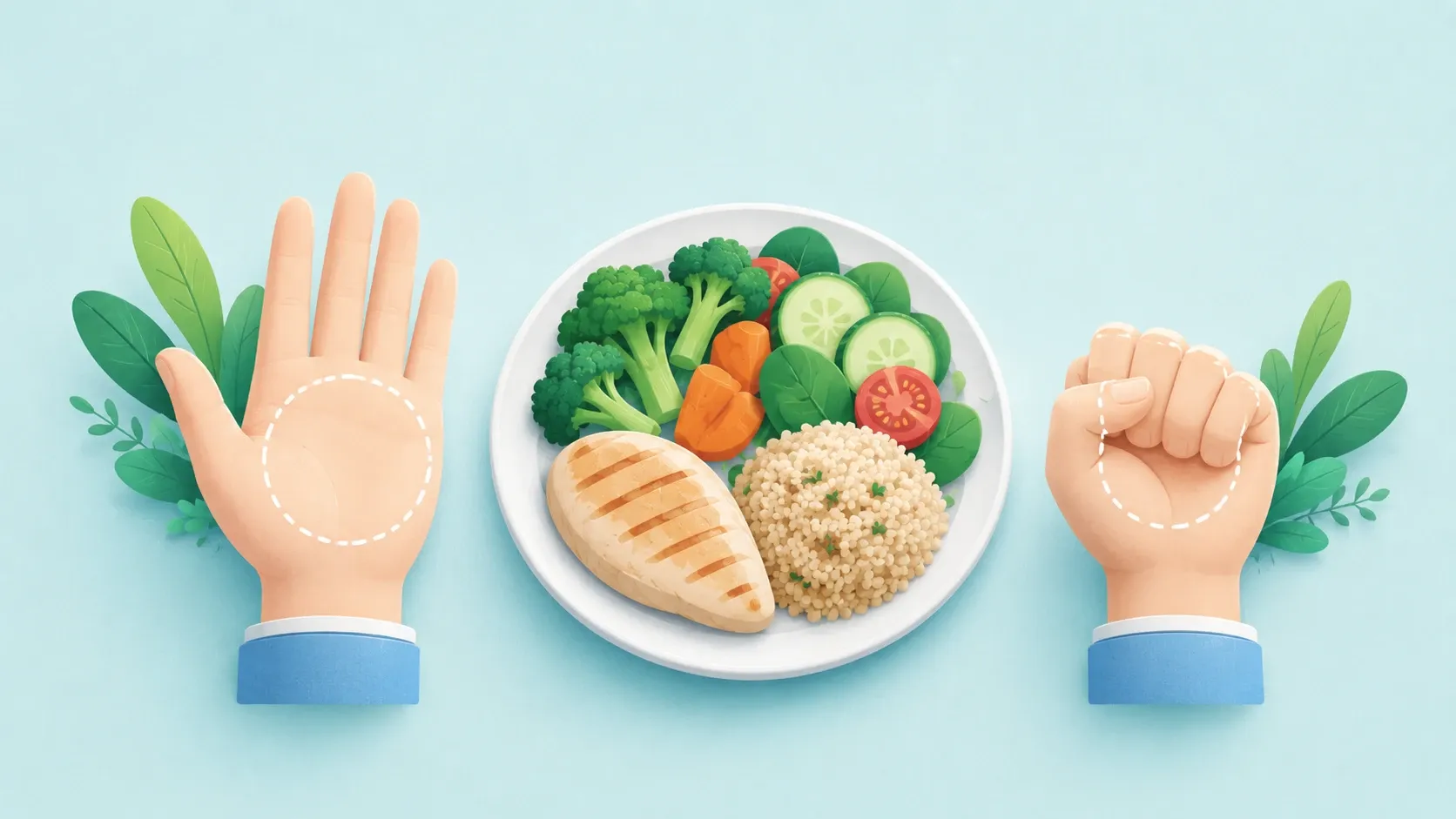
The approach is simple. Match a body part to a food group:
- Palm = protein. A portion of meat, fish, eggs, or tofu about the size and thickness of your palm.
- Fist = vegetables. A fist-sized serving of non-starchy vegetables like broccoli, peppers, spinach, or salad.
- Cupped hand = carbs. A cupped handful of rice, pasta, potatoes, oats, or other starchy carbs.
- Thumb = fats. A thumb-sized amount of oils, butter, nut butter, cheese, or nuts.
Research supports using hands as a reasonable estimation aid. A 2016 study in the Journal of Nutritional Science found that hand-based measures worked well for many foods, especially items with a regular shape, and concluded that hands can be a usefully accurate, always-available way to gauge portions (Gibson et al., 2016). The authors framed it as a complement to other tools rather than a replacement, which is a sensible way to use any estimation method.
A quick hand-portion reference
Use this table as a starting point. The calorie figures are rough ranges to set expectations, not exact values, because foods within a group vary.
| Body part | Food group | Roughly equals | Typical amount |
|---|---|---|---|
| Palm | Protein (chicken, fish, lean meat, tofu) | A deck of cards | About 3 to 4 oz cooked, ~20 to 30 g protein |
| Fist | Non-starchy vegetables | A baseball | About 1 cup |
| Cupped hand | Starchy carbs (rice, pasta, potato, oats) | A tennis ball | About 1/2 to 2/3 cup cooked |
| Thumb | Fats and oils (butter, oil, nut butter, cheese) | A poker chip stack | About 1 tablespoon, ~100 to 120 calories |
A handy way to build a balanced plate: one to two palms of protein, one to two fists of vegetables, one to two cupped hands of carbs, and a thumb or two of fats. Adjust up or down based on your calorie target and how hungry you are.
Everyday objects as portion cues
If hands feel awkward at first, common objects give you another reliable yardstick. These are the visual references dietitians reach for again and again:
- A deck of cards or your palm equals about 3 ounces of cooked meat or fish.
- A baseball or a clenched fist equals about 1 cup, useful for vegetables, salad, or whole fruit.
- A tennis ball equals about a half cup, handy for cooked grains, pasta, or starchy sides.
- A poker chip is roughly a tablespoon, good for oils, dressings, and spreads.
- A pair of dice or your thumb tip equals about an ounce of hard cheese.
- A light bulb is a fair stand-in for a half-cup portion of loose foods like berries.
The point isn’t to memorize all of them. Pick two or three that match the foods you eat most and they’ll cover most of your meals.
Read labels, and read them carefully
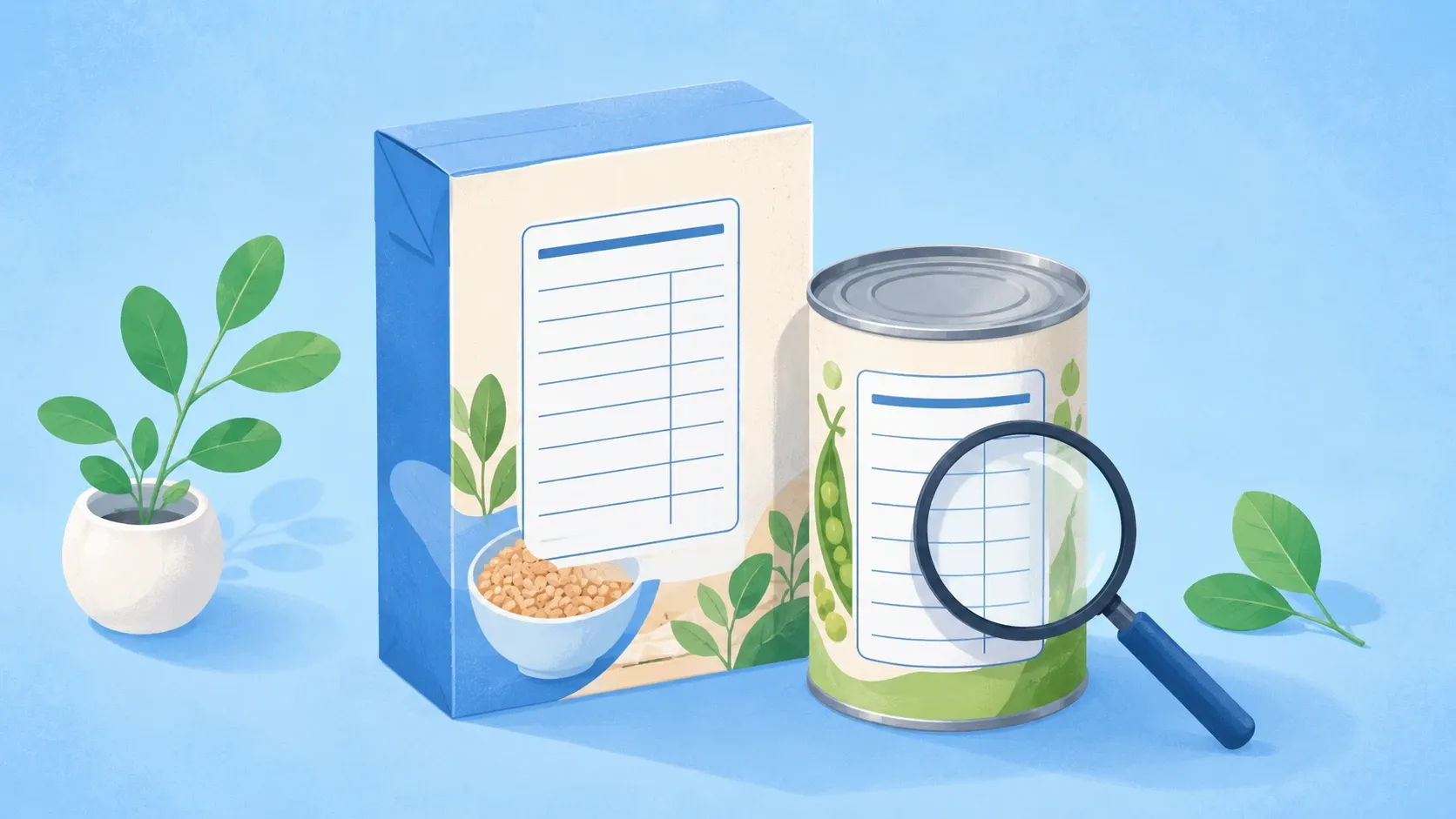
Packaged foods hand you the numbers directly, but there’s one habit that trips people up: the serving size. The calories listed are per serving, and the package may hold several servings. A bag of chips or a pint of ice cream can quietly contain two, three, or four servings, so the number on the front tells only part of the story.
When you check a label, do three quick things:
- Find the serving size and compare it to how much you actually plan to eat.
- Multiply the calories by the number of servings you’ll have.
- Scan the key numbers like total fat, sugars, and protein so you understand what you’re getting, not just the calorie count.
A useful rule of thumb from nutrition labeling: about 5 percent of the Daily Value or less of a nutrient per serving is considered low, and 20 percent or more is considered high. That quick gut-check helps you compare products at a glance without doing heavy math.
Use restaurant and menu calorie info
Eating out is where estimates get fuzziest, and where posted numbers help most. In the United States, the FDA requires chain restaurants and similar establishments with 20 or more locations to list calorie information on their menus and menu boards. When those numbers are there, use them as your anchor.
When they’re not posted, lean on hand portions and stay alert to how the dish was prepared. Grilled, baked, steamed, and roasted foods tend to be lower in added fat than fried, creamy, or buttery ones. Ordering sauces and dressings on the side gives you control over one of the biggest hidden sources of calories, which leads neatly to the next point.
The calories that are easy to miss
Most underestimation doesn’t come from the obvious stuff on your plate. It comes from the extras that don’t feel like food. These add up fast:
- Cooking oils and butter. A single tablespoon of oil is roughly 120 calories, and pans often get more than a tablespoon. Sauteing and stir-frying are common blind spots.
- Dressings, sauces, and spreads. Two or three tablespoons of dressing can rival the calories of the salad it’s on.
- Drinks. Liquid calories slip by because they don’t fill you up the way food does. The CDC notes that sugary drinks are the leading source of added sugars in the American diet, and a 12-ounce regular soda has more than 10 teaspoons of added sugar, about 150 calories (CDC, Rethink Your Drink). Specialty coffees, juice, and alcohol count too.
- Bites, licks, and tastes. The fries you steal, the cheese you nibble while cooking, the kids’ leftovers you finish. None feel like a meal; together they can be a meaningful number.
These quiet extras are a big reason intake is so commonly underestimated. In a well-known study published in the New England Journal of Medicine, adults underreported their actual food intake by an average of about 47 percent, not because they were dishonest, but because everyday tracking is genuinely hard to do by memory (Lichtman et al., 1992). Simply being aware of the usual culprits closes most of that gap.
Where photo-based AI logging fits
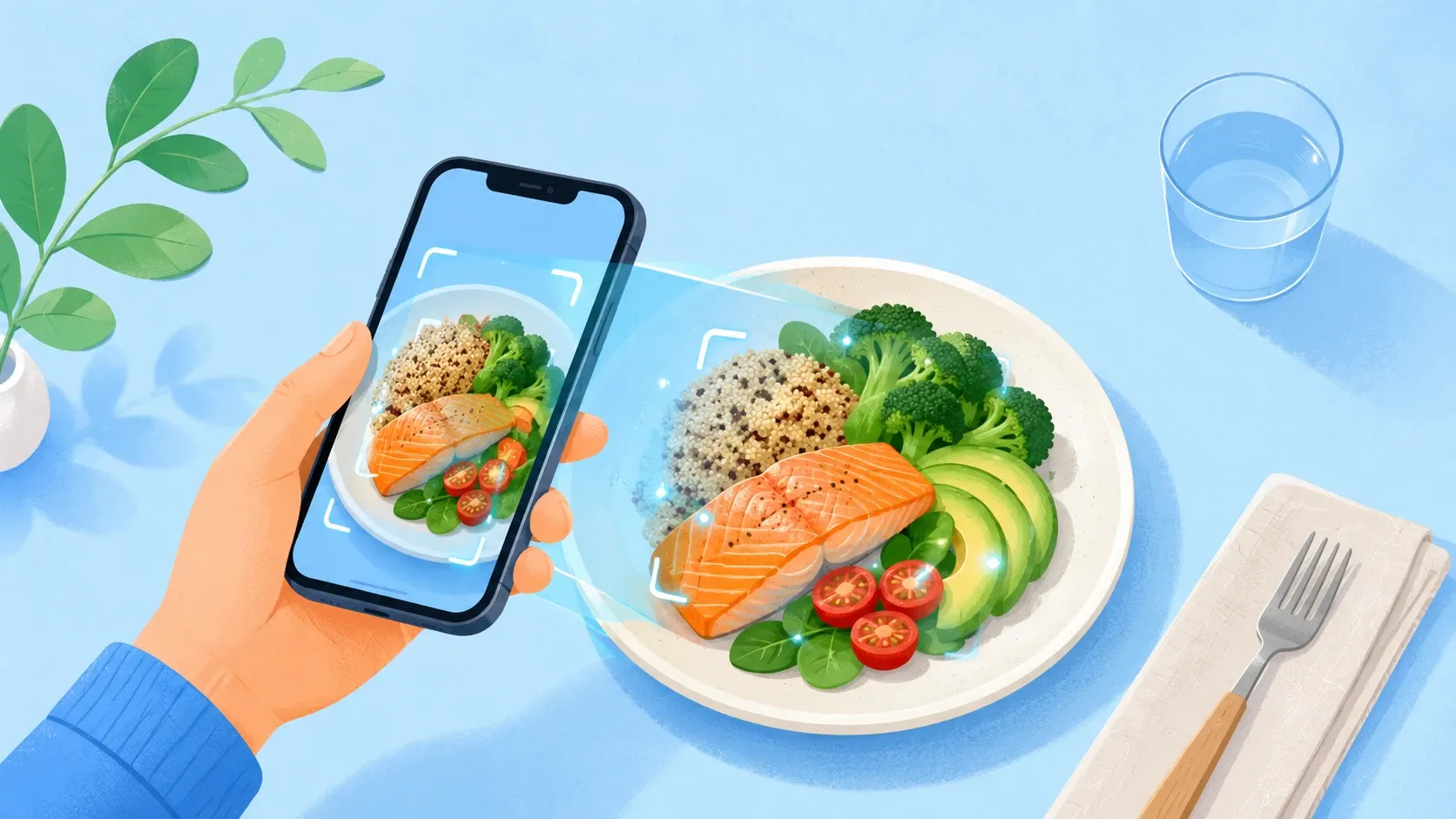
This is exactly the situation a quick photo is built for. Instead of weighing your plate or scrolling a database, you snap a picture and let the app estimate the portions, calories, and macros for you. Apps like CalcEat use AI to read your meal from a photo, which makes logging fast enough that you’ll actually keep doing it, and consistency is the whole game.
Treat the estimate as a strong starting point rather than a final verdict. You can nudge it when you know a portion was unusually large or small, and over time you’ll get a feel for when to trust it as-is. Photo logging also helps in the awkward moments, like restaurant meals or a friend’s cooking, where weighing simply isn’t an option.
A fair expectation helps here. Research on estimating portions from images shows it’s a hard task to nail perfectly, and that combining methods improves accuracy (Naska et al., 2022). So use the photo for speed, sanity-check it against your hand portions when something looks off, and you’ll get the best of both.
The 80/20 consistency principle
Here’s the mindset that ties everything together. If you log most of your meals most of the time and your estimates are in the right ballpark, you’ll see clear, reliable feedback, even with the occasional miss. Being roughly right four or five days a week beats being exactly right one day and giving up the rest.
Think of it as aiming for “good enough, repeated” rather than “perfect, occasionally.” Trends reveal themselves over a week or two, not over a single dinner. If the scale and your measurements are moving the way you want, your estimating is working, full stop.
Skipping a meal in your log isn’t failure either, but a blank entry teaches you nothing while a rough estimate keeps your data honest. When in doubt, log your best guess and move on.
Common estimation pitfalls to avoid
A few predictable traps catch nearly everyone. Watch for these:
- Forgetting the cooking fat. Always account for the oil or butter in the pan, not just the food.
- Eyeballing dense foods low. Nut butter, cheese, granola, oils, and dried fruit pack a lot of calories into a small space, so they’re easy to under-count.
- Ignoring liquid calories. Drinks, dressings, and sauces deserve a spot in your log.
- Confusing serving size with portion size. The label’s serving is a reference amount, not a recommendation or a measure of what you actually ate.
- Estimating only when it’s convenient. Skipping the meals that feel hard to log is how the day’s biggest calories disappear.
- Chasing false precision. Don’t let perfect math become the reason you quit. A confident estimate beats an anxious one.
A simple safeguard: weigh a handful of your most common foods once or twice to calibrate your eye, then trust your estimates day to day. Your guesses get noticeably better after you’ve seen what a real portion looks like next to its number.
Putting it all together
You don’t need a scale, a spreadsheet, or perfect numbers to count calories well. You need a target, a few reliable estimation habits, and the willingness to log most days even when the math is fuzzy.
Use your hands and everyday objects to size up portions. Read labels with the serving size in mind. Lean on posted menu calories when you eat out, and keep an eye on the quiet extras like oils, sauces, and drinks. When you want speed, let a photo do the heavy lifting. Then zoom out and watch the trend.
Get those basics right and “close enough” turns out to be more than enough. Aim for consistency, give yourself grace on the imperfect days, and let the weeks do the talking.