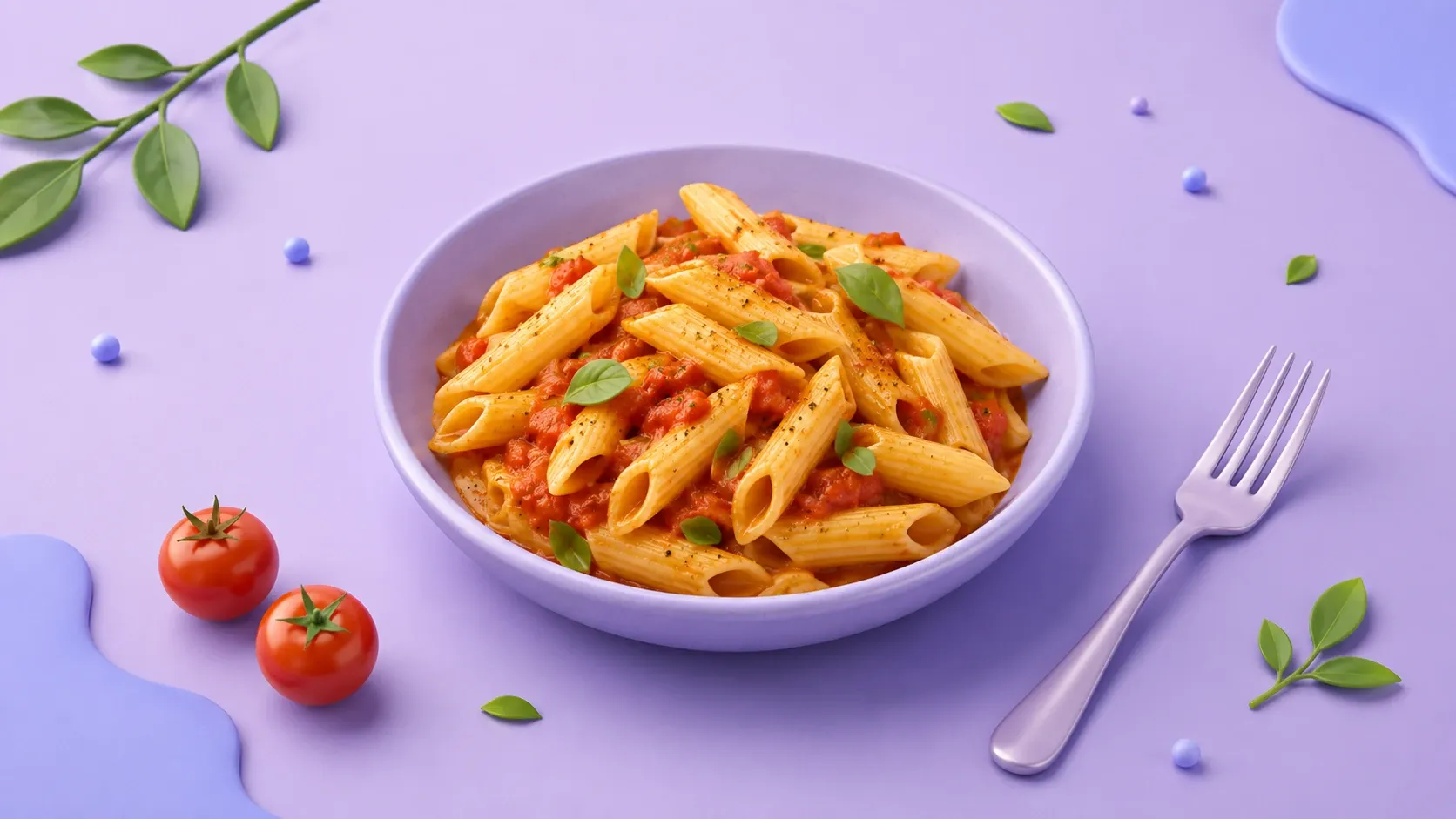

Plain cooked pasta has about 158 calories per 100 grams, along with roughly 31 grams of carbohydrate, 6 grams of protein, and only about 1 gram of fat, based on USDA FoodData Central data. A standard 1 cup serving lands at around 221 calories. Pasta gets a bad reputation for being fattening, but the truth is more practical: the calories come down to how much you serve and what you put on top, far more than the noodles themselves.
The quick answer: calories in pasta
A plain, cooked serving of regular pasta, with no oil or sauce, comes in at about 158 calories per 100 grams. Because pasta is mostly carbohydrate with very little fat, the number tracks closely with weight, so portion size is what moves the total.
Here is how the macros break down for 100 grams of plain cooked pasta:
- Calories: about 158 kcal
- Carbohydrate: about 31 g
- Protein: about 6 g
- Fat: about 1 g
Values vary a little by shape and brand, so depending on the exact product you may see anything from roughly 130 to 160 calories per 100 grams cooked. Either way, pasta is a carbohydrate-forward food with modest protein and almost no fat, which is why what you add to it usually decides the calorie damage.
Calories by serving size
“A serving of pasta” means very different things on a box, in a measuring cup, and on a restaurant plate. The table below applies the USDA cooked-pasta value (about 158 calories per 100 grams) to common servings, plus the dry serving most packages list.
| Serving | Calories | Carbs | Protein |
|---|---|---|---|
| 100 g cooked | about 158 | 31 g | 6 g |
| 1 cup cooked (about 140 g) | about 221 | 43 g | 8 g |
| 2 oz dry (56 g), package serving | about 208 | 42 g | 7 g |
| Large bowl, 2 cups cooked | about 442 | 87 g | 16 g |
| Restaurant portion, 3 cups cooked | about 664 | 130 g | 24 g |
The takeaway: a generous restaurant plate can carry three or four times the calories of a measured cup, before any sauce. If you are tracking carefully, weighing the pasta beats guessing, because “a bowl of pasta” can mean anywhere from about 221 to well over 650 calories. For more reference numbers like these, our Food and Calorie Guides hub keeps them in one place.
Dry versus cooked: why the number changes
This is where most pasta-tracking mistakes happen. Dry, uncooked pasta is about 371 calories per 100 grams, nearly triple the cooked figure. Cooking does not add or remove calories, but pasta soaks up water and roughly doubles in weight, which spreads the same calories across more grams.
So 56 grams of dry pasta (the standard 2 oz serving, about 208 calories) becomes roughly a cup or so of cooked pasta, still about 208 calories. The water it absorbed has no calories.
What this means in practice:
- Weigh pasta dry when you can. It is the most accurate way to log it, because dry weight does not change with how long you boil it or how well you drain it.
- If you weigh it cooked, use a cooked-pasta value (about 158 calories per 100 grams), not the dry one.
- Never mix the two. Logging a cooked weight against the dry value (about 371 per 100 grams) is one of the most common tracking errors, and it can overcount your pasta by more than double.
White versus whole-wheat: a small calorie gap, a big fiber gap
Swapping white pasta for whole-wheat barely changes the calories. Cooked whole-wheat pasta is about 149 calories per 100 grams, only a few less than regular pasta. The meaningful difference is fiber.
| Type (100 g cooked) | Calories | Carbs | Fiber |
|---|---|---|---|
| Regular pasta | about 158 | 31 g | about 1.8 g |
| Whole-wheat pasta | about 149 | 30 g | about 3.9 g |
Whole-wheat pasta delivers roughly twice the fiber, which slows digestion, blunts blood-sugar spikes, and helps you feel full for longer on the same calories. Whole grains are also linked to better long-term health outcomes, which is why dietary guidance keeps pointing people toward them (Harvard Nutrition Source). If you are looking for easy upgrades like this, our guide to healthy food swaps covers more.
The sauce is usually the real calorie story
Here is the part that catches people out: the pasta is often the smallest part of the calorie total. A cup of plain pasta is about 221 calories, but what goes on top can quietly double or triple the plate.
Rough additions on top of the pasta:
- Tomato or marinara sauce, 1/2 cup: about 40 to 70 calories. The lightest option.
- Olive oil, 1 tablespoon: about 120 calories. Easy to free-pour two or three times that.
- Pesto, 1/4 cup: about 230 to 260 calories, mostly oil and nuts.
- Alfredo or cream sauce, 1/2 cup: about 200 to 300 calories from cream, butter, and cheese.
- Grated parmesan, 2 tablespoons: about 40 to 45 calories.
A measured cup of pasta with marinara might total around 275 calories, while the same pasta drowned in alfredo and oil can clear 520 to 620 before you add meat. The noodles barely moved. The sauce, oil, and cheese did the work, which is exactly the kind of thing a food log makes visible. A tracking app like CalcEat lets you log the pasta and the sauce separately so the math stays honest.
How pasta fits a calorie budget
Pasta is not fattening, and it does not need to be off-limits when you are watching calories. It just rewards a little structure.
Portion is everything. Because pasta is calorie dense and easy to over-serve, deciding the amount up front is the single biggest lever. Measuring a cup or two of cooked pasta, rather than filling the bowl, keeps the meal in a sensible range. If you are figuring out your own intake, our guide on how many calories you should eat to lose weight lays out the math.
Let the rest of the plate do the filling. Pasta is mostly carbohydrate, so pairing a moderate portion with lean protein and vegetables makes the meal more satisfying for the calories and rounds out the nutrition. Building the plate that way is easier when you know your targets, which is where learning how to count macros helps.
Mind the add-ons, not the noodles. The oil, butter, cream, and cheese are where the calories hide. Lighter tomato-based sauces, a measured drizzle of oil instead of a free pour, and a hand of vegetables stirred in all keep the plate generous without the calorie creep.
The bottom line
Plain cooked pasta is about 158 calories and 31 grams of carbohydrate per 100 grams, and a 1 cup serving is roughly 221 calories. Dry pasta looks far more calorie dense at about 371 per 100 grams only because it has not absorbed water yet, so the smart move is to weigh it dry. Whole-wheat pasta saves just a few calories but adds real fiber.
Keep it simple: measure your portion, weigh the pasta dry when you can, and watch the sauce more than the noodles. Logged that way, pasta fits almost any calorie budget without much fuss.
This article is general information, not medical or dietary advice for your specific situation.