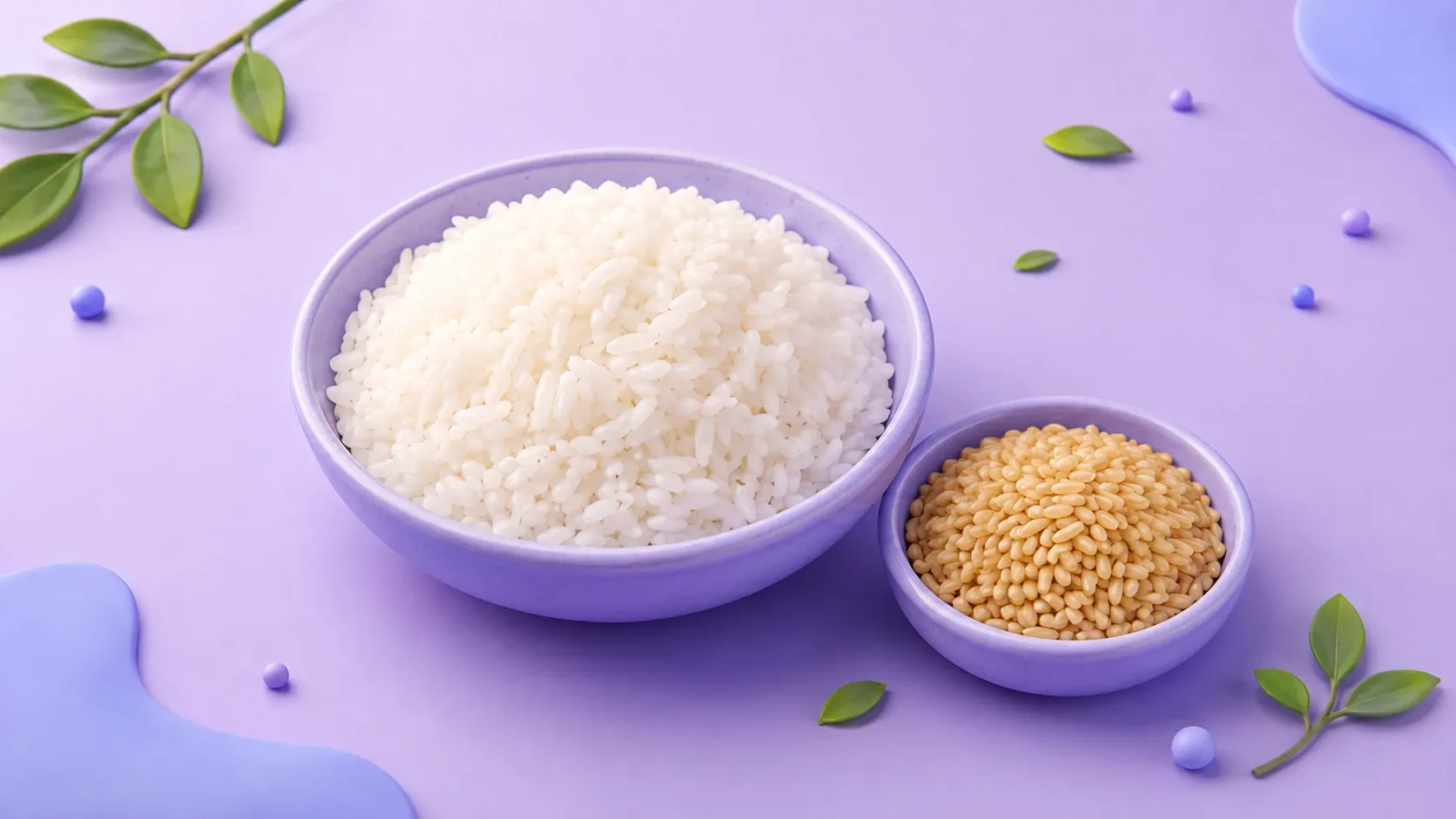
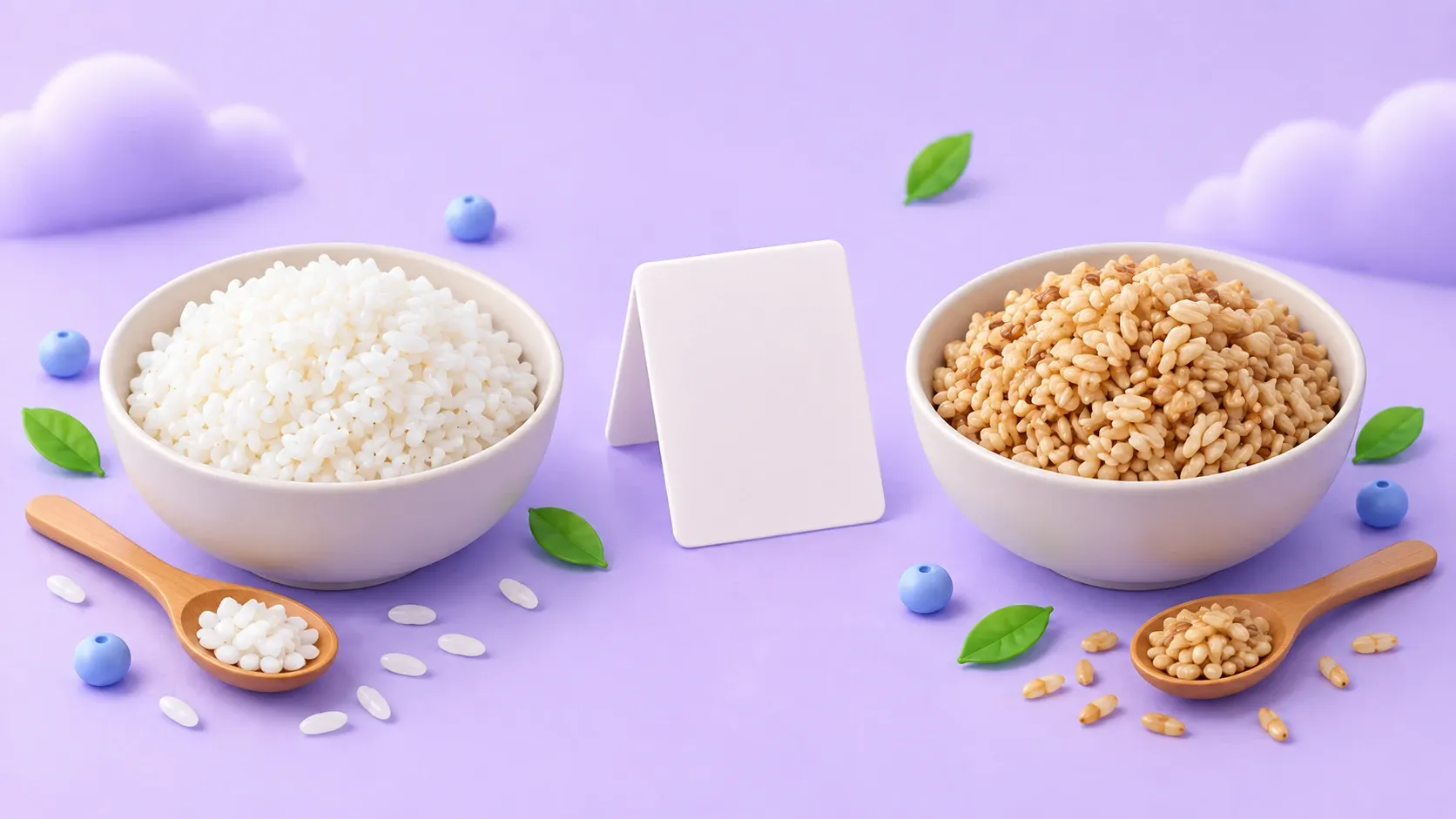

Cooked white rice has about 130 calories per 100 grams and cooked brown rice about 123, according to USDA FoodData Central. Per cup, that is roughly 205 versus 194 calories, a small gap. What actually separates them is fiber: brown rice has about 1.6 grams per 100 grams, while white rice has under 1 gram. If you are choosing between them to save calories, the difference is minor; if you want more fiber, brown rice is the clear pick.
White rice vs brown rice per 100 g
Here is how the two compare per 100 grams of cooked rice, using USDA values.
| Per 100 g cooked | White rice | Brown rice |
|---|---|---|
| Calories | about 130 | about 123 |
| Carbohydrate | about 28 g | about 26 g |
| Fiber | under 1 g | about 1.6 g |
| Fat | 0.3 g | 1.0 g |
Both are mostly carbohydrate with very little fat. Brown rice has slightly fewer calories and carbs, a little more fat, and noticeably more fiber. Protein is modest in both; white rice has about 2.7 grams per 100 grams.
Calories per cup and per portion
Most people measure rice by the cup or the bowl, not by the gram. A standard serving is 1 cup of cooked rice, about 158 grams.
| Per 1 cup cooked (158 g) | White rice | Brown rice |
|---|---|---|
| Calories | about 205 | about 194 |
A cup of white rice also carries about 45 grams of carbohydrate and 4.3 grams of protein. For white rice, other common portions work out like this, and brown rice runs slightly lower at each size:
| White rice serving | Calories | Carbohydrate | Protein |
|---|---|---|---|
| 1/2 cup cooked (79 g) | about 103 | 22 g | 2.1 g |
| 1 cup cooked (158 g) | about 205 | 45 g | 4.3 g |
| Heaping cup cooked (200 g) | about 260 | 56 g | 5.4 g |
Look at the spread between rows rather than between columns. Moving from a half cup to a heaping cup more than doubles the calories, while switching from white to brown at the same cup saves only a handful. Portion is the lever that matters.
One more tracking trap applies to both: dry rice is about 365 calories per 100 grams because it has not absorbed water yet, so a cup of dry white rice (about 185 g) is roughly 675 calories and expands into about three cups cooked. Match dry weights to dry values and cooked weights to cooked values.
What actually differs: fiber and the whole grain
Brown rice is a whole grain. It keeps the bran and germ, the parts that are milled away to make white rice. That is where its extra fiber comes from, along with more of the grain’s micronutrients.
Fiber is the practical payoff. At about 1.6 grams per 100 grams versus under 1 gram, brown rice has noticeably more, and that fiber can make it a little more filling and slow digestion. The Harvard Nutrition Source links the fiber in whole grains to better digestion and steadier energy. If you are working toward a daily fiber goal, our guide on how much fiber you need per day covers the daily targets.
The glycemic side follows from the same structure. White rice is digested quickly and can raise blood sugar faster than many whole foods, while brown rice sits a little lower thanks to its fiber. For most people this is a minor factor next to portion size, and eating rice with protein, fat, and vegetables slows digestion either way.
What does not differ: calories and carbs
Per 100 grams, brown rice has about 123 calories to white rice’s 130, and about 26 grams of carbohydrate to white’s 28. Per cup, it is about 194 calories versus 205. None of those gaps is large enough to change your day on its own.
That means the usual advice about rice applies to both kinds equally:
- Measure your portion. Most people pour more than they think, and a heaping bowl can double the calories of a measured cup.
- Watch what goes on top. A tablespoon of oil or butter stirred into rice adds roughly 100 to 120 calories, more than the whole difference between white and brown across several cups.
- Rinsing does not change much. It affects texture, not calories, because the carbohydrate stays in the grain.
If you are budgeting carbohydrate specifically, the carb calculator gives you a daily range to work within, and our guide on how many carbs per day explains the numbers behind it.
The verdict: which rice should you eat?
Pick based on fiber and taste, not calories.
- Want more fiber and fullness: choose brown rice. It is the whole grain, with about 1.6 grams of fiber per 100 grams.
- Prefer the taste or texture of white rice: eat it, and control the portion. A measured cup is about 205 calories, close to the 194 in a cup of brown.
- Counting calories closely: weigh or measure either one, log cooked against cooked, and track the oil and butter separately.
- Building a balanced plate: use rice as one part of the meal, next to a lean protein such as chicken breast and plenty of vegetables.
To fit rice into your full daily targets for protein, carbs, and fat, the macro calculator does the math for you. For serving sizes, dry-versus-cooked values, and more, see our complete guide to calories in rice.
The bottom line
Cooked white rice is about 130 calories per 100 grams and brown rice about 123, which works out to roughly 205 versus 194 calories per cup. Carbs are close too, about 28 versus 26 grams per 100 grams. The meaningful difference is fiber, about 1.6 grams in brown rice versus under 1 gram in white. Choose brown for the fiber, choose white if you prefer it, and in both cases let the portion and the toppings, not the color of the grain, decide your calories.
This article is general information, not medical or dietary advice for your specific situation.