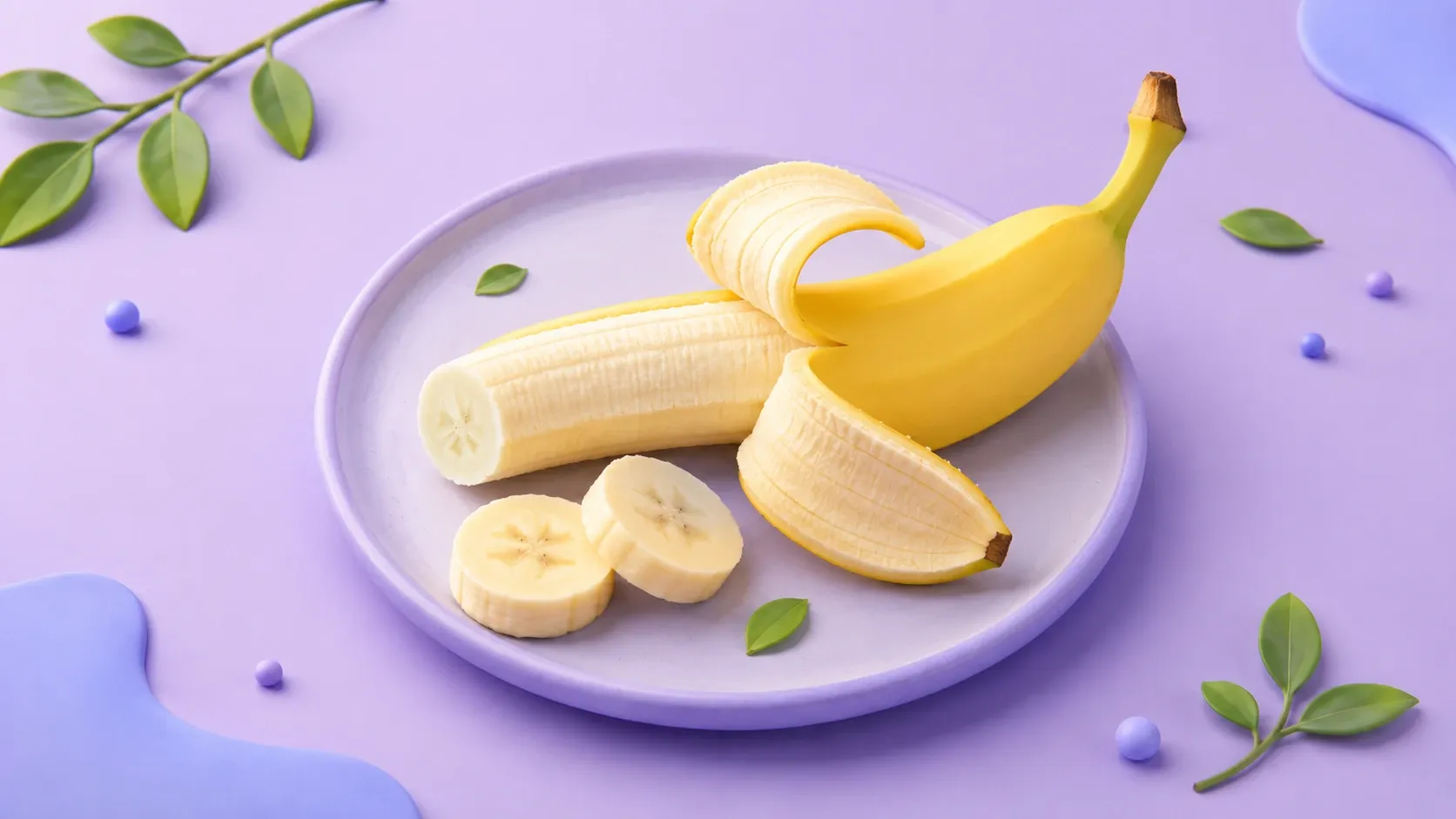

A raw banana has about 89 calories per 100 grams, along with roughly 23 grams of carbohydrate, 2.6 grams of fiber, and almost no fat, according to USDA FoodData Central. In everyday terms, a medium banana lands at about 105 calories. Bananas are one of the most popular grab-and-go snacks in the world, and the good news for anyone counting calories is that the number is modest and easy to predict, because it tracks closely with the size of the fruit.
The quick answer: calories in a banana
A medium banana, the kind most people picture, has about 105 calories. Because a banana is mostly water and carbohydrate with barely any fat, the calories scale almost perfectly with weight, so the size of the banana is what moves the total.
Here is how the numbers break down for 100 grams of raw banana:
- Calories: about 89 kcal
- Carbohydrate: about 23 g
- Sugar: about 12 g (naturally occurring)
- Fiber: about 2.6 g
- Protein: about 1.1 g
- Fat: about 0.3 g
That profile, low in fat, no cholesterol, and packaged with fiber and potassium, is why bananas show up on almost every list of healthy calories in fruits worth keeping on hand.
Calories by banana size
“One banana” is not a fixed amount. Supermarket bananas range from small and stubby to long and heavy, and the calories follow. The table below applies the USDA per-100-gram value for raw banana (89 calories) to the standard sizes USDA uses, measured as edible flesh without the peel.
| Serving | Calories | Carbs | Sugar | Fiber |
|---|---|---|---|---|
| Extra small (under 6 in / 81 g) | about 72 | 18 g | 10 g | 2.1 g |
| Small (6 to 7 in / 101 g) | about 90 | 23 g | 12 g | 2.6 g |
| 100 g | about 89 | 23 g | 12 g | 2.6 g |
| Medium (7 to 8 in / 118 g) | about 105 | 27 g | 14 g | 3.1 g |
| Large (8 to 9 in / 136 g) | about 121 | 31 g | 16 g | 3.5 g |
| Extra large (9 in plus / 152 g) | about 135 | 35 g | 18 g | 4.0 g |
The takeaway: most whole bananas fall in a tight 90 to 135 calorie band, so even a large one is a reasonable snack. If you slice a banana into oatmeal or a smoothie, weighing the flesh is the most accurate way to log it, since “one banana” can mean anywhere from about 90 to 135 calories. For more reference numbers like these, our Food and Calorie Guides hub keeps them in one place.
Carbs and natural sugar: what is actually in a banana
Bananas are a carbohydrate food, and that is the part people ask about most. A medium banana has about 27 grams of carbohydrate, of which roughly 14 grams is sugar and about 3 grams is fiber. The rest is starch.
The important context is that this is natural sugar in a whole food, not added sugar. It arrives bundled with fiber, potassium, vitamin C, and vitamin B6, and the fiber slows how quickly the sugar is absorbed. That is a completely different thing from the added sugar in soda or candy, and it is why whole fruit is encouraged in the Dietary Guidelines for Americans rather than restricted. If you are watching carbs specifically, the banana counts, but it earns its place by delivering nutrients alongside those carbs.
Fiber and potassium: why bananas punch above their calories
For about 105 calories, a medium banana delivers roughly 3 grams of fiber and somewhere around 420 to 450 milligrams of potassium. Potassium is an electrolyte that helps nerves fire, muscles contract, and the body offset the blood-pressure effects of excess sodium. A medium banana covers close to 10 percent of the roughly 4,700 milligrams per day used in heart-healthy patterns like DASH, according to the Harvard Nutrition Source.
That fiber-and-potassium combination, for so few calories, is what makes a banana feel like more than its number on a tracker. Fiber adds bulk and slows digestion, which helps a banana satisfy better than a quick-digesting snack of the same calories, a quality it shares with other low-calorie filling foods.
Does ripeness change the calories?
This is a common worry, and the answer is reassuring: ripeness barely changes the calories. As a banana ripens, its starch converts into sugar, so a spotty brown banana tastes much sweeter than a green one, but the total energy stays about the same. You are not eating more calories because the banana got sweeter.
What does change is the glycemic index. A slightly under-ripe banana has a lower GI (around 42) than a fully ripe one (around 51), because greener bananas contain more resistant starch, a carbohydrate that resists digestion in the small intestine and is absorbed more slowly. So if blood-sugar response matters to you, a less-ripe banana is digested more gradually, even though the calorie count on your log is essentially unchanged.
Are bananas good for weight loss?
Bananas fit a weight-loss plan well, with one caveat about portions. Three things work in their favor.
They are nutrient-dense for the calories. A medium banana is about 105 calories, fat-free, and brings fiber, potassium, and vitamins along for the ride. Swapping a banana in for a higher-calorie snack is an easy win.
The fiber helps with fullness. Whole fruit takes longer to eat and digest than processed snacks, so a banana tends to satisfy better than its calorie count suggests. That makes a calorie deficit easier to stick with.
They are portable and need no prep. A banana travels in a bag, peels in seconds, and pairs with almost anything, which makes the healthy choice the convenient one.
The caveat: a banana is still food with calories, and it is easy to eat quickly, so it counts toward your daily total like everything else. If you are working out your target, our guide on how many calories you should eat to lose weight lays out the math. Logging the banana, ideally by weight, keeps it honest.
Bananas before and after a workout
Bananas are a classic training snack for good reason. They are an easy source of fast-digesting carbohydrate plus potassium, which makes them handy before exercise for quick energy or after it to help refuel. They are gentle on the stomach for most people and need zero preparation.
A few simple ways to use a banana around training and within a calorie budget:
- Eat one 30 to 60 minutes before a workout for accessible carbohydrate without feeling heavy.
- Pair it with protein afterward, such as Greek yogurt, milk, or a protein shake, to turn a snack into a more complete recovery meal.
- Log it like any other food. A tracking app like CalcEat lets you record the banana and whatever you pair it with so the totals stay accurate, whether it is a snack or part of a bigger meal.
How a banana fits a calorie budget
At roughly 90 to 135 calories for a whole banana, bananas slot easily into most days. They make a satisfying snack on their own, an easy addition to oatmeal, yogurt, or smoothies, and a natural sweetener for baking that brings fiber and potassium instead of empty calories.
A few practical points:
- Weigh the flesh when you can. Banana size varies a lot, so a quick weight is far more accurate than logging “one banana.”
- Pair it with protein or fat to slow digestion and stay full longer, especially if you tend to feel hungry soon after fruit.
- Watch what goes with it, not just the banana. A banana is around 105 calories; the peanut butter, chocolate, or granola you add is usually the bigger number to track.
The bottom line
A raw banana has about 89 calories per 100 grams, which puts a medium banana around 105 calories, with roughly 27 grams of carbohydrate, 14 grams of natural sugar, and 3 grams of fiber. Ripeness changes the sweetness, not the calorie count, and the fiber and potassium make a banana feel like more than its number suggests. For most people, a banana is one of the easiest nutrient-dense snacks to fit into a calorie budget.
Keep it simple: most whole bananas land between about 90 and 135 calories, so pick the size that fits your day, pair it with a little protein when you want it to last, and log it by weight when you can. Stay consistent, and the numbers will take care of themselves.
This article is general information, not medical or dietary advice for your specific situation.