
The ketogenic diet, keto for short, is a very-low-carbohydrate way of eating that cuts carbs to roughly 20 to 50 grams a day and gets most of its calories from fat. With so little carbohydrate coming in, your body shifts into a metabolic state called ketosis and starts burning fat-derived fuel instead of glucose (StatPearls). For weight loss it can work well, but not for the reasons the marketing implies. This guide explains what keto actually is, why it helps some people lose weight, what to eat and avoid, the dreaded keto flu, and who should be cautious.
What the keto diet is
Most everyday diets run on carbohydrate. Your body breaks carbs down into glucose, your main quick-access fuel. Keto deliberately starves that supply. A standard ketogenic diet limits carbohydrate to about 20 to 50 grams a day, keeps protein moderate, and fills the rest with fat, so fat ends up supplying somewhere around 60 to 75 percent of calories (StatPearls).
To put that carb ceiling in perspective: most dietary guidance puts carbohydrate at 45 to 65 percent of daily calories, which is about 225 to 325 grams on a 2,000-calorie day (National Academies). Even the carbohydrate Recommended Dietary Allowance, the floor set to cover the glucose your brain uses, is 130 grams a day (DRI summary table). Keto sits far below all of that on purpose. If you want the full picture of normal carb intake before you decide to go this low, our guide on how many carbs you should eat a day lays it out.
Keto is one specific point on a wider low-carb spectrum. Plenty of people eat “low carb” at 100 to 150 grams a day without ever reaching ketosis. What makes a diet ketogenic is dropping carbs low enough, and for long enough, to flip your metabolism into ketosis.
How ketosis works
When daily carbohydrate falls to around 20 to 50 grams, your insulin levels drop. Lower insulin signals your body to release stored fat, and your liver converts some of those fatty acids into molecules called ketone bodies. Ketones become an alternative fuel that your brain, muscles, and other tissues can run on in place of glucose (StatPearls). That fuel switch is ketosis, and it is the defining feature of the diet.
Reaching ketosis usually takes a few days of consistently low carbs. It is worth being clear about one thing: ketosis is a metabolic state, not a measure of how much fat you are losing. Being “in ketosis” does not guarantee weight loss on its own. Whether you lose fat still depends on the total energy equation, which is where the honest part of this story begins.
Does keto actually work for weight loss?
Yes, keto helps many people lose weight, but it is not the carbs themselves doing something magical. Keto works through a few down-to-earth mechanisms that all funnel into the same place: eating fewer total calories.
- It blunts appetite. This is keto’s standout advantage. A systematic review and meta-analysis found that people following ketogenic diets were less hungry and had a reduced desire to eat, even while losing weight, when normally weight loss makes hunger climb (Gibson et al., 2015). Eating mostly protein and fat is filling, so many people naturally eat less without consciously trying.
- Early water weight drops fast. Cutting carbs empties your glycogen stores and the water bound to them, so the scale often falls several pounds in the first week. That quick feedback is motivating, but it is mostly water, not fat.
- You end up in a calorie deficit. Put the appetite suppression and the simpler food choices together, and most people simply consume less. The fat loss that follows comes from that calorie deficit, which is the real engine here, not the absence of carbs.
Here is the part most keto marketing leaves out. Over the long run, keto is about as effective as other diets when calories are similar. In the year-long DIETFITS randomized trial, a healthy low-carbohydrate diet and a healthy low-fat diet produced no significant difference in weight loss: participants lost about 6.0 kg on low-carb and 5.3 kg on low-fat, a gap that was not statistically meaningful (Gardner et al., 2018). A meta-analysis of trials lasting 12 months or more found only a small long-term edge for very-low-carb diets, on the order of about 1 kg (Bueno et al., 2013). The practical message: keto can absolutely work, but its main value is that for some people it makes eating less feel easier. The best diet is the one you can actually stick with.
What to eat and what to avoid
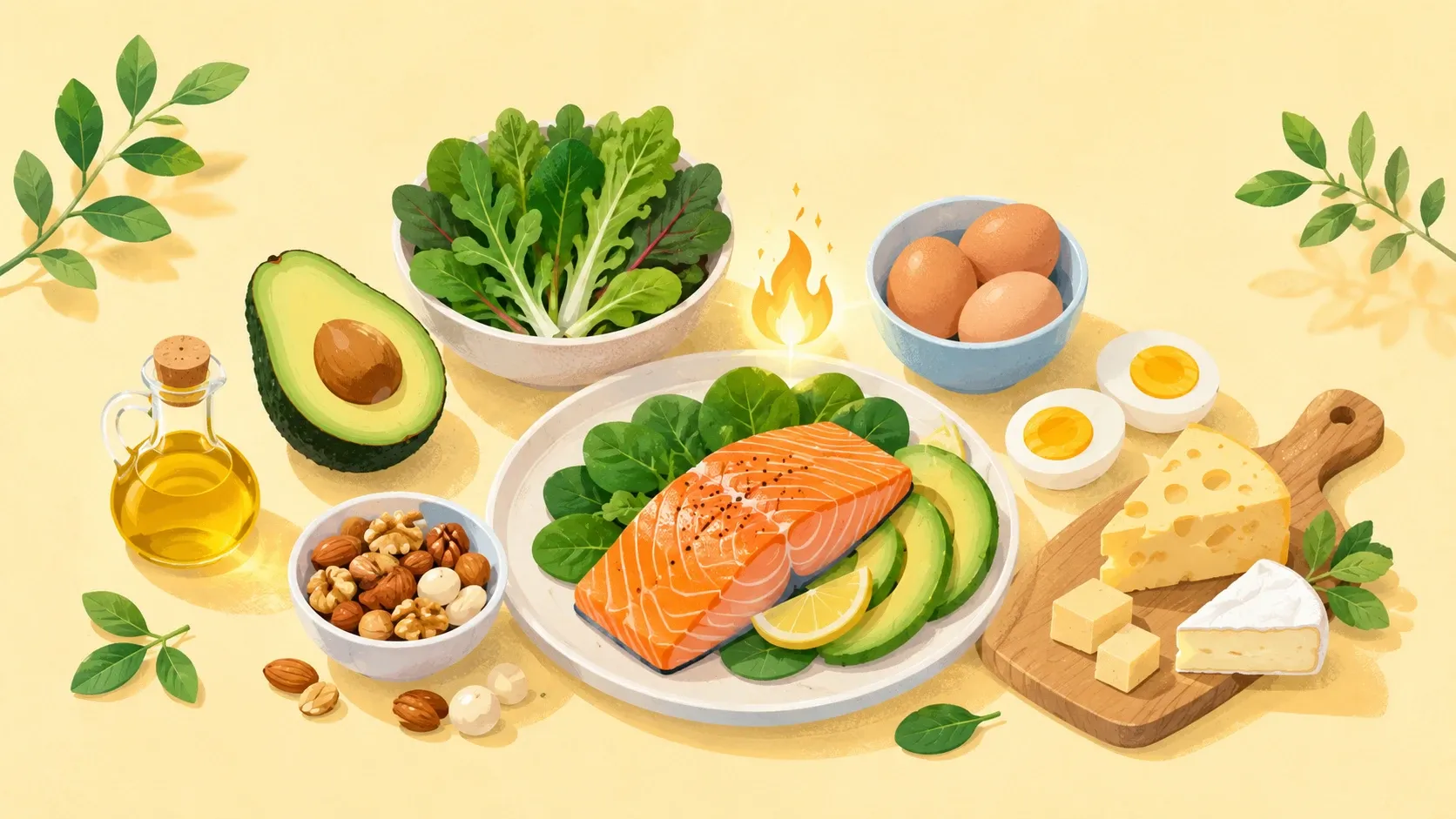
Keto reshuffles your plate around fat and protein while keeping carbs very low. You do not need to count every leaf, but you do need to know which foods fit and which quietly blow your carb budget.
| Eat freely (very low carb) | Limit or avoid (carb-heavy) |
|---|---|
| Meat, poultry, fish, eggs | Bread, pasta, rice, cereal, oats |
| Non-starchy vegetables: leafy greens, broccoli, zucchini, peppers | Starchy vegetables: potatoes, corn, peas |
| Avocados, olives, olive oil | Most fruit, especially bananas, grapes, mango |
| Nuts and seeds (in sensible portions) | Beans, lentils, and other legumes |
| Cheese, butter, full-fat dairy | Sugar, candy, desserts, sweetened drinks |
| Low-carb berries in small amounts | Milk and sweetened yogurts |
A few practical notes. Vegetables still matter on keto, so build meals around the non-starchy ones for fiber and micronutrients. Protein should stay moderate rather than unlimited. And “fat is unlimited” is a myth: fat is calorie-dense, so portions of oil, cheese, and nuts still count toward your total. For how these foods fit into a bigger picture of protein, carbs, and fat, see What Are Macros?.
The keto flu and other risks
Cutting carbs hard can come with a rough adjustment period, nicknamed the keto flu. In the first days of the diet, some people get headaches, fatigue, nausea, dizziness, constipation, and irritability as the body adapts to running on ketones. These symptoms typically show up during the early adaptation phase and clear within days to a couple of weeks (StatPearls). Staying well hydrated, getting enough sodium and other electrolytes, and not crash-dieting on calories at the same time all help smooth the transition.
Beyond the early flu, keto has trade-offs worth knowing. Because whole grains, most fruit, and legumes are off the menu, it takes deliberate effort to get enough fiber and certain vitamins and minerals. Some people see changes in blood cholesterol. Long-term very-low-carb eating has also been linked in the clinical literature to issues like kidney stones in susceptible people (StatPearls). None of this means keto is dangerous for a healthy adult who does it thoughtfully, but it is a bigger departure from typical eating than, say, a moderate high-protein diet, so it deserves a little planning.
Who keto suits, and who should be cautious
Keto tends to work best for people who feel genuinely more satisfied eating fat and protein, who do not mind giving up bread, pasta, and most fruit, and who value the strong appetite control it can provide. If structure helps you and you would rather follow a clear “no” list than count every calorie, keto can be a good fit.
It is not for everyone, though. Skip keto or talk to a clinician first if you:
- are pregnant or breastfeeding, when severe carb restriction is generally not recommended;
- have a history of disordered eating, since rigid food rules and rapid weight swings can be a trigger;
- take medication for diabetes or high blood pressure, because cutting carbs can change your blood sugar and medication needs;
- have a chronic liver, pancreas, kidney, or gallbladder condition, or any ongoing health issue, where personalized advice matters most.
When in doubt, get individual guidance before starting. This is general education, not medical advice for your specific situation.
How to track keto with CalcEat
The single most useful habit on keto is keeping an eye on your carbs so you actually stay under your threshold, because hidden carbs in sauces, dressings, and “just a bite” foods are what quietly knock people out of ketosis. You do not need a spreadsheet for this. With CalcEat, you can snap a photo of your plate to estimate its carbs and calories, scan a barcode for packaged foods, or log manually, so checking whether a meal fits your keto budget takes seconds.
Two tools make setting up easier. The free macro calculator turns your details and goal into protein, fat, and carb targets in grams, which gives you a concrete carb ceiling to stay under. If you would rather have the whole thing mapped out, you can get a free plan built around your numbers. And if macro tracking is new to you, how to count macros walks through setting your numbers and following them without it taking over your life.
The bottom line
Keto is a very-low-carb diet, about 20 to 50 grams of carbohydrate a day, that puts your body into ketosis so it burns fat-derived ketones for fuel. It can be an effective way to lose weight, mainly because it suppresses appetite, drops early water weight, and helps you eat fewer total calories. What it is not is a metabolic shortcut: over the long term it performs about as well as other diets when calories line up, so the deciding factor is whether you can stick with it. Expect a possible keto flu in the first week or two, be deliberate about fiber and nutrients, and check with a clinician first if you are pregnant, have a history of disordered eating, or take medication for a chronic condition. If keto fits your life, run your numbers through the macro calculator and track your carbs so staying in ketosis is something you can actually keep up.